Physical Address
304 North Cardinal St.
Dorchester Center, MA 02124
Physical Address
304 North Cardinal St.
Dorchester Center, MA 02124

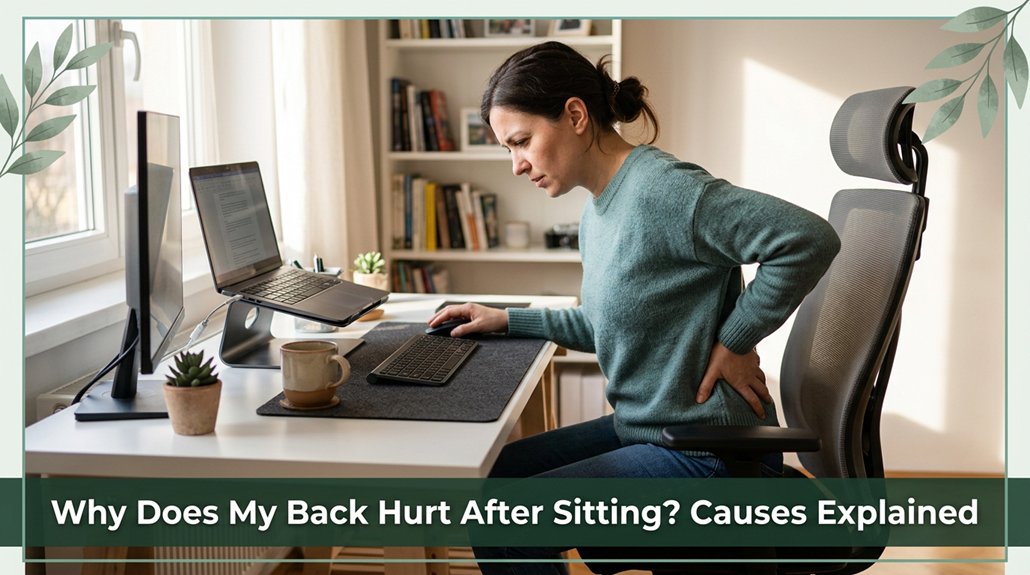
All right, so you’ve probably noticed that after sitting for a while, your back starts feeling like a tired noodle. Here’s the thing: sitting puts a ton of pressure on your lumbar discs up to 185%, especially if you slump or lean forward weakening your muscles and shifting stress to your spine. Poor posture and long periods of stillness tighten muscles, mess with your alignment, and squeeze nerves. If you keep ignoring it, those tiny adjustments become bigger problems. Stick around, and you’ll find out how to stop that pain in its tracks.
This article contains affiliate links. If you purchase through them, I may earn a small commission at no extra cost to you. I only recommend products I genuinely believe in.
Ever wonder why your back suddenly grumbles after sitting at your desk all day? If you’re asking, “Why does my back hurt when sitting,” you’re not alone.
Sitting increases pressure inside your lumbar discs more than standing does, according to OSHA ergonomic guidelines. Slouching or leaning forward can double or even triple that pressure, which compresses those discs and stresses your spine’s shock absorbers.
Prolonged sitting can lead to loss of cushioning in vertebral discs. Over time, this pressure can accelerate wear or worsen existing issues like herniated discs or degenerative disc disease. Prolonged sitting also weakens your gluteal muscles and core stabilizers, shifting more load to your lumbar spine, which can intensify discomfort. Incorporating ergonomic adjustments, especially proper chair settings and supportive accessories, can help reduce strain on your back.
Sitting raises lumbar disc pressure; slouching can triple it, stressing your spine’s shock absorbers.
According to research on spinal biomechanics, weakening these muscles impairs your spine’s support system, making back pain more likely.
All right, so you sit long, lose muscle strength, and your spine takes a hit that’s why your back protests!
To mitigate this, incorporating movement breaks, ergonomic adjustments such as lumbar support cushions, and strength exercises for your core and glutes can help protect your spine and reduce discomfort.
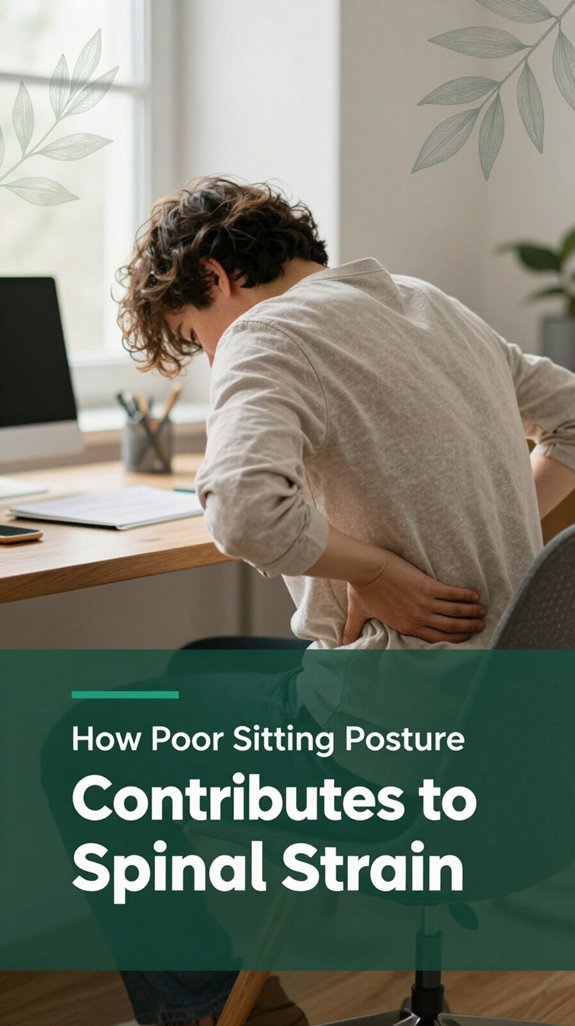
When you slouch forward over your desk, you mightn’t realize just how much that hunched position is putting your spine through the wringer. It shifts your head’s center of gravity forward, so your cervical (neck) and thoracic (upper back) regions carry a bigger load research on spinal biomechanics suggests that for every inch you lean in, your neck bears around 10 pounds more.
The natural curves of the spine are essential for shock absorption and load distribution, making proper posture crucial for maintaining spinal health. Slumped sitting forces your lumbar and thoracic vertebrae to hinge improperly at just a few spots instead of moving evenly, which can be likened to a broken hinge on a door.
This faulty alignment over time can over-stretch ligaments, leading to weakened supportive structures. It also overloads the facet joints and intervertebral discs, increasing the risk of degeneration and conditions such as herniated discs or sciatica.
Furthermore, poor posture promotes muscle imbalance, particularly weakening of the core muscles that stabilize your spine, which makes you more vulnerable to strain and injury. In addition, slouched sitting cuts off blood flow to spinal tissues, leading to fatigue and muscle spasms, while narrowing the foraminal openings where nerve roots exit the spinal cord per Mayo Clinic recommendations this increases the risk of nerve compression or pinched nerves, such as in cases of radiculopathy.
Poor posture can also weaken the muscles that support your spine, making it even harder to maintain proper alignment over time. All these factors indicate that poor sitting habits don’t just cause soreness; they strain your spine, making it do extra work it shouldn’t have to.
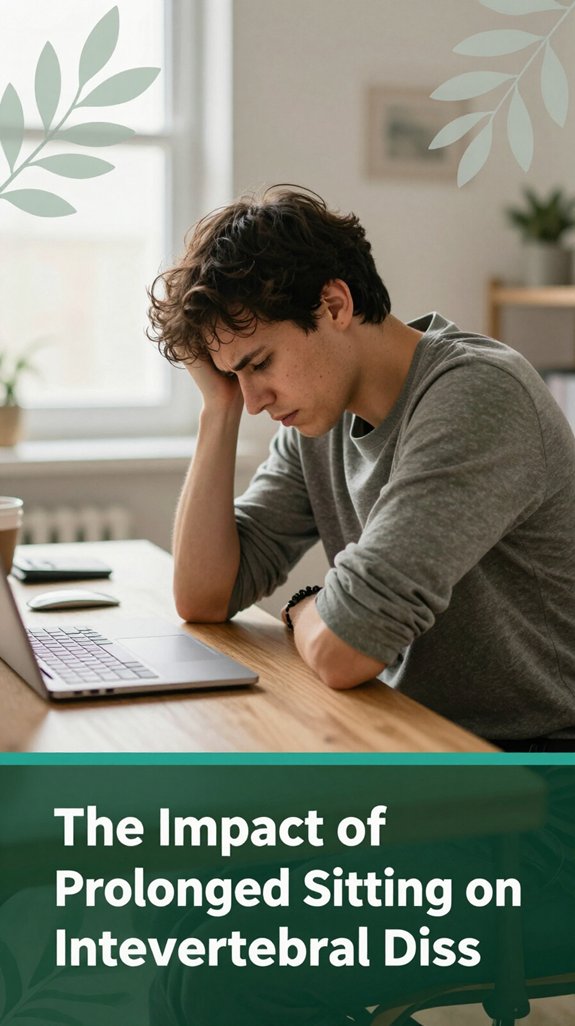
All right, let’s talk about what sitting for hours does to your intervertebral discs those soft, gel-like cushions between your spinal vertebrae. When you sit, especially with your hips and knees bent at approximately 135 degrees (which means leaning back slightly, not sitting bolt upright), the pressure on your lower lumbar discs, such as L4–L5, can increase by about 40%, according to Mayo Clinic recommendations. This heightened pressure is similar to stacking several heavy books on top of each other or applying constant squeezing force, which leaves your discs little room to breathe.
Over time, this compressive load presses out fluid from the intervertebral discs, and fluid is essential for maintaining their health and shock-absorbing properties. As a result, after prolonged sitting, your discs become less hydrated, more stiff, and may develop tiny tears. These changes increase the risk of disc degeneration, herniation, and associated issues like sciatica.
People who sit more than 6 hours a day, especially in poor ergonomic postures, are particularly susceptible to these negative effects. To mitigate this, frequent breaks standing, stretching, or shifting positions are recommended.
Using ergonomic chairs with lumbar support and adjustable features can also help distribute pressure more evenly and reduce strain on the lumbar and thoracic intervertebral discs.
All right, let’s talk about something you probably already feel but haven’t quite named muscular imbalances caused by sitting too much. When you sit for extended hours, your hip flexors tighten up, pulling your pelvis into an anterior tilt. According to OSHA ergonomic guidelines, this anterior pelvic tilt can increase lumbar lordosis, leading to lower-back discomfort. If this condition persists, it may contribute to issues like sciatica or chronic lower back pain.
Meanwhile, your glutes tend to become weak and inactive, which reduces their capacity to support the pelvis effectively. This weakening process is common among people who sit more than 6 hours a day and can lead to instability in the lumbar spine.
Prolonged sitting reduces muscle activity, which further exacerbates weakness in these muscles over time. Your core muscles and back extensors can also weaken, worsening posture and back pain. Your chest muscles also tighten up, pulling your shoulders forward into a rounded posture, which often results in thoracic kyphosis. As your chest tightens, your shoulders may become protracted, and your upper back weakens, further impairing posture.
Additionally, your neck muscles experience imbalance and overuse, leading to forward head posture. This position strains the cervical and upper thoracic muscles and can cause neck pain and headaches over time. Research on spinal biomechanics suggests these muscular imbalances can contribute to pain syndromes, reduced mobility, and increased risk of injury if left uncorrected.
Here’s a practical takeaway: the combination of tight hip flexors and chest muscles with weak glutes and back musculature creates a cycle that promotes poor posture.
Understanding these muscular imbalances and their effects can help motivate targeted corrective exercises.
Ever notice how sitting just feels different when your back is acting up? It’s like your nerves are throwing a hissy fit. According to research on spinal biomechanics, when you sit, lumbar disc pressure can increase dramatically sometimes up to 185% compared to standing. This elevated pressure pushes disc material backward, narrowing the intervertebral foramina where spinal nerves exit.
Prolonged sitting amplifies this effect, further increasing the risk of nerve compression. This narrowing can lead to radicular pain shooting down your leg because those nerves become compressed or irritated. If you have herniated lumbar discs or spinal stenosis, sitting can exacerbate the problem by pushing these conditions further.
The sciatic nerve, which runs from your lower back (lumbar region) down through your buttocks and into your legs, doesn’t tolerate stretching or compression well, especially when your posture increases tension on it. Poor sitting posture can turn your back into a nerve’s worst enemy, leading to sharp shooting pains or numbness in the legs and feet. Proper lumbar support and posture awareness can help mitigate these issues and reduce nerve irritation, especially for those with pre-existing lower back conditions.
Look, you probably already know that sitting in a wrecked chair or slumping like a ragdoll can turn your back into a pain magnet. But it’s not just about the chair your setup and how you sit matter a lot too.
Chairs without proper lumbar support force your lower back muscles to work overtime, leading to fatigue and aches, according to OSHA ergonomic guidelines. If your chair doesn’t fit your spine’s unique curves, it can cause tension and irritate joints, which may contribute to conditions like lumbar strain or sciatica.
Proper lumbar support reduces back fatigue and prevents tension-related conditions like lumbar strain and sciatica.
Poor adjustability means you’re likely stuck in awkward positions, unevenly distributing load and stressing your thoracic and lumbar regions. Ensuring your chair is adjustable can significantly reduce muscle strain caused by improper support.
Sitting with your shoulders rounded or leaning forward increases strain your spine’s not meant to carry that weight all day, and prolonged poor posture can lead to thoracic kyphosis or muscle imbalances. Additionally, neglecting to adjust your chair’s height or tilt can exacerbate these issues, causing unnecessary strain.
Additionally, if your monitor’s too high or low, it causes neck strain that can radiate down into your upper, middle, and lower back. According to Mayo Clinic recommendations, the ideal monitor height allows your eyes to gaze slightly downward, about 15 to 20 degrees (which reduces neck and back strain).
The connection between sitting and spinal degeneration is significant. After sitting for an extended period, you may notice that your back feels tight or sore, almost like it’s protesting.
That observation is supported by research on spinal biomechanics, which shows that sitting, especially when in slouched or forward-flexed positions, causes your intervertebral discs to become compressed up to two to three times more than when standing. Think of your discs as soggy sponges; the longer they stay compressed, the more they dry out and undergo deterioration.
Prolonged compression can also restrict blood flow to the discs, further impeding their ability to recover and maintain health, making them more vulnerable over time. This microtrauma over time leads to degenerative changes such as reduced disc height and cartilage wear. According to Mayo Clinic recommendations, prolonged compression of lumbar discs can impair their ability to absorb shock, increasing the risk of herniation and sciatica. To understand these effects better, consider this table:
| Sitting Effect | Why It Happens | Result |
|---|---|---|
| Disc dehydration | Static pressure blocks fluid flow (per research on spinal biomechanics) | Loss of shock absorption capabilities |
| Increased load | Sitting shifts load to the posterior elements like facet joints | Facet joint wear and possible arthropathy |
| Reduced nutrition | Less pumping through the endplates due to limited motion (according to OSHA ergonomic guidelines) | Disc breakdown and accelerated degeneration |
The key takeaway? Sitting isn’t just a source of discomfort; it’s a process that quietly and gradually alters your spinal structure. To mitigate this, it’s important to incorporate movement breaks, maintain good posture, and support your lumbar spine during prolonged sitting sessions.
So, you’re probably wondering, “When should I really start worrying about my back?” It’s a good question because not every ache indicates a serious problem, but ignoring warning signs can turn a small issue into a significant health concern.
Poor posture can lead to ongoing discomfort and chronic back issues if not addressed early. Sudden, severe pain after an accident, like a fall or a crash, especially if it’s unbearable or makes you unable to move, requires immediate medical attention. Loss of control over your bladder or bowels, or noticing numbness in your groin or buttocks referred to as saddle anesthesia could be a sign of cauda equina syndrome, which research on spinal biomechanics suggests needs urgent care.
Pain that keeps waking you up at night or worsens when lying down may indicate underlying spinal conditions such as disc herniation or infection, according to Mayo Clinic recommendations. Additionally, if you experience a sudden loss of strength, feel weak, or have trouble walking, your body is signaling that something abnormal is happening.
Persistent back pain accompanied by systemic symptoms like fever, unexplained weight loss, or night sweats might suggest infection or internal issues. Understanding the importance of spinal health can help in early detection of issues before they become more severe, emphasizing the need for prompt medical evaluation. These signs should prompt you to seek medical evaluation promptly.
You’ve probably noticed that sitting for hours on end causes your lumbar and thoracic regions to ache, creating a persistent discomfort that won’t easily subside.
According to OSHA ergonomic guidelines, your body thrives on movement and change. Limiting sitting sessions to 30 minutes or less, then standing or walking for 1–2 minutes, can significantly reduce back strain. Every 15 minutes, shift your positions by stretching, rolling your shoulders, or standing to prevent stiffness and improve circulation.
Incorporate micro-breaks like bathroom walks or quick hallway laps. Research on spinal biomechanics suggests these short activities enhance circulation and reduce discomfort without disrupting your workflow. Regular movement helps to prevent stiffness and promotes healthy spinal discs by encouraging nutrients to flow to your spinal structures.
To keep your spine healthy, perform gentle movements such as cat-cow stretches or lumbar extensions each hour to maintain spinal flexibility and prevent thoracic kyphosis. These movements can also help reduce muscle tension and alleviate soreness.
Strengthening your core and hip muscles with simple exercises such as bridges and squats provides vital support to your lumbar and sacral vertebrae, reducing the risk of lower back pain. Regular activity like brisk walks keeps your paraspinal and abdominal muscles strong, helping to prevent sciatic and other back-related conditions.
Ever notice how those persistent lower back aches tend to appear only after you’ve been glued to your desk for a while? According to OSHA ergonomic guidelines, your body signals when it’s time for a change. When you experience low-back pain after sitting for 20 to 60 minutes, or if it worsens as your day progresses, it indicates your current sitting setup may not support your lumbar spine adequately.
The spine’s natural curves help absorb shocks and distribute weight evenly, highlighting the importance of proper posture. Proper workspace ergonomics can make a significant difference in preventing discomfort and injury.
Signs that you need to modify your seating environment include slouching or leaning forward in your posture, pain that begins earlier in the day, lingering discomfort hours after sitting, reliance on pain medications or frequent stretching to manage discomfort, and pain flaring up with existing conditions like herniated discs or sciatica.
Research on spinal biomechanics suggests that sustained poor posture can aggravate herniation or nerve compression. If these symptoms sound familiar, it’s time to adjust your chair height, modify your sitting angles such as maintaining a lumbar support angle around 90 to 100 degrees, which promotes optimal spinal alignment and incorporate more frequent breaks to stand and stretch.
Your back, particularly the lumbar and sacral regions, will thank you for these proactive changes. Remember, optimizing your seated posture not only alleviates discomfort but also helps prevent long-term spinal issues.
Yes, sitting too long can definitely make an existing disc herniation worse.
When you sit, especially in a slouched position, you put more pressure on your lumbar discs up to triple the amount pushing that herniated material further into your nerve roots.
It’s like forcing a bubblegum bubble eventually, it’s gonna pop!
Muscle imbalances are like having a stubborn roommate some muscles slack off while others overwork, throwing your back off balance.
When your core and back are weak, and hip flexors are tight, the front pulls your pelvis into an awkward tilt. That disrupts your spine’s neutral position, doubling stress on your discs and ligaments.
If your sitting discomfort keeps getting worse, lasts more than 4–6 weeks despite your best efforts, or suddenly feels unbearable, it might signal something serious.
All right, if you notice sharp pain, numbness, weakness, or if it’s suddenly preventing you from even standing up straight or controlling your bladder, you should definitely see a doctor.
Trust me, don’t ignore those red flags they’re your body’s way of saying, “Hey, this isn’t just a bad chair day.”
Standing or walking doesn’t always fix back pain; I’ve been there, thinking a quick stretch would solve everything, only to feel worse.
Sometimes, certain issues like spinal stenosis or disc problems actually get worse with upright positions. It’s like trying to unstick a jammed zipper not every move helps.
You need exercises that target your hips, glutes, and core.
Try hip stretches like the couch or lunge, which loosen tight muscles. Add glute bridges or clamshells to strengthen your backside because, honestly, sitting kills your glutes.
Core moves like planks and dead bugs also help stabilize your spine. Think of it like giving your muscles a little tune-up, so they support your back instead of pouting all day.
Alright, so your back’s throwing a tantrum after sitting? Think of your spine as a busy street when you sit too long without moving, the traffic (your discs and muscles) gets backed up. The good news? Small changes, like stretching or adjusting your chair, help clear the jam. Keep the flow smooth, and you’ll avoid the mess of a jammed back. Trust me, your future self will thank you at your next barbecue.