Physical Address
304 North Cardinal St.
Dorchester Center, MA 02124
Physical Address
304 North Cardinal St.
Dorchester Center, MA 02124

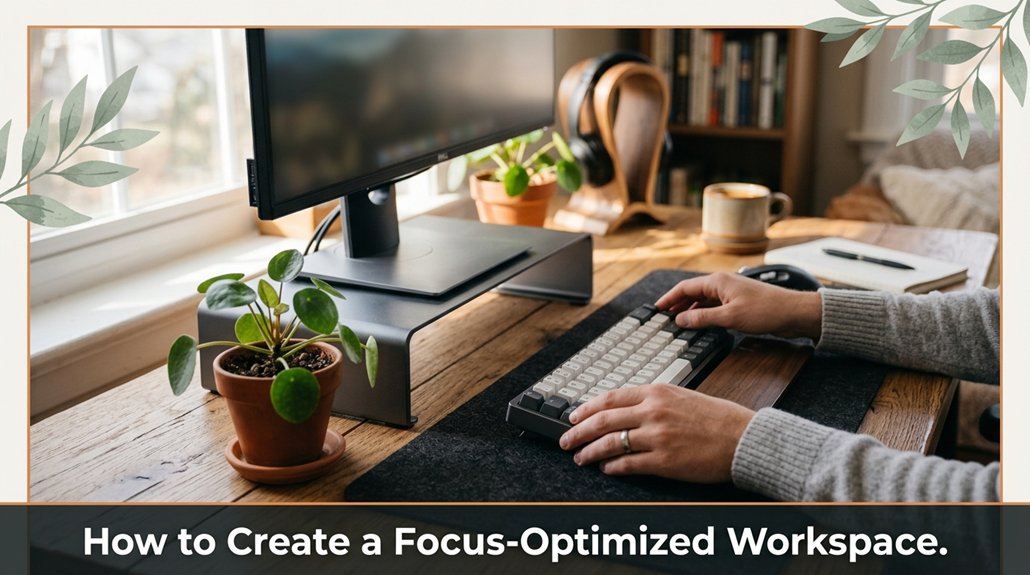
If your workspace isn’t helping you focus, it’s probably time for some small but smart adjustments. Trust me, building a focus-friendly setup isn’t about following a perfect blueprint; it’s about making tweaks you can actually stick with.
Start by positioning your monitor at eye level avoiding neck strain and keep it about 20-30 inches away. Adjust your chair and desk so your elbows form a 90-degree angle, with your feet flat on the floor. Let there be plenty of bright, glare-free light, and control noise noise-canceling headphones are a game-changer.
Keep your space tidy, set clear boundaries, and choose tools to block out distractions. And remember, what works today might need fine-tuning tomorrow regularly reassess your setup to stay on track. Want to unlock even more focus? There’s always more to explore.
This article contains affiliate links. If you purchase through them, I may earn a small commission at no extra cost to you. I only recommend products I genuinely believe in.
Alright, before you start rearranging or investing in new gear, you need to know if your focus workspace setup is actually supporting you. First, sit at your desk and ask: do I feel drained or distracted? If the glare from your monitor or clutter causes constant distraction, that’s a no-go.
Next, check your screen height. Raise the monitor until the top of the screen is at or just below your eye level, because looking slightly down reduces fatigue on the cervical spine. Are you craning your neck or looking straight ahead? Maintaining the correct monitor height keeps your neck relaxed.
Remember, comfort fuels focus, so don’t cheat yourself on this.
Prioritize your comfort it’s the key to maintaining focus and productivity.
How about lighting? Is it bright enough without causing glare? Can you see your desk clearly? If you’re squinting or fiddling with lamps, your setup isn’t doing its job.
For a true focus workspace setup:
Highlighted Fact:
– The monitor should be positioned 20 to 30 inches from your face, with the top at or just below eye level, to reduce eye strain and neck fatigue.
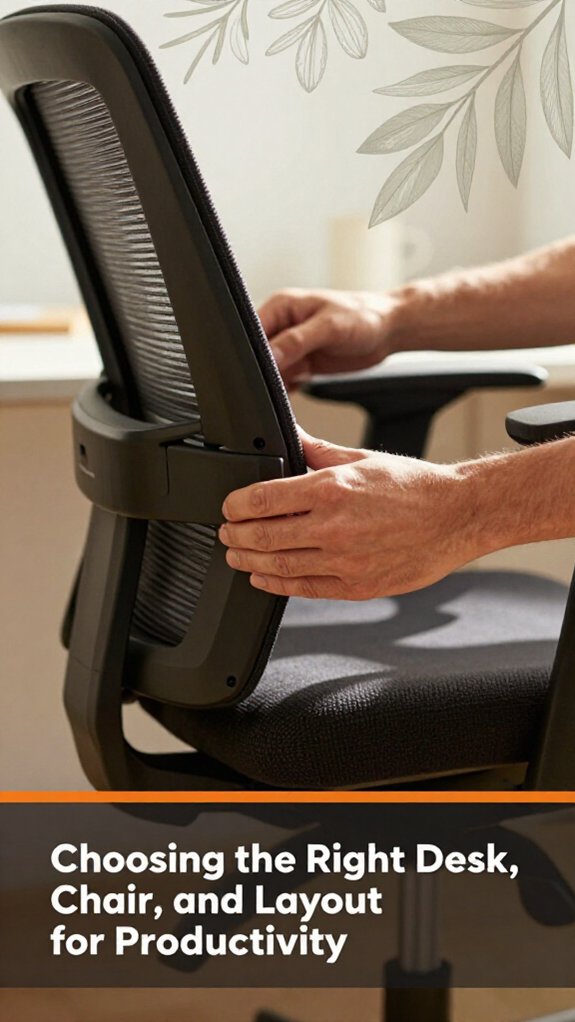
Choosing the right desk, chair, and layout isn’t just about fitting everything on your, ahem, “perfect” Pinterest board it’s about making your workday run smoothly without constantly fighting discomfort or chaos. You’ve probably been 45 minutes into assembling something when you realize step 4 assumed something step 2 never told you.
Start with your chair because it needs to support your back effectively. Test it out by sitting for a few minutes, and adjust the height until your feet are flat on the floor and your knees form a 90-degree angle. Avoid choosing a chair solely based on its appearance or the most advanced features; comfort and proper support are essential for long-term health.
Next, set your desk at elbow height meaning your elbows are bent at roughly 90 degrees when your hands are on the keyboard so your arms aren’t typing in Morse code.
Important Measurement: The standard height for a desk is typically between 28 and 30 inches, but always adjust to match your personal ergonomic needs because everyone’s height and arm length are different.
Now, about the layout: place your most-used items within arm’s reach. Keep frequently used objects such as your mouse, keyboard, and notepad about 16 to 24 inches away from your body. This prevents unnecessary stretching or leaning forward, which can cause strain over time.
Keep everything simple, organized, and accessible this is the secret to killing clutter and boosting focus.
Common Mistake: Placing the monitor too high, which causes neck strain, or too low, leading to slouching. Correct this by adjusting the monitor height until the top of the screen is at your eye level or just below, ensuring a neutral neck position.
Summary of Measurements:
Being aware of proper ergonomic principles can make a significant difference in preventing discomfort during your workday.
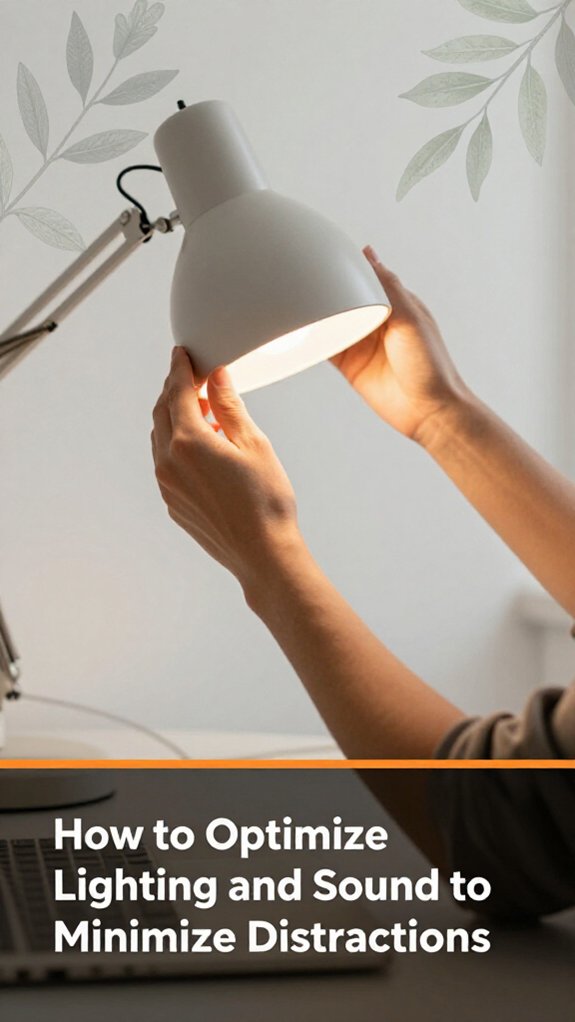
A well-lit workspace is like a well-tuned instrument: you don’t notice it until it’s off-key. Too dim, and your eyes strain; too harsh, and glare distracts you. Aim for soft, natural light think big windows or a daylight LED bulb such as the Philips Hue White Ambience.
Position your monitor perpendicular to windows, so reflections don’t bounce around and cause visual discomfort.
Lighting Tips:
Sound Tips:
Important Measurements & Formulas:
Common Mistakes to Avoid:
Trust me, implementing these precise adjustments will save you from frustration and improve your overall productivity.

In the world of workspaces, clutter is the enemy of focus, because it distracts attention and hampers productivity. You’ve probably wrestled with piles of papers, scattered pens, and empty coffee mugs, thinking, “This can’t be right.” Now’s your chance to fix that.
Highlighted fact:
– Keep items within 20 to 30 inches from your face for optimal ergonomic positioning.
Additionally, incorporating under-desk cable management strategies can further enhance your workspace organization, ensuring cables are neatly routed and out of sight for a truly tidy environment.

After you’ve cleared your clutter and found a designated spot for your pens, notebooks, and cables, it’s time to bring in some decor that actually helps you focus and stay motivated.
Start with a motivational print or quote something that sparks your energy when you look at it. Choose colors that calm or energize you, like soft blues or vibrant yellows; your eyes and brain will thank you. Because these colors influence your mood and alertness, selecting the right palette can enhance productivity.
Choose calming or energizing colors like soft blue or vibrant yellow to boost focus and mood.
Next, add a small plant. Nature reduces stress and breathes life into your space. Look for low-maintenance options like succulents or air plants, which require minimal care. Avoid high-maintenance plants like fiddle leaf figs unless you’re prepared to babysit them.
Incorporate personal touches, such as photos or trinkets, that inspire you but don’t create clutter. Keep decor simple and intentional because a cluttered workspace can distract you and hinder focus.
Key Measurements and Facts:
Common Mistakes:
Distractions can sneak into your workspace faster than you realize, especially when you’re trying to focus. You know that feeling a ping, a sneeze, or a stray thought derails your flow. So, set boundaries:
All right, let’s talk about the tech tools that keep your focus sharp and your management game solid. You need tools that block distractions, organize your day, and keep notifications in check.
Here’s a quick rundown:
| Tool Type | What It Does | Why You Need It | Example Apps |
|---|---|---|---|
| Focus Blockers | Silence or block distracting sites and apps | Stops you from mindlessly drifting, helping maintain focus | Freedom, StayFocusd |
| Task Managers | Organize tasks, set deadlines, track progress | Keeps your goals clear and manageable, ensuring productivity | Todoist, Asana |
| Pomodoro Timers | Break work into focused intervals and break times | Prevents burnout and keeps you energized, because breaks enhance focus | TomatoTimer, Focus Booster |
| Notification Hiders | Mutes or schedules alerts to avoid constant interruptions | Maintains workflow without surprise alerts, because interruptions break concentration | Forest, Offtime |
Specific Measurement for Proper Monitor Positioning:
– Raise the monitor until the top of the screen is at or just below your eye level, approximately 20 to 30 inches from your face, because this position reduces neck strain and promotes better posture.
Additional Tips for Creating an Ergonomic Workspace:
Common Mistakes and How to Avoid Them:
All right, now you’re ready to keep distractions at bay and manage your work like a pro.
See, the thing about adjusting your workspace is that it’s less about perfect measurements and more about making it work for *you*.
Trust me, I’ve spent ages fiddling with chair height only to realize I needed a cushion.
Start by positioning your monitor at eye level because looking slightly down reduces strain on your neck.
Position your monitor at eye level to ease neck strain and keep your posture comfortable.
Raise the monitor until the top of the screen is at or just below eye level.
Now, grab a cushion or a small stand if your chair’s too low because comfort is key to focus.
Look for good airflow, as no one wants a stuffy, stagnant room.
Use a small desk fan or ensure your workspace is well-ventilated.
Keep your essentials within arm’s reach, so you’re not stretching like a circus performer.
To prevent unnecessary strain, position everyday items such as your keyboard, mouse, and notepad within a 14-16 inch range from your body.
This minimizes reaching and maintains ergonomic posture.
And finally, don’t ignore lighting because natural light boosts your mood.
If you’re indoors, use a warm desk lamp with a color temperature of about 2700K to 3000K.
Keep the light source about 16 to 24 inches away from your eyes to prevent glare and eye fatigue.
Getting into the habit of regularly reassessing your workspace is like giving your focus a tune-up, because it makes a real difference. You might think everything’s set, but dust bunnies and bad habits sneak in.
First, check if your setup still fits your workflow. Is that monitor angle still eye-friendly? Are distractions creeping in?
Now, here’s the thing your needs change over time. You might have added new gadgets or shifted your focus. Use this quick chart to guide you:
| Area to Check | Question to Ask |
|---|---|
| Lighting | Is it glare-free and supportive? |
| Organization | Is everything within reach? |
| Comfort | Are your chair and desk still right for your ergonomic needs? |
Set a reminder to reassess your workspace regularly because consistent evaluation ensures sustained focus and productivity.
Extraction of specific measurements:
– Raise your monitor until the top of the screen is at or just below your eye level, roughly 20 to 30 inches from your face.
Common Mistakes and Corrections:
Plants help improve focus by bringing nature into your space, which calms your mind and reduces stress.
You, realistically, just need a low-maintenance plant like a succulent or pothos no green thumb required. Place it where you usually work desk, shelf, or windowsill.
All right, keep it within sight, and your brain gets a little break from screens, plus more oxygen. Honestly, it’s a simple upgrade that pays off.
You’ll want soft, muted colors like blues, greens, or earthy tones. They’re proven to reduce stress and boost concentration unlike bright reds or neon yellows, which can be overstimulating and make you jittery.
All right, pick shades that are easy on the eyes. If you’re unsure, go for a calming wall or desk accent; your brain appreciates the subtlety, and you won’t be pulling your hair out trying to match hues.
Ergonomic accessories seriously boost your productivity no joke. You’ll work longer without aches because your chair and desk are correctly aligned.
A good chair with lumbar support keeps your back happy, while a keyboard tray prevents wrist strain. All right, don’t skimp here; cheap options can make you miserable quick.
Alright, quick tips to keep your focus all day think of it like avoiding a medieval squire’s chaos.
First, break your day into chunks; set clear tasks, and take five-minute breaks every hour.
Second, eliminate distractions mute notifications and tidy your desk.
Third, hydrate and move around; even a quick stretch resets your brain.
Finally, double-check your setup’s ergonomic because if your neck’s killing you, focus won’t stand a chance.
You know how temperature can make or break your focus? Honestly, keep it around 68-72°F.
Too hot, and you’ll start sweating, which is distracting believe me, I’ve seen it in practice.
Too cold, and your fingers freeze while typing.
Find that sweet spot where your body isn’t fighting the environment, and your brain stays put on work, not shivering or sweating.
It’s that simple, but oh so easy to mess up.
So, here’s the thing setting up a focus-friendly workspace isn’t magic, it’s patience and a little trial and error. Fun fact: nearly 75% of people say clutter hampers their focus. If you follow these steps, you’ll dodge the typical setup nightmares and actually enjoy your space. Trust me, a well-organized workspace isn’t just about looking good; it’s your secret weapon against distractions. Once you get it right, work feels a lot less like a chore.