Physical Address
304 North Cardinal St.
Dorchester Center, MA 02124
Physical Address
304 North Cardinal St.
Dorchester Center, MA 02124


If you’re looking to get rid of that old office furniture without piling up waste or draining your wallet, you’re in the right place. Start by inspecting your items check for broken parts and separate them into recyclable materials and items that need special disposal. Look for local recycling centers or donation spots like Goodwill or Habitat for Humanity; they often welcome these donations. Remember to clear out drawers, remove hardware, and give everything a quick wipe-down. From there, you can donate, resell, or choose a responsible recycler junk removal services can be a great option to keep things out of the landfill. Keep reading for all the tips to make this process easier and more eco-friendly.
Alright, let’s get one thing straight from the start: figuring out what office furniture you can recycle isn’t rocket science, but it does require a bit of inspection. First, you need to identify what’s old or damaged enough to dispose of, such as desks, chairs, filing cabinets, or other workplace furnishings. Take a close look at each item, checking for broken parts, excessive wear, or anything that’s just plain outdated.
Next, sort these items into two piles: recyclable and non-recyclable. Remember, not everything’s fair game for recycling. Metal components like steel or aluminum frames, plastic parts such as chair casings or desk accessories, and wooden surfaces like laminate or veneer can often be recycled.
However, upholstery, foam padding, and any fabric-covered components require special attention since they’re usually not recyclable through standard programs.
The key is knowing which components you can easily disassemble and recycle without encountering a complicated or costly process. For example, removable metal legs or plastic panels are straightforward to separate from the main furniture piece.
Keeping these guidelines in mind simplifies your sorting process and ensures that more of your old furniture gets properly recycled, reducing landfill waste and supporting environmental sustainability.

If you’ve ever tried to find a place to recycle old office furniture without ending up in a maze of confusing websites or, worse, just throwing everything in the trash, I understand your frustration. Here’s how you can make the process easier:
Once you’ve identified a few potential options, don’t hesitate to ask the organization about their acceptance policies, required documentation, and whether any fees apply.
Confirming these details beforehand can prevent unnecessary trips and save you time.
Before loading that old office desk into your car or scheduling a donation pickup, you’ll want to give it a proper preparation. First, empty all drawers trust me, you don’t want that one tragic, half-filled paperclip container to fall out mid-transport. Removing loose items prevents clutter and potential damage during movement.
Next, unscrew any hardware or panels that are easily removable. Doing so will make recycling or donation smoother and help prevent damage to the furniture or your vehicle. For example, detach metal fasteners, plastic handles, or glass tabletops when possible.
All right, so you’ve got a giant, unwieldy piece brace yourself. If you disassemble the desk completely, it becomes lighter and easier to carry. Many donation centers prefer flat, portable pieces because they fit better into their storage areas and transport vehicles. Carefully disassemble the furniture into manageable components, like separating the desktop from the legs or removing panels.
Now, wipe down the furniture. Use a damp cloth with mild soap or a gentle cleaning solution to remove dust, coffee stains, or other marks. No one wants to receive a desk that’s dusty or stained, and a quick clean helps preserve the furniture’s condition for its next user.
Although cleaning doesn’t usually take long, it shows respect for your future recipient or reuse facility. Proper preparation ensures a smooth donation or recycling process and helps extend the lifespan of the furniture by removing dirt and debris.
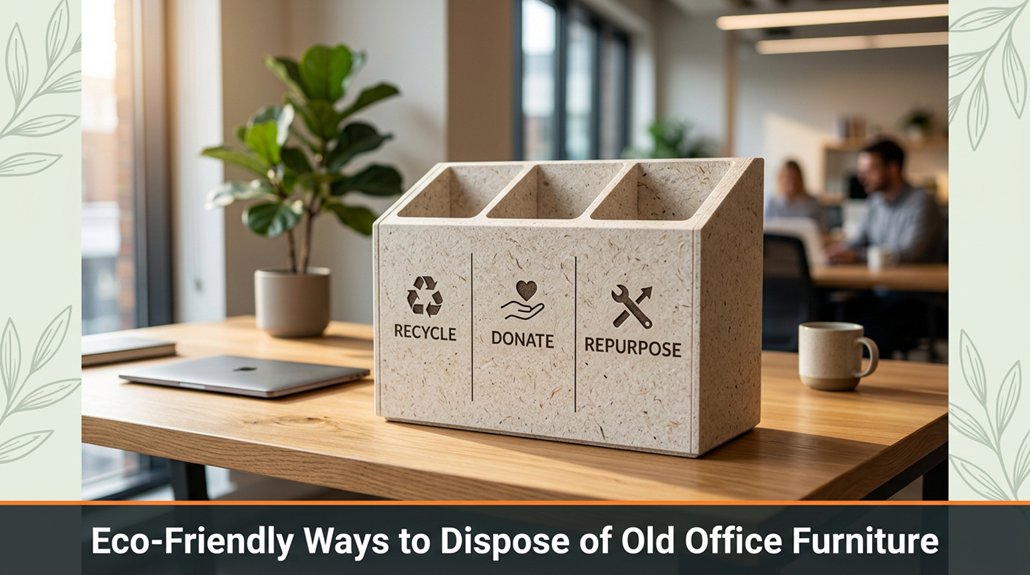
The number one eco-friendly way to dispose of your old office furniture is by giving it a second life. There are more options available than simply tossing it into the trash bin.
1. Sell it locally post listings on platforms like Facebook Marketplace, Craigslist, or local community boards. Buyers appreciate finding affordable, gently used office furniture such as ergonomic chairs, sturdy desks with laminate surfaces, or filing cabinets.
Selling locally not only helps you recoup some costs but also prevents your furniture from ending up in a landfill, reducing environmental impact.
2. Donate it to charities or schools organizations like Habitat for Humanity ReStores, local nonprofits, or community colleges often accept furniture donations. Your donations of items like adjustable-height desks, conference tables, or padded office chairs can directly benefit community members in need of affordable workspace solutions.
Additionally, you might be able to write off the fair market value of the donated furniture on your taxes, providing further incentive to donate.
3. Repurpose or upcycle**** transform your old office furniture into new functional pieces. For example, an outdated metal filing cabinet can become a unique storage unit by adding fresh paint or decorative handles.
Wooden desks might serve as craft stations or planter stands after some DIY modifications. This not only extends the lifespan of your furniture but fosters creativity and reduces waste.
4. Find a responsible recycler** research local e-waste and furniture recycling centers to ensure your items are properly disassembled and recycled. Companies specializing in office furniture recycling typically dismantle items to recover valuable materials** like steel, aluminum, foam, and wood, minimizing environmental harm.
Avoid junk removal services that simply dump furniture in landfills, as this contributes to pollution and resource depletion.
By choosing these eco-friendly disposal methods, you help divert office furniture from landfills, conserve resources, and support sustainable practices.
Make an informed choice and do right by Mother Earth.
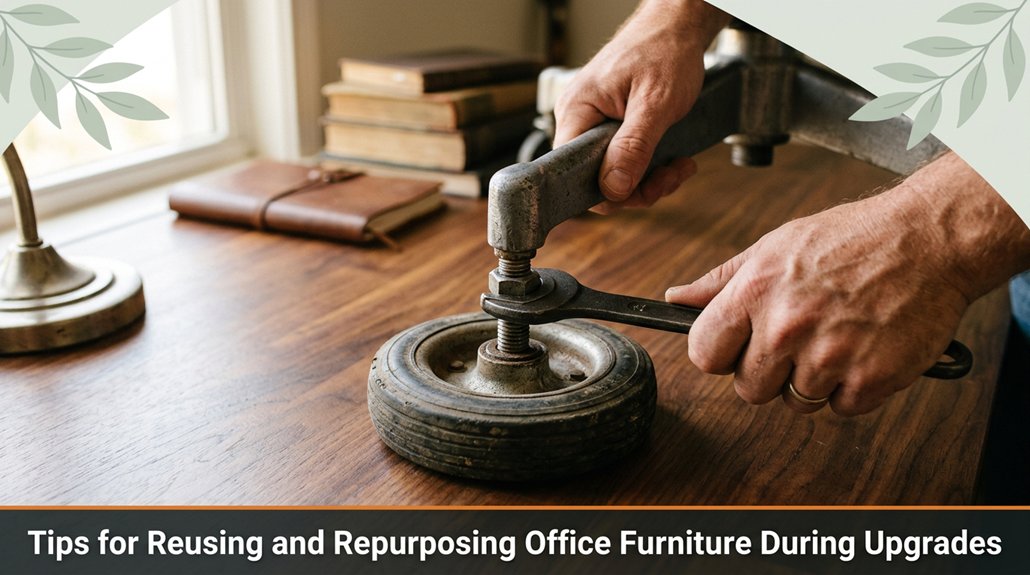
Upgrading your office doesn’t mean you have to toss everything out, even if it’s tempting. You can reuse and repurpose furniture to save money and reduce waste. For starters, think creatively. Got old desks with scratched laminate or veneer surfaces? You can transform them into standing desks by adding adjustable risers or turn them into ergonomic plant stations by placing potted greenery on top seriously.
Chairs with squeaky casters can be refreshed by removing the wheels, sanding the casters lightly, and repainting the frame with durable spray paint; a fresh coat can make them look nearly new.
All right, be honest measure twice before you drill new holes. For example, if you plan to modify a filing cabinet, double-check the dimensions of the new shelves or countertop you intend to add. You might want to convert a 3-drawer lateral filing cabinet measuring 18 inches deep, 36 inches wide, and 65 inches high into a credenza by attaching a 48-inch by 18-inch board on top.
Alternatively, you can repurpose an old metal or wooden filing cabinet into a storage bookshelf by removing the drawers and installing wooden or metal shelves inside, creating versatile open shelving for books, binders, or decorative items.
The key is to see your furniture not just as objects but as opportunities for purpose-driven reuse. Remember, you’re not just saving cash but also avoiding landfill waste, which benefits the environment.
With some creativity and basic DIY skills, your makeshift workspace could end up looking even better than the original setup.
Alright, so recycling or donating that old office furniture is kind of like cleaning out your garage you know you should do it, but actually getting started feels like climbing Mount Everest. The good news? Once you get the hang of sorting, finding centers, and prepping, it all becomes just another task checked off your list. Think of it as turning clutter into a clear conscience and way more space. Who knew doing good could be so straightforward?