Physical Address
304 North Cardinal St.
Dorchester Center, MA 02124
Physical Address
304 North Cardinal St.
Dorchester Center, MA 02124

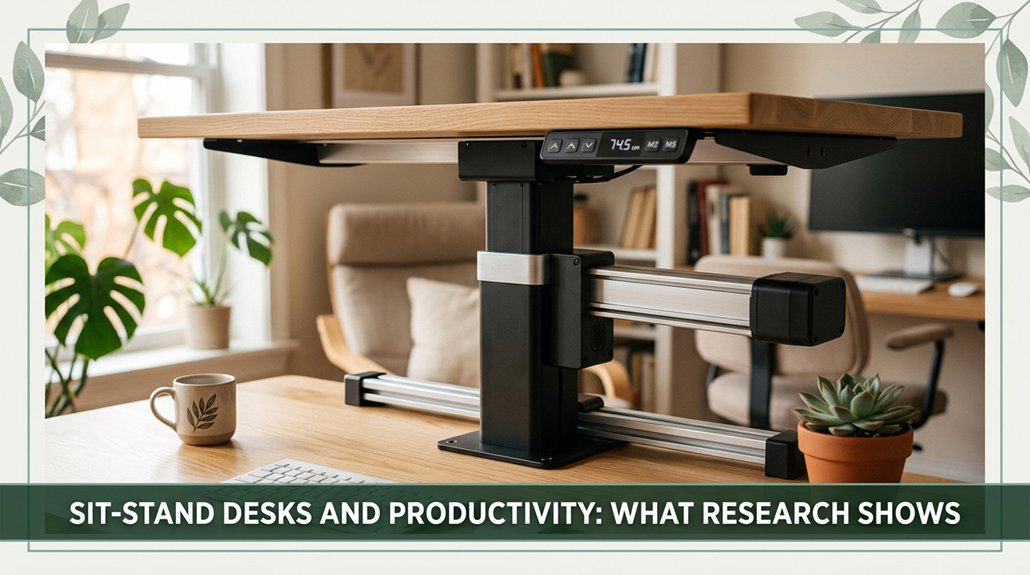
Sitting all day makes you feel sluggish, and your back might be signaling that it’s time for a change. Research shows that switching to sit-stand desks helps you stay more engaged without sacrificing focus your productivity remains steady.
When you alternate positions, you not only reduce discomfort but also improve circulation, keeping your brain sharp. And the best part? Your work performance stays strong, and your body will thank you. Keep reading to see how these desks can seamlessly fit into your workday without adding chaos.
This article contains affiliate links. If you purchase through them, I may earn a small commission at no extra cost to you. I only recommend products I genuinely believe in.
All right, so here’s the thing: when you start using a sit-stand desk, it’s like giving your body a little wake-up call. According to standing desk productivity research, people almost immediately start standing about 73 minutes more per day after just one week. By four weeks, that number jumps to nearly 96 minutes.
You’ll probably notice your sitting time dropping by around 70 to 100 minutes daily, which, honestly, feels good and is quite a significant improvement. Despite this increased movement, productivity metrics such as calls, talk time, or online work don’t really change, according to research on workplace performance. It’s like your brain stays focused and on task, even if your legs are busy.
Excessive sitting time has been linked to an increased risk of cardiovascular disease mortality and morbidity, so standing more can contribute to better overall health. Incorporating ergonomically correct standing practices can maximize health benefits and prevent discomfort during extended standing periods.
Fundamentally, you’re just swapping sitting for standing no sacrifice to your work performance and this offers a healthier way to work. Regularly alternating between sitting and standing can help reduce the risk of musculoskeletal issues like lower back pain and thoracic kyphosis.
You’ve probably felt it your back starting to protest around hour four, your hips feeling tight, and your legs begging for a break. That’s because sitting all day chips away at your health and leaves your body craving movement. According to research on spinal biomechanics, prolonged sitting can contribute to issues like lumbar strain, thoracic kyphosis, and even sciatica. The studies included in the review show that sit-stand desks help. They can cut your sitting time by about an hour or more each day, which adds up over weeks. And, yes, that really matters.
Reducing sitting time is associated with improvements in cholesterol, blood sugar, and blood pressure important factors for preventing long-term health issues, per Mayo Clinic recommendations. Long-term health benefits are still being studied, but early evidence suggests encouraging standing can lead to healthier profiles over time. Incorporating proper ergonomics such as correct desk height and monitor placement can further enhance comfort and reduce strain during standing periods.
Most people report feeling more comfortable, not worse, after switching to a sit-stand workstation. All right, it’s not a magic fix, but combining a sit-stand desk with some movement throughout your workday could be a simple step toward keeping your body happier and healthier.
Standing all day might sound like a good idea at first more movement, fewer hours glued to a chair but the reality is a little more complicated. You’ve probably felt that sudden, sharp lumbar discomfort or that dull ache creeping into your feet after an hour of standing.
Research on spinal biomechanics suggests that objective measurements show 84% of office workers report symptoms within just two hours of standing. Lumbar spines are especially sensitive, with symptoms often hitting within 30 minutes. Additionally, prolonged static standing can lead to increased muscle fatigue and circulatory issues.
Your muscles and joints just aren’t meant to hold a static position that long without breaks, and continuous standing puts strain on the lower back and legs. According to OSHA ergonomic guidelines, alternating positions and taking short breaks is recommended to reduce strain. It’s about balance, not marathon standing sessions. Incorporating movement routines and ergonomic adjustments can further mitigate these risks and promote better overall comfort.
You might assume that standing more would automatically boost your focus and productivity, but surprisingly, research on ergonomic interventions suggests a more nuanced picture. Honestly, you won’t see huge swings in work output, but you might feel sharper and more alert.
Here’s what the studies show:
All right, so it’s not a productivity magic bullet, but standing desks might help you feel more present and attentive allowing you to lean into your work with greater awareness.
Think of that moment when you’ve been sitting for hours and suddenly stand up your legs feel a little wobbly, your lower back might remind you it exists, and you wonder if your posture was even okay. It’s a common experience, and research supports this observation. When you switch to standing, you actually reduce sitting time by about 21%, and you spend around 13% of your workday standing according to ergonomic studies.
Most people report feeling better overall, more energized, and less achy after alternating between sitting and standing. About 43% of studies show a decrease in musculoskeletal discomfort, especially in the lumbar region, thanks to less static loading on the lower back muscles and spinal structures. Proper ergonomic design plays a crucial role in maximizing these health benefits.
Alternating sitting and standing reduces back discomfort and boosts energy and overall well-being.
According to OSHA ergonomic guidelines, reducing static loading in the lumbar, thoracic, and cervical regions aids in decreasing risks of conditions such as sciatica, herniated discs, and thoracic kyphosis.
While standing can be slightly less comfortable initially, many find that the long-term benefits improved mood, reduced fatigue, and decreased lower back pain outweigh the temporary discomfort. It’s important to gradually incorporate standing into your routine and find a comfortable balance to support spinal health.
Your body appreciates the change from prolonged sitting, even if you need to find your balance first. Practicing proper ergonomics with sit-stand desks can help optimize comfort and well-being during your workday.
All right, here’s the good news: switching to a sit-stand desk probably isn’t going to tank your productivity. You can stand more, sit less, and still get work done. Research on ergonomic interventions suggests that your work performance remains steady when using sit-stand desks.
Here’s what I found reassuring:
I understand that standing up and feeling like you’re on your feet all day might seem distracting at first.
But the brain’s neuroplasticity allows for quick adaptation. The initial awkward minutes are normal and temporary.
Standing gradually throughout the day aiming to stand for 15-30 minute intervals can improve comfort and reduce lumbar and thoracic kyphosis.
It’s worth trying, as studies show your performance can remain stable during this transition. The adaptation process typically occurs rapidly, making it a practical change for maintaining productivity without disruption.
All right, you don’t need a PhD to figure out a sit-stand desk, but a little training really helps. You should learn how to adjust the height so your elbows are at about 90°, and your monitor matches eye level otherwise, your neck and shoulders will protest.
A quick intro or reminders boost confidence, keep your posture correct, and prevent you from turning your workspace into a makeshift acrobatics gym.
You can breathe a sigh of relief sit-stand desks aren’t a ticking time bomb for long-term musculoskeletal issues.
I know, at first, it feels like walking a tightrope, but research shows that if you use them properly, with ergonomic support and regular breaks, you’re not setting yourself up for disaster.
The key is moderation and listening to your body, not turning your desk into a standing marathon.
You’ll find that sit-stand desks boost team collaboration and communication, at least a bit. The research shows standing increases face-to-face chat frequency by about 19%, and people feel more engaged and satisfied after just a few weeks.
When you’re standing, you’re more approachable, and your energy can spark better conversations. Plus, with more opportunities to move around, those little chats become more natural, not forced.
Think of adjustable and fixed desks like a Swiss Army knife versus a paperclip one’s versatile, the other limited.
With adjustable desks, you get to move more, which actually reduces sitting time and improves blood flow, health stats, and pain like giving your body a much-needed tune-up.
Fixed desks may look tidy but don’t offer the same ongoing benefits, and you might find yourself wishing for that extra wiggle room.
Look, sit-stand desks aren’t a magic cure for all office work. If you’re doing highly detailed, fine-motor tasks, standing might be a little trickier.
But for stuff like data entry, calls, even creative thinking, they generally help without messing up your flow. The key is listening to your body and adapting you’ll find some days standing feels great, other days, maybe not so much.
It’s all about balance, not a standing-only mandate.
So, here’s the irony you get a sit-stand desk to dodge the monotony, but the truth is, switching back and forth might just keep things interesting enough to forget about your aching neck by the end of the day. And yet, with all the research, I’d bet you’re still wondering if it’s worth the hassle. Honestly, it’s about finding that sweet spot something to keep you moving without turning your desk into a science experiment.