Physical Address
304 North Cardinal St.
Dorchester Center, MA 02124
Physical Address
304 North Cardinal St.
Dorchester Center, MA 02124

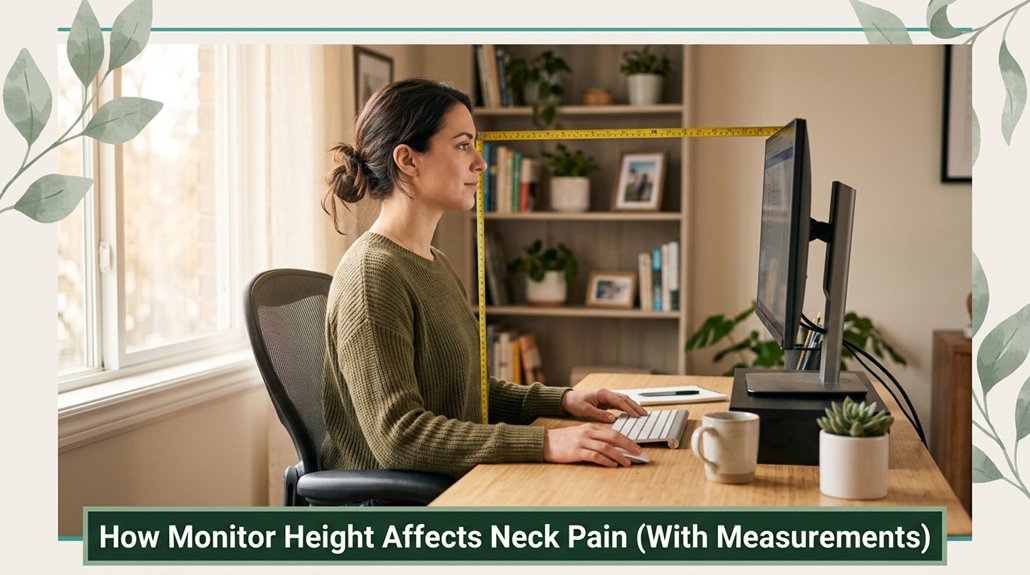
Your neck can start to scream after just a few hours at your desk, right? That ache often comes from your monitor’s height if it’s too low, you’re always looking down, straining those deep cervical muscles and making your neck tired and sore. If it’s too high, your head tilts back, creating tension overload. Keep the top of your screen just below eye level, and you’ll prevent that awkward, aching feeling. Stay with me, and I’ll show you how to set it just right.
This article contains affiliate links. If you purchase through them, I may earn a small commission at no extra cost to you. I only recommend products I genuinely believe in.
You’ve probably felt it you’re deep into work, eyes glued to the screen, and suddenly your neck starts feeling stiff, maybe even a dull ache creeping in. That’s where monitoring your monitor height comes in.
If your screen is too low or too high, your cervical and thoracic vertebrae strain to maintain a neutral position, which isn’t exactly relaxing. Research on spinal biomechanics suggests that non-ergonomic monitor height contributes to work-related upper back and neck pain, especially after hours of staring.
Improper monitor height strains neck and upper back, increasing pain and risking long-term spinal issues.
All right, the thing is, these small adjustments like raising or lowering your monitor can prevent minor discomfort from turning into persistent pain. Ensuring your monitor is at the right eye level measurement minimizes unnecessary head movements and neck stress during prolonged computer use.
When you keep your monitor aligned with your eye level, it encourages better posture, reducing strain on the cervical disks, trapezius muscles, and cervical nerve roots. This helps prevent conditions such as cervical radiculopathy and thoracic kyphosis. Proper monitor height plays a crucial role in maintaining spinal health during long periods of computer use, as it helps ensure the vertebral alignment remains optimal with minimal effort.

Now, let’s get real about how your monitor height impacts your neck angles and the load on your cervical muscles. If your screen sits about 15 to 20 degrees below eye level, you’re primarily maintaining your neck in a low, manageable flexion around 0 to 15 degrees per OSHA ergonomic guidelines. This position keeps your neck muscles from overexerting, reducing strain.
However, when you raise your monitor to eye level or above, you’re tilting your head back or lifting your gaze. Prolonged extension or flexion beyond 20 to 30 degrees ramps up muscle activity and fatigue, which research on spinal biomechanics suggests can lead to discomfort or musculoskeletal issues.
The more you bend or tilt your head, the heavier your head feels like adding pounds to your cervical spine especially since the head weighs approximately 10 to 12 pounds (which increases with forward head posture). This added load stresses the cervical vertebrae and associated musculature.
People who sit more than 6 hours a day should recognize that such positions can cause or worsen thoracic kyphosis and neck strain. Proper monitor positioning can help prevent or alleviate these issues monitor height and promote better spinal health.
In practical terms, ensuring your monitor is positioned so your eyes remain roughly level with the top third of the screen helps minimize neck flexion and extension, reducing muscle load and fatigue throughout your workday.
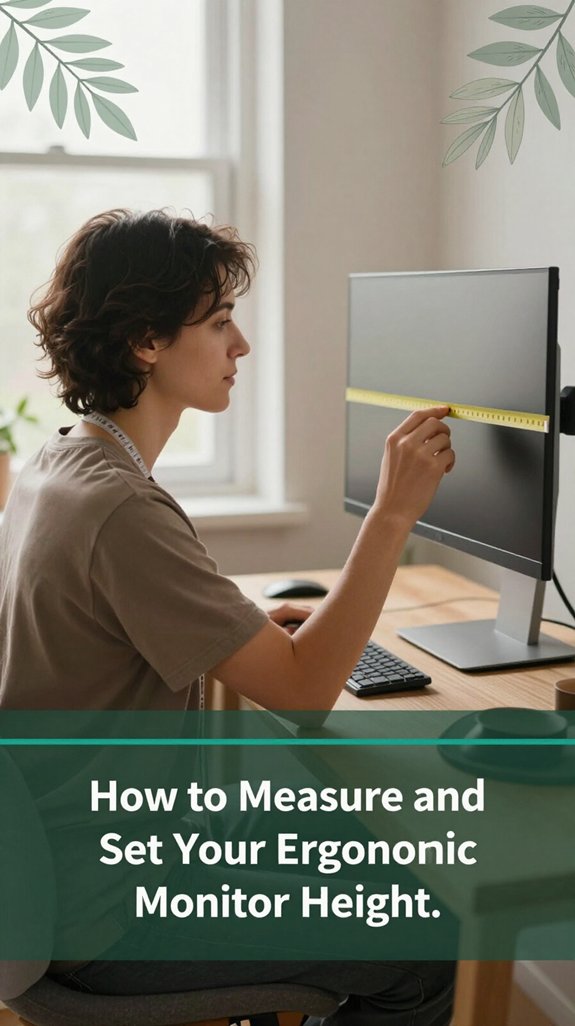
Getting your monitor height just right might seem like a small detail, but trust me, it makes a huge difference especially when you’ve been staring at the screen for hours.
Small monitor adjustments can prevent long-term neck and shoulder fatigue.
According to OSHA ergonomic guidelines, maintaining proper monitor height can prevent neck and shoulder strain. I’m sure you’ve felt that moment where everything’s fine until hour three, then suddenly your neck’s protesting loudly.
Here’s the secret: set your chair first, with your feet flat on the floor and thighs parallel to the ground. Then, adjust your work surface so that it’s just below your elbows when sitting; this position helps maintain a relaxed shoulder posture and reduces upper back tension.
Mark your eye level maybe with a sticky note and align the top of your monitor slightly below that, about 15 to 20 degrees (which means the screen should be slightly below your line of sight, encouraging a comfortable, slightly downward gaze).
Adjust the monitor in small steps, like 1 to 2 centimeters, while relaxing your shoulders to avoid unnecessary tension. A properly positioned monitor can significantly reduce the risk of developing neck and spinal issues over time.
If you stand while working, raise the monitor about 10 to 15 centimeters (roughly 4 to 6 inches) to keep your head aligned over your neck and reduce strain.
Research on spinal biomechanics suggests that proper monitor height can help prevent issues such as thoracic kyphosis, cervical strain, and lower back discomfort.
This simple adjustment can save your neck from slow, creeping fatigue and discomfort.

When your monitor is too low, it’s like asking your neck to do a headstand, comma, except without the upside benefits. You’re actually forcing your cervical muscles into an extended or flexed position, which increases fatigue and strain, according to OSHA ergonomic guidelines.
When you look down at a low screen, your head’s center of mass shifts forward, making your neck muscles work harder to keep you upright. This prolonged flexion can cause your deep cervical flexors and upper trapezius muscles to tire faster, as research on spinal biomechanics suggests, and EMG activity increases with lower screens.
Proper monitor positioning, which minimizes unnecessary muscle activation, is essential for reducing fatigue. Conversely, if your monitor’s height causes you to extend your neck, your posterior cervical muscles stay under sustained tension.
This can lead to neck and upper trapezius discomfort or pain over time. People who sit more than 6 hours a day should especially be mindful, as poor monitor positioning adds to muscle fatigue. Adjusting your monitor to a neutral height about 15 degrees (which means sitting upright with the screen at eye level) can help minimize strain.
Correct ergonomic setup and monitor height are key factors in reducing musculoskeletal issues. If the monitor is too high, causing extension, your posterior neck muscles remain continuously tense, leading to discomfort and potential musculoskeletal issues.
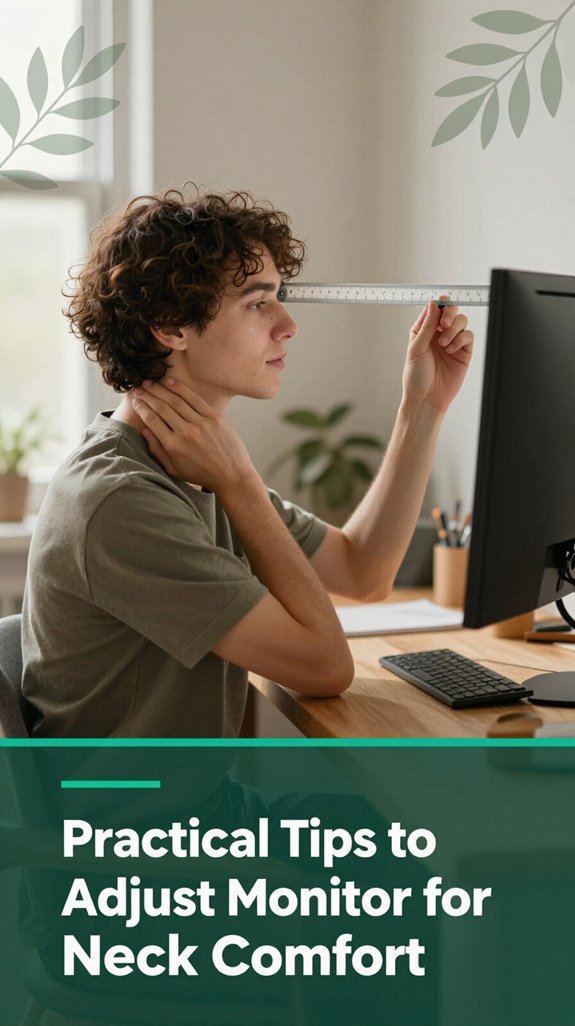
Sure, you’ve probably already figured out that squinting at your screen or craning your neck to see better isn’t doing your posture any favors, but fixing it can feel like a puzzle.
Here’s how you can make it easier:
Here’s a simple way to improve your posture and reduce strain during long hours at your desk.
All right, remember, small adjustments add up.
Keep your neck relaxed, and don’t ignore those little hints your body gives you.
Maintaining proper monitor positioning supports spinal health and overall comfort during prolonged sitting.
All right, let’s talk about some common pitfalls when setting up your monitor height, because honestly, many of us fall into these traps without even realizing it.
You’ve probably heard the rule that the top of your screen should be at eye level, but if you’re using a tall monitor or sitting at a low desk, that can actually put the main content well above your natural gaze line. This positioning forces your neck to tilt backward, which can lead to strain and discomfort over time, according to OSHA ergonomic guidelines.
If your screen sits too low, you may find yourself hunching forward or flexing your neck constantly, leading to issues like thoracic kyphosis or cervical strain. Ensuring proper workspace setup can significantly reduce these risks.
Maintaining proper monitor height is essential; the goal is to align the top third of your display about 2–3 inches below your eye level. This creates an ergonomic neutral positioning that encourages a downward gaze of about 15–20 degrees (which means leaning back slightly, not sitting bolt upright). Proper monitor height reduces unnecessary muscle tension, helping you maintain comfort during extended periods of work or leisure.
This setup minimizes neck strain and helps prevent long-term musculoskeletal problems.
You’ve probably experienced that weird tug in your neck after hours hunched over a laptop or trying to get everything just right on your tiny desk. The good news is that external devices can help reduce strain.
Use monitor stands or arms to elevate your screen so the top bezel sits around eye level. According to OSHA ergonomic guidelines, keeping your monitor at eye level prevents neck flexion and reduces the risk of cervical strain.
Elevate your monitor to eye level to prevent neck strain and improve comfort.
Raise your laptop with a stand or riser, but grab an external keyboard and mouse. Without an external keyboard and mouse, your wrists may experience increased pressure, potentially leading to conditions like carpal tunnel syndrome.
Keyboard trays positioned below the elbows help keep your arms relaxed, which in turn reduces shoulder and upper back strain. Ensuring that your keyboard height allows your forearms to be parallel to the floor (roughly 90 degrees) can alleviate thoracic kyphosis and minimize discomfort.
Opt for ergonomic keyboards, including split or tented designs, to maintain a neutral wrist position. This setup helps prevent repetitive strain injuries and supports proper alignment of the distal radioulnar joint and carpal bones.
All these simple upgrades can effectively save your neck and shoulders from chronic pain so consider implementing them today for better ergonomic comfort. Proper monitor height is essential in preventing neck strain and promoting a healthier ergonomic workspace.
Your monitor distance directly affects neck strain, and honestly, it’s worth paying attention to. When you sit too close, your neck might extend or tilt awkwardly to see everything, causing muscle fatigue think of it like holding a silly pose for too long.
Too far, and you lean forward, putting extra load on your neck and shoulders. Keep it about an arm’s length, and your neck can stay relaxed and happy during those marathon work sessions.
If your monitor’s too high or low, you’ll start noticing signs.
Maybe you’re tilting your head back or craning it down frequently. Perhaps your eyes feel strained or watering like you’re trying to see around a mountain.
If you catch yourself adjusting the monitor or leaning forward constantly, that’s your cue.
All right, your neck is telling you it needs a more neutral, comfortable position time to raise or lower that screen!
Different monitor sizes definitely impact your ideal eye level position.
When your screen’s too tall or short, you’ll unnaturally tilt your head or strain your neck, which can lead to discomfort. Larger monitors, like a 32″, tend to be higher, so you might need to raise your chair or riser. Smaller screens are easier to align eye-level without much fuss.
The key is keeping your gaze slightly downward about 15° to avoid neck fatigue.
You should recheck your monitor setup every 6 to 12 months. Imagine it like tuning a guitar little adjustments keep the sound clear.
Now, if your neck’s been sore or your task changes, do it sooner. All right, your eyes, neck, and back work best when your monitor stays aligned so check regularly, especially when something feels off.
Better to reset early than to suffer later!
You’re probably wondering if standing desks are better for your neck than sitting ones. Honestly, not necessarily. The key is monitor height.
If you don’t adjust it properly, both modes can cause more strain like tilting your head forward or looking too far up. Standing shifts some load, but if your monitor’s too high or low, your neck still bears the brunt.
All right, so here’s the thing: if you keep your monitor at the right height, you’re basically giving your neck a gentle high-five instead of a slap in the face. Trust me, it’s worth messing with those measurements a little tweak here, a slight adjustment there. Your neck will thank you, you’ll feel less like a human question mark, and you might even save yourself from that weird, stubborn crick that keeps showing up.