Physical Address
304 North Cardinal St.
Dorchester Center, MA 02124
Physical Address
304 North Cardinal St.
Dorchester Center, MA 02124

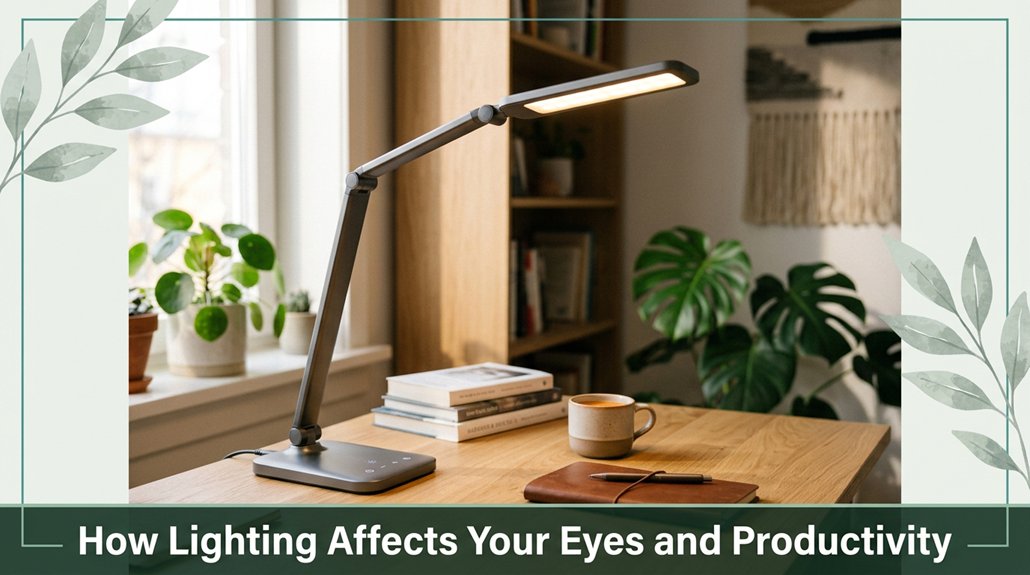
That tired, foggy feeling after staring at screens all day is more common than you think and it’s often thanks to poor lighting. When your workspace isn’t well-lit, your eyes have to work harder, with glare and flicker forcing your ciliary muscles into overdrive, which quickly becomes exhausting.
Bright, steady lighting, especially with the right color temperature, reduces that strain, making it easier for your eyes to focus and helping you stay alert. Want to find out how to keep your eyes comfortable and your productivity high? Keep reading there’s some useful info coming up.
This article contains affiliate links. If you purchase through them, I may earn a small commission at no extra cost to you. I only recommend products I genuinely believe in.
Imagine you’re working at your desk, and the lights are just a little dimmer than they should be; it’s enough to make everything seem a little fuzzy, right? Proper home office lighting and eye health come into play here. When your workspace isn’t well-lit, your eyes strain to catch every detail, which can lead to headaches and fatigue.
Bright, consistent lighting helps you see contrast clearly, reducing eye strain and making tasks smoother. If you’ve ever noticed poor focus after hours of dim lighting, now you know why your eyes work harder, and your attention suffers. Research on visual ergonomics suggests that proper lighting minimizes the effort your ciliary muscles need to focus, enhancing overall clarity.
Good lighting isn’t just about brightness; it’s about creating the right environment where your eyes don’t have to fight to keep up. Adequate lighting levels can improve contrast sensitivity, which is crucial for distinguishing colors and objects, especially in low-light situations. Additionally, choosing flicker-free lights can significantly decrease eye fatigue during prolonged usage.
For example, avoiding harsh glare and maintaining a color temperature between 4000K and 5000K can help reduce visual discomfort. Proper placement of light sources, such as using adjustable desk lamps, ensures even illumination and reduces shadows that may impair visibility.
Glare and photophobia mightn’t be something you constantly think about, but if your eyes start to feel gritty, twitchy, or like they’re constantly overcorrecting, they’re telling you something. When glare ramps up, pupils actually constrict, and your blinking rate drops, according to research on ocular responses to bright light.
Think of your eyes as saying, “Hey, I’m overwhelmed here,” signaling that they’re under strain. Your eyes have to work harder, causing fixation rates to increase and fixation durations to become shorter. This is similar to trying to read a sign flickering in the distance, but you can’t quite focus, which can lead to visual fatigue.
Additionally, the glare can cause your binocular coordination to falter, adding extra strain to the extraocular muscles responsible for eye alignment. Keep in mind that exceeding certain brightness levels such as 2000 cd/m², which is considered very bright can trigger significant discomfort, and the discomfort only worsens with higher brightness.
According to OSHA ergonomic guidelines, high luminance levels can contribute to visual stress and fatigue. Light intensity levels exceeding 2000 cd/m² can significantly exacerbate eye discomfort and fatigue, making it even more important to manage ambient lighting.
Pay attention to these signs of visual stress and take steps to reduce glare, such as adjusting screen brightness, using anti-glare filters, or improving ambient lighting in your environment. Ignoring these signals can lead to more serious eye strain issues over time. Remember, your eyes are telling you to adjust your surroundings before discomfort leads to more significant visual or ergonomic problems.
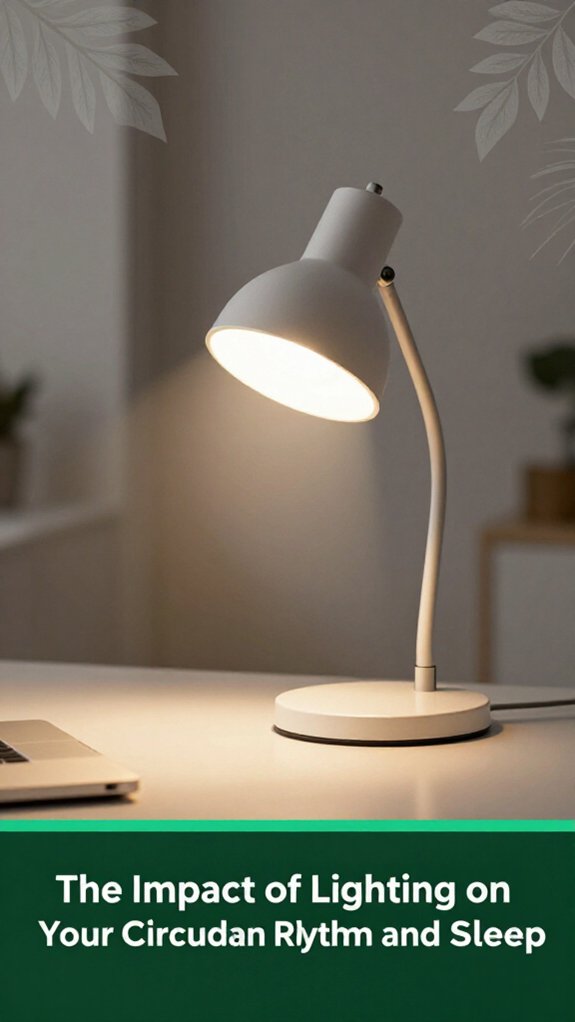
Now, here’s the reality: your body is like that friend who’s perpetually on a schedule, except it’s with your circadian rhythm, the internal clock telling you when to wind down and when to gear up.
Bright evening light, especially between 4 and 10 pm, pushes that clock to delay your melatonin production, making it harder to fall asleep. According to research on circadian rhythms, this effect occurs because bright light at night suppresses melatonin, the hormone responsible for signaling sleep readiness. It’s like your internal DJ keeps hitting the “play later” button, shifting your sleep phase later.
If you expose yourself to high melanopic light before bed, sleep latency increases meaning, you’ll lie there, eyes open, longer than you want. Many sleep experts recommend minimizing exposure to blue light-emitting sources such as smartphones, tablets, and LED lighting in the evening to help your internal clock stay synchronized. Melatonin suppression is directly linked to light exposure in the evening, further emphasizing the importance of managing your lighting habits.
Conversely, dimmer, low-melanopic lighting can help you wind down faster without losing your vision’s clarity. Without this, you risk disrupting your natural sleep-wake cycle, which can lead to chronic sleep difficulties or fatigue.
Basically, the right lighting at the right time keeps your rhythm on track, so you sleep better and feel more energized. Proper evening lighting can support your circadian health and improve overall sleep quality.
All right, let’s be real if you’ve ever stared at a screen for too long, you probably know that eye fatigue is basically unavoidable. However, managing it doesn’t have to be complicated. To reduce glare from harsh fluorescent lights and match room brightness to your screen just like dimming the lights when you’re reading you can help prevent pupil fluctuation and reduce eye strain.
Position your monitor about 35 to 40 inches away from your eyes (this distance helps minimize eye muscle strain) and set the top of the screen slightly below eye level (around 15 to 20 degrees below gaze angle, which encourages a relaxed neck position).
Taking micro-breaks by following the 20-20-20 rule every 20 minutes, looking at something 20 feet away for at least 20 seconds can significantly help relax your ciliary muscles and promote blood flow. Adjusting lighting to minimize glare is crucial, as glare from outdoor or indoor lighting can increase eye strain during prolonged computer use.
Proper monitor positioning and ambient lighting can further enhance visual comfort and prevent long-term issues like computer vision syndrome, especially when the lighting environment is optimized to reduce reflections and contrast problems.
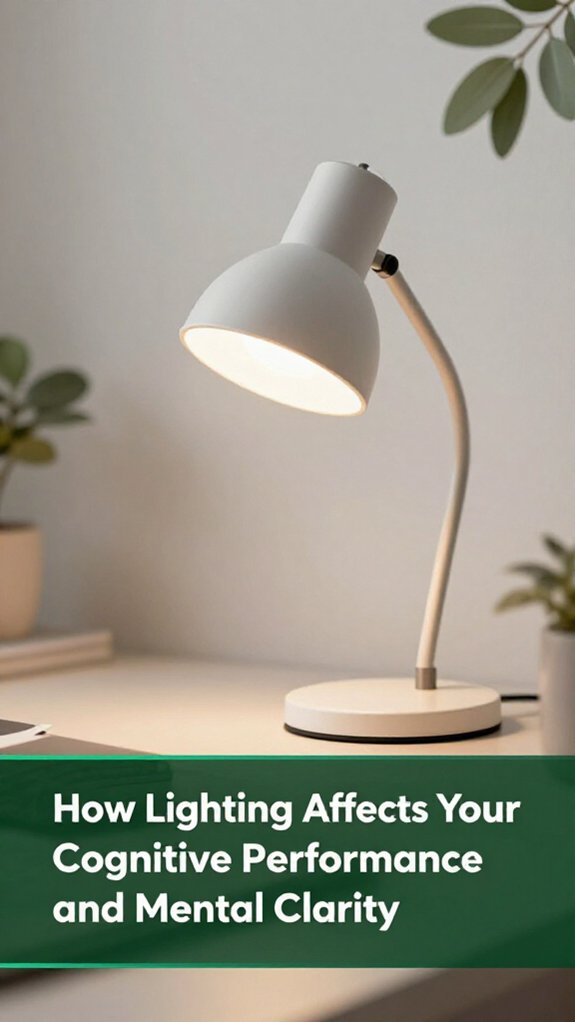
When you’re working at your desk and thinking, “I really need to get this done,” it’s easy to overlook just how much the lighting around you can set the tone for your brain’s sharpness. The right glow, especially with a higher color temperature around 6,500 K, can boost your reaction times and memory recall.
Research shows that light exposure in real-world settings can directly impact cognitive performance. According to OSHA ergonomic guidelines, blue-rich light, which makes you feel alert, actually reduces sleepiness, helping you stay focused without crashing mid-afternoon. Bright light think over 1,000 lx makes you quicker at psychomotor tasks, meaning less mental sluggishness.
All right, add some daylight or access to a good view outside your window, and you’ll notice improved working memory and less eyestrain. Exposure to natural light has been linked to better circadian rhythms, which support overall cognitive function.
Maximizing natural light in your workspace not only improves mood but can also sustain your mental clarity throughout the day. Basically, the better your lighting, the clearer your mind like giving it a shot of espresso, but without the jitters. Good lighting can significantly enhance your mental clarity and efficiency during work tasks.
All right, here’s the thing: good lighting isn’t just about making your workspace look appealing; it’s essential for reducing eyestrain and preventing headaches. According to OSHA ergonomic guidelines, proper lighting can decrease eyestrain and associated discomfort by up to 30%.
Make sure your workspace has between 300 and 500 lux on your work surfaces a level that supports visual clarity without causing glare or reflections. Using layered lighting with adjustable task lamps and ambient fixtures helps achieve this balance.
Opt for matte filters or anti-glare coatings on your screens because they cut reflected light, which can cause muscle strain in the neck and shoulders. Additionally, pay attention to color temperature: cool light (around 5,000–6,500 Kelvin) boosts concentration, while warm light (around 2,700–3,000 Kelvin) helps reduce fatigue and creates a comfortable atmosphere.
These simple lighting adjustments can significantly improve comfort and productivity, so don’t overlook the importance of well-chosen lighting in your work environment.
All right, managing your light levels midday is similar to tuning a musical instrument you want it just right, not too loud or too soft. You’ve probably noticed that excessive brightness causes eye strain, while too little makes it difficult to see details clearly. According to OSHA ergonomic guidelines, aim for ambient lighting between 400 and 600 lux to keep you alert without overwhelming your senses.
Optimal midday lighting balances brightness to reduce eye strain and enhance focus.
Keep your color temperature between 5000 and 6500 K for sharp contrast, which makes it easier to focus on fine details. Use task lighting around 300–500 lux directly on your work surface, such as your keyboard or documents, but avoid glare that can cause discomfort or headaches.
Indirect fixtures are effective because they diffuse light evenly and reduce harsh reflections on screens and surfaces. Additionally, a small amount of bias lighting behind your monitor at about 10 lux can help reduce eye fatigue and improve visual comfort.
This subtle backlight balances the overall luminance around your display, aligning with research on visual ergonomics suggesting that balanced ambient and task lighting reduces eye strain and enhances focus.
Understanding how to create eye-friendly lighting in your workspace isn’t just about flipping a switch; it’s about making intentional adjustments that your eyes will thank you for later.
Think about ambient light aim for around 300-500 lux per research on workplace lighting; too little, and your eyes strain, which can lead to discomfort or headaches, while too much causes glare that disrupts your focus.
Position monitors perpendicular to windows to prevent blinding sunlight, reducing glare and eye fatigue. Keep fixtures clean because dust is a sneaky light assassin, reducing output by approximately 15% according to OSHA ergonomic guidelines.
Use matte finishes on surfaces to diffuse reflected light, minimizing eye strain caused by harsh reflections.
Add adjustable task lamps with narrow beams for precise illumination these help you control direct lighting for detailed work. Maintaining contrast using bright screens with dark text can make reading easier for your eyes.
Additionally, setting the right color temperature, such as warm light after hours, helps your eyes relax and reduces potential strain from blue light exposure.
Simple tweaks like these adequate ambient lighting, mindful monitor positioning, clean fixtures, matte finishes, adjustable task lighting, contrast maintenance, and appropriate color temperature can make a significant difference in making your workspace more eye-friendly without overcomplicating your day.
Sometimes, it feels like just turning on a light is enough to improve your workspace, but here’s the thing: proper lighting does much more than that. It’s about your overall health, not just what you see. Proper lighting reduces glare, preventing eye strain and fatigue, according to OSHA ergonomic guidelines.
Proper lighting safeguards your health by reducing glare, eye strain, and fatigue, beyond just illuminating your workspace.
It also helps you focus better, boosting productivity by up to 50% a significant advantage in any work environment. Good lighting keeps your pupils steady, which can help prevent headaches, dry eyes, and the sensation that your brain is running a marathon.
Here’s why it matters:
All in all, proper lighting is a health investment trust me, your eyes will thank you. Good lighting conditions help maintain optimal ocular health, reduce digital eye strain, and improve overall well-being in your workspace.
Lighting influences your long-term eye health because too much blue light, especially at night, can harm your retina and increase AMD risk, even if casual screen use isn’t outright damaging now.
All right, you might think your eyes are fine, but chronic exposure ramps up retinal stress and messes with hormones that keep your sleep on track.
You’re gonna want warm LEDs around 2700-3000K, not those harsh cool whites.
Ditch overhead fluorescents swap for diffused LED panels or indirect lighting, which cut glare and make your eyes happier.
Use tinted lenses like FL‑41 or polarized shades for screen glare.
Position your workstation so sunlight doesn’t smack you in the face, and keep monitor brightness in check.
Your eyes will thank you, trust me.
All right, you want to keep focusing during those marathon work sessions, right? Bright, uniform lighting with about 500 lx helps sharpen your mind, while higher blue-enriched CCT around 5,000–6,500 K keeps fatigue at bay.
The trick? A mix of soft, glare-free ambient light with targeted task lighting.
And here’s the key: smart, adaptive systems that tweak brightness and color based on how you’re feeling can keep your attention sharp longer.
Lighting plays a surprisingly big role in reducing turnover and absenteeism, you know? When you get plenty of daylight or views of nature, you feel more satisfied and less stressed.
Bright, natural light and good views boost your mood and alertness, making you want to stick around. Plus, modern shades cut glare and eye strain, so you stay healthier and more focused.
It’s all about creating a space where you actually want to be.
Ever wonder why you prefer some lighting over others? It’s all about personal preferences your comfort, your style, your mood.
You might like a warmer glow, or maybe you crave brighter, cooler light to stay sharp. Your needs change with the day, and good workplaces respect that.
Alright, think of lighting like a lighthouse guiding your focus it’s what keeps your eyes on the right path and your mind sharp. If you ignore it, your eyes strain, your sleep rebels, and productivity takes a nosedive, like a ship lost at sea. But when you choose wisely, you create a beacon of comfort that keeps you steady and alert. Trust me, your eyes and your brain will thank you at the end of the day.