Physical Address
304 North Cardinal St.
Dorchester Center, MA 02124
Physical Address
304 North Cardinal St.
Dorchester Center, MA 02124

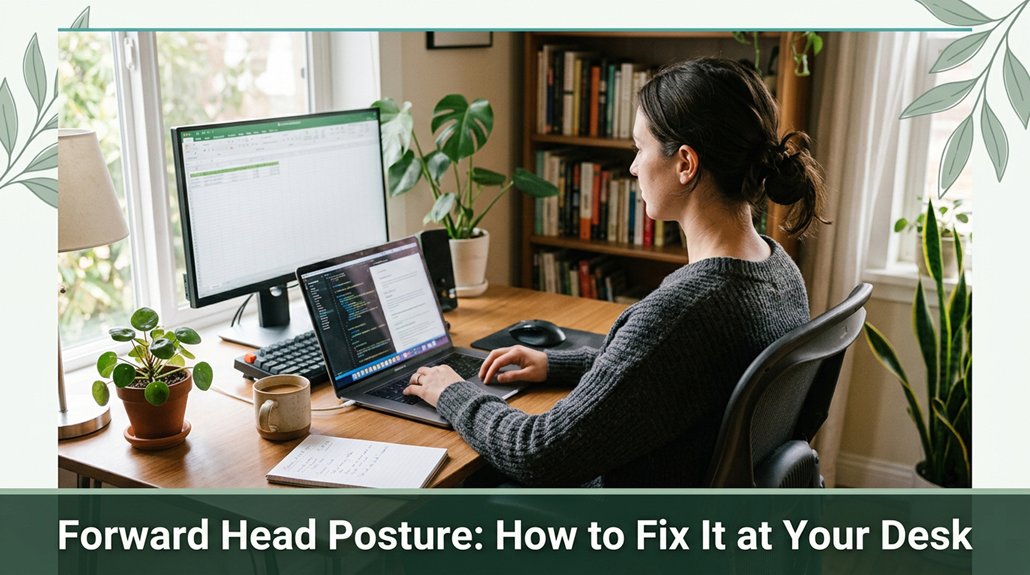
Look, if your neck starts to creep forward after a few hours at your desk, I get it that head tilt feels almost involuntary. Start by adjusting your monitor so it’s right at eye level, about 20–30 inches away, and sit with your hips level, knees at 90 degrees. Remember to take mini breaks, do neck stretches, and keep checking your posture ear, shoulder, hip in a straight line. Want to know how tiny tweaks can make the biggest difference? Keep going, and you’ll learn more tips to keep that head where it belongs.
This article contains affiliate links. If you purchase through them, I may earn a small commission at no extra cost to you. I only recommend products I genuinely believe in.
You’ve probably felt it even if you didn’t have a name for it at the time. That nagging ache in your neck after hours of working at your desk, especially if you’re in front of a screen all day. According to OSHA ergonomic guidelines, this discomfort is often associated with forward head posture.
Forward head posture begins when you lean your head forward, which is common among people who sit more than 6 hours a day, often from poor ergonomic setups or habits. This position increases strain on your cervical muscles and the ligaments supporting your cervical spine.
FHP is defined as holding the head forward over the cervical spine. Over time, this can lead to a loss of the normal cervical lordotic curve, making your head feel heavier and shifting your spinal balance. Proper monitor height can significantly reduce this strain by keeping your head aligned correctly.
Research on spinal biomechanics suggests that this postural change can cause the head to move forward by more than 15 degrees (which means leaning the head forward relative to your shoulders). This misalignment places additional stress on cervical discs and musculature, increasing the risk of headaches, neck stiffness, and even degenerative conditions such as cervical disc herniation or thoracic kyphosis.
If you recognize these symptoms, improving your ergonomic setup like adjusting your monitor height or using lumbar and cervical supports can help mitigate the strain.
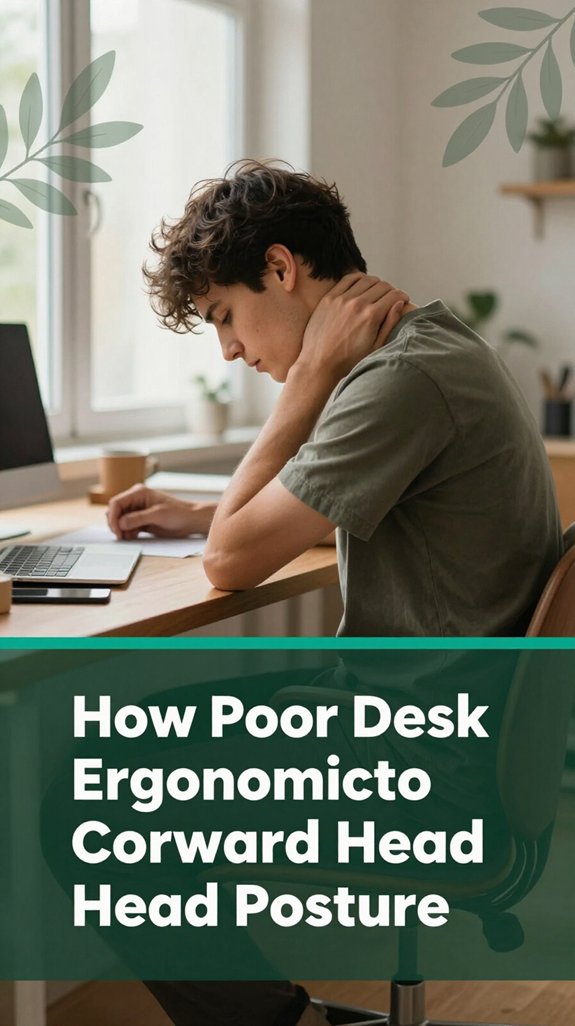
All right, let’s talk about how your desk might be secretly sabotaging your posture without you even realizing it. Maybe your monitor is too低, making you tilt your head down, or your chair backrest is just a little off, encouraging slouching and rounded shoulders. According to OSHA ergonomic guidelines, the ideal monitor height is at eye level or slightly below to prevent neck strain.
These tiny adjustments put your cervical and thoracic spine into awkward positions like shifting your head forward to see clearly which over time, can lead to forward head posture. Incorrect monitor height contributes to poor neck alignment, increasing the risk of postural issues. Research on spinal biomechanics suggests that tilting the head forward increases stress on the cervical vertebrae and strains the upper trapezius muscles, potentially causing muscle fatigue and discomfort. Think of your neck as a stack of vertebral bones: tilt one forward, and everything else follows.
If your workspace isn’t supporting your back and shoulders properly, your muscles fatigue, and your head creeps forward to keep looking at your screen. Maintaining proper ergonomic workspace, including monitor and chair adjustments, can help preserve your posture and prevent these issues.
This process is like a slow, sneaky slide into poor posture, all caused by an inadequate desk setup. Maintaining proper monitor height, chair alignment, and lumbar support can help prevent the development of forward head posture and its associated musculoskeletal issues.

Now that you understand how your desk setup might be quietly pulling your head forward all day, let’s discuss some quick, simple adjustments to help realign your posture without a complete overhaul.
First, adjust your chair so your hips are even with or slightly higher than your knees. According to OSHA ergonomic guidelines, this position helps keep your pelvis in a neutral alignment, which reduces tension in the lumbar and cervical regions and minimizes neck strain. Ensuring your pelvis is in a neutral position supports proper spinal curves and promotes healthier head and neck alignment.
Adjust your chair so hips are level with or slightly above knees for optimal spinal and neck alignment.
Next, pull your chair close so your abdomen is near the edge of the desk less reaching means less leaning forward and minimizes the habit of craning your neck. This position allows your shoulders to stay relaxed and keeps your head aligned over your thoracic spine, which research on spinal biomechanics suggests can reduce neck discomfort over time.
Also, position your monitor at or slightly below eye level and about an arm’s length away this keeps your gaze horizontal (approximately 15 to 20 degrees below eye level) and prevents the habit of craning forward, which can contribute to thoracic kyphosis and cervical strain. Maintaining the monitor at this height encourages upright head posture, crucial for preventing forward head posture and associated issues like tension headaches. Incorporating proper ergonomic principles in your workspace setup can further enhance posture and comfort.
Finally, use a lumbar support or headrest to promote proper spinal alignment, helping your lumbar lordosis and cervical spine stay in their natural curves. This support maintains your head in a neutral position, avoiding forward displacement, and stabilizes the cervical and thoracic regions, reducing the risk of strain and discomfort.

Figuring out whether your posture is correct can feel almost impossible when you’re working at your desk for hours. According to OSHA ergonomic guidelines, maintaining proper alignment reduces the risk of musculoskeletal discomfort and long-term issues. Trust me, I’ve been there staring at the screen, then glancing in the mirror or a photo, wondering if your head is still aligned or if you’re gradually developing a forward head posture, which research on spinal biomechanics suggests can lead to neck pain and upper thoracic kyphosis.
Here’s a quick trick: do a wall test. Stand with your back against a wall, ensuring your heels are touching it. If your head is too far from the wall, you probably have forward head posture, which often exceeds 15 degrees of anterior cervical tilt (a common indicator of poor head alignment). When sitting at your desk, paying attention to your posture alignment can help prevent this condition from worsening over time.
During the day, take brief micro-visual checks: Are your ears aligned over your shoulders? Is your gaze level with the top of your screen? If not, gently straighten your head and neck to restore neutral cervical alignment. Regularly positioning your monitor so that the top is at or slightly below eye level can help encourage this. Maintaining awareness of spinal biomechanics and how it impacts your overall posture can further support your efforts to prevent postural problems.
Additionally, every 20 minutes, look at an object approximately 20 feet away for 20 seconds. This simple eye and neck movement per Mayo Clinic recommendations serves as a reminder to reset your head and neck position, helping to prevent prolonged forward head posture and eye strain.
Incorporating these small checks into your routine can make a significant difference in maintaining spinal health and reducing discomfort throughout your workday.

You know that feeling when your neck and shoulders start to tighten up after hours at your desk, and suddenly every movement feels a little more like work than it should? That’s your muscles yelling at you, especially those tiny suboccipital muscles and larger cervical neck flexors.
Tight neck and shoulder muscles from long hours at your desk can turn simple moves into a workout.
According to research on spinal biomechanics, these muscles tend to shorten from prolonged slouching and staring at screens, which can lead to discomfort and postural issues.
All right, here’s what you can do:
Practicing these stretches regularly can relax tension in neck and shoulder muscles, improve alignment, and help you feel less like a stiff robot.
Incorporating these movements into your daily routine supports better posture and reduces discomfort caused by prolonged sitting or screen time.
Getting your head to stay nicely balanced over your shoulders while sitting at a desk can feel like trying to keep a bowling ball perched without a stand almost impossible after a while, according to OSHA ergonomic guidelines.
All right, here’s the thing you’ve probably noticed your neck feels perfectly fine until about hour three, then suddenly it’s complaining. That’s because your deep neck muscles, specifically the cervical flexors and extensors, are getting lazy, letting your head drift forward and pulling on the tiny shoulder stabilizers like the trapezius and levator scapulae.
Research on spinal biomechanics suggests these weak deep flexors are crucial for maintaining proper head and neck alignment. Now, these strengthening exercises change that. You can do seated chin tucks, gently gliding your head backward to create a “double chin,” which activates and awakens those weak deep cervical flexors. This exercise helps counteract the forward head posture that develops from prolonged sitting.
Then, there’s the isometric neck retraction, where you press your head back into your chair for a few seconds. This activity strengthens the cervical retractors, such as the deep cervical muscles, promoting better head positioning. Adding a band-resisted chin tuck amplifies its effectiveness by providing external resistance, which helps build real strength where it counts especially in muscles that support a neutral cervical spine position. Regularly incorporating these exercises can also improve ergonomic muscle engagement during your workday.
Engaging these muscles regularly can reduce the strain on overworked shoulder and upper back muscles, decreasing discomfort and potential musculoskeletal issues like cervicogenic headaches or early signs of thoracic kyphosis. Consistent practice of these exercises can reinforce proper postural habits over time, making it easier to maintain correct alignment even during long work sessions.
It turns out, a big part of preventing that stubborn forward head posture isn’t just about doing exercises per Mayo Clinic recommendations, it’s about designing your workspace smartly so your body can stay in alignment without fighting gravity all day. You want your monitor at or slightly below eye level, about an arm’s length away, so you’re not craning or leaning forward. According to OSHA ergonomic guidelines, this position helps keep your neck in a neutral, relaxed position, reducing strain on the cervical and upper thoracic spinal regions.
Keep your chair height so your feet are flat on the floor with your knees at a 90-degree angle this encourages proper alignment of the lumbar and sacral regions and ensure your lower back is supported, effectively hugging your lumbar spine. Proper lumbar support promotes healthy spinal curvature and prevents excessive thoracic kyphosis.
Also, position your keyboard and mouse close to your body, with elbows around 90 degrees (which helps maintain optimal ergonomic positioning for your upper limb joints), to avoid reaching and shrugging, which can lead to shoulder and neck tension. According to research on spinal biomechanics, keeping these tools within easy reach reduces the risk of repetitive strain injuries like carpal tunnel syndrome and promotes better posture.
Organize your desk so you’re working within easy reach no more stretching for files or phone calls. This reduces unnecessary neck and upper limb movements that might contribute to neck and shoulder discomfort. Additionally, incorporating an ergonomic workspace can further enhance your posture and reduce fatigue throughout the day.
Keeping your muscles loose and your joints moving throughout the day might just be the easiest way to keep that forward head posture at bay. Think of it as giving your neck and shoulders a little daily wake-up call. Short breaks every 25–30 minutes, similar to the Pomodoro method, help prevent stiffness and reduce the risk of developing myofascial tension, according to research on spinal biomechanics.
All right, stand up, stretch, walk for a few minutes, or do some shoulder rolls. It’s about consistency. Use this simple table as your cheat sheet:
| Habit | How it helps |
|---|---|
| Neck gentle range of motion (ROM) | Maintains cervical spine mobility and reduces muscular tension, per Mayo Clinic recommendations |
| Pectoral stretches | Reverses rounded shoulders and thoracic kyphosis, helping straighten posture |
| Shoulder blade exercises | Strengthens muscles between the shoulder blades, supporting proper head alignment |
| Frequent microbreaks | Prevents postural fatigue, keeps muscles and joints healthy, and reduces the risk of discomfort |
Basically, stay moving, stretch, and keep checking in with your body. Consistently implementing these habits helps maintain a healthy cervical and thoracic spine, preventing forward head and rounded shoulder postures. Additionally, spinal alignment plays a crucial role in preventing muscle strain and improving overall posture stability.
You’ve probably caught yourself leaning too close to your screen without even realizing it, and suddenly your neck starts to ache or your head feels heavier than it should. It’s common to overlook these tiny mistakes that gradually build up over time, potentially leading to discomfort or musculoskeletal issues.
According to OSHA ergonomic guidelines, such habits can contribute to conditions like cervical strain or cervicalgia if left unaddressed. Prolonged poor posture can also cause muscle fatigue and joint stress, further exacerbating discomfort. Recognizing and correcting these habits early can prevent long-term issues and promote better desk posture.
Ignoring ergonomic habits can lead to neck strain and discomfort over time.
Here are some signs to watch for:
Now that you’re aware of these signs, it’s important to proactively monitor your posture.
Adjust your monitor height so that the top of the screen is roughly at eye level about 20 to 30 inches (which encourages a neutral neck position).
Sit back fully in your chair with lumbar, thoracic, and cervical supports to maintain the natural spinal curves. Additionally, be mindful of uneven shoulders or leaning tendencies; correcting these small habits can prevent the development of chronic musculoskeletal problems.
Ever notice how just a few minutes of movement can make your neck and shoulders feel like they’ve been given a little reset? According to OSHA ergonomic guidelines, this simple action can alleviate muscle fatigue and tension. You’ve probably felt that tightness creeping in after sitting too long say, for more than 6 hours while focused on your screen, leading to discomfort in the cervical, thoracic, and lumbar regions.
Here’s the thing: research on spinal biomechanics suggests that taking short, frequent breaks like 20 seconds to five minutes every 20-30 minutes can actually help. It’s not about doing a full-on workout; it’s about shifting your posture and engaging in simple activities such as standing, walking, or stretching just enough to get the blood flowing.
A recent study found that active breaks significantly reduce the risk of developing musculoskeletal pain among office workers. Movement helps clear out muscle fatigue and tightness in the neck, shoulders, and upper back, stopping that stubborn head-forward position before it becomes a larger problem. Incorporating micro-movements into your routine encourages better spinal health and prevents the formation of bad postural habits.
Practically speaking, incorporating micro-movements throughout your workday can prevent the development of chronic conditions like thoracic kyphosis or cervical strain. Many ergonomists recommend these small, consistent actions to maintain proper spinal alignment and reduce the risk of repetitive strain injuries.
When should you seek professional help for persistent forward head posture? If your neck pain persists longer than 4–6 weeks despite practicing ergonomic adjustments and regular stretching, it may be time to see a specialist, according to Mayo Clinic recommendations. This prolonged discomfort, despite your efforts, suggests that underlying issues might exist requiring expert intervention.
Additionally, if you notice increased headaches, numbness, or weakness in your arms symptoms that aren’t typical of normal desk fatigue consult a healthcare professional. These signs can indicate nerve compression or other serious conditions that need prompt diagnosis and treatment.
All right, you should see a healthcare provider if:
Listen to your body. Sometimes, it’s telling you to get checked out before issues escalate into more serious health problems. Addressing these symptoms early can prevent chronic pain and functional impairments.
No, ergonomic adjustments alone won’t fully fix forward head posture, but they’re a solid start.
You see, your muscles and joints are often stuck in habits that work against these adjustments think tight chest muscles or weak neck stabilizers.
You’ll usually start seeing improvement in FHP within 4–8 weeks if you’re consistently doing chin tucks, stretching, and making ergonomic tweaks.
It’s like tweaking a stubborn light switch give it a few flips regularly, and you notice the flicker smoothing out.
But don’t expect a complete overhaul overnight. It’s a process sometimes faster, sometimes slower depending on severity and your commitment.
Still, every microstep gets you closer.
You’ll know your posture’s getting worse if you notice your ears sticking farther in front of your shoulders, or if your shoulders start rounding forward more than they used to.
Maybe your neck feels tighter or you’re getting these weird nagging headaches at the base of your skull.
All right, and if you’re feeling more tired, wobbly, or like your breathing’s shallow, those are pretty clear signs it’s time to recheck how you’re sitting.
You’re more likely to notice forward head posture in teens and young adults because of all the time they spend staring at screens, especially smartphones and computers.
As you get older, repetitive habits and work environments can make it worse think prolonged sitting or poor ergonomics.
Basically, your neck muscles adapt to these habits, pulling your head forward.
Yes, repetitive device use can cause long-term neck injury. You’ve probably felt that moment where you’re hunched over your phone, and your neck starts aching somewhere around hour two.
This constant forward flexion puts loads on your cervical discs and muscles, speeding up wear and tear. Over time, this can lead to degenerative changes, herniation, or chronic pain.
All right, so here’s the thing: fixing forward head posture isn’t about drastic overhaul but small, smart tweaks. Practice good habits, stretch, move, and keep your desk ergonomically friendly. Remember, your posture is like a garden needs regular tending. And if it stubbornly sticks around, don’t hesitate to seek help. After all, “an ounce of prevention is worth a pound of cure” so go easy on your neck, and it’ll thank you with fewer aches!