Physical Address
304 North Cardinal St.
Dorchester Center, MA 02124
Physical Address
304 North Cardinal St.
Dorchester Center, MA 02124

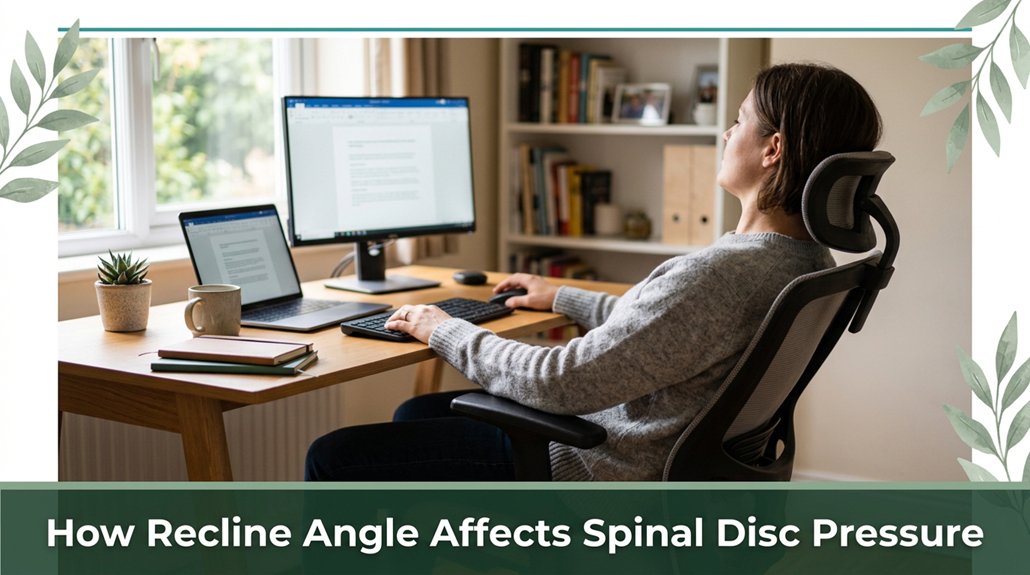
If your lower back is talking to you by 3pm, you already know that sitting in the wrong position can be uncomfortable. When you sit upright with a flat back, your lumbar discs face more pressure because your posture isn’t giving them much relief. Leaning back to around 110° slightly opens your hips and reduces strain, while deeper reclines of 120–135° decompress your discs even more, giving your spine a break. But be careful: staying in a deep recline for hours can weaken your muscles. If you keep turning that angle and moving around, your spine will thank you so stick around for tips that keep your back happy!
This article contains affiliate links. If you purchase through them, I may earn a small commission at no extra cost to you. I only recommend products I genuinely believe in.
Alright, here’s the thing: when you’re sitting down, your chair recline angle really matters more than you might think especially for your spinal health. You probably know that slumping forward or leaning back feels okay at first, but it’s actually disrupting the health of your lumbar and thoracic discs.
According to research on spinal biomechanics, a slight recline, about 100–110° (which allows the hips to open slightly and reduces strain), helps reduce disc pressure compared to sitting upright at 90°. Think of it like giving your spine a gentle break by shifting some weight to the backrest, which reduces constant compression on the intervertebral discs that cushion your vertebrae.
A recline of 100–110° gently relieves pressure on your spinal discs during long sits.
The magic number everyone keeps talking about is around 135° (which means leaning back slightly, not sitting bolt upright). This position seems to give your lumbar and thoracic discs the best chance to decompress and maintain healthy alignment during long sitting periods, especially for people who sit more than 6 hours a day.
When you recline to this angle, you decrease pressure on the discs, potentially reducing the risk of disc herniation and lower back pain. Maintaining proper ergonomic seating posture is essential for long-term spinal health and can even help prevent chronic discomfort.
So, next time you sit for extended periods, try adjusting your chair to that deeper recline. You might feel a lot better because this position supports spinal health and can decrease discomfort associated with sustained sitting.
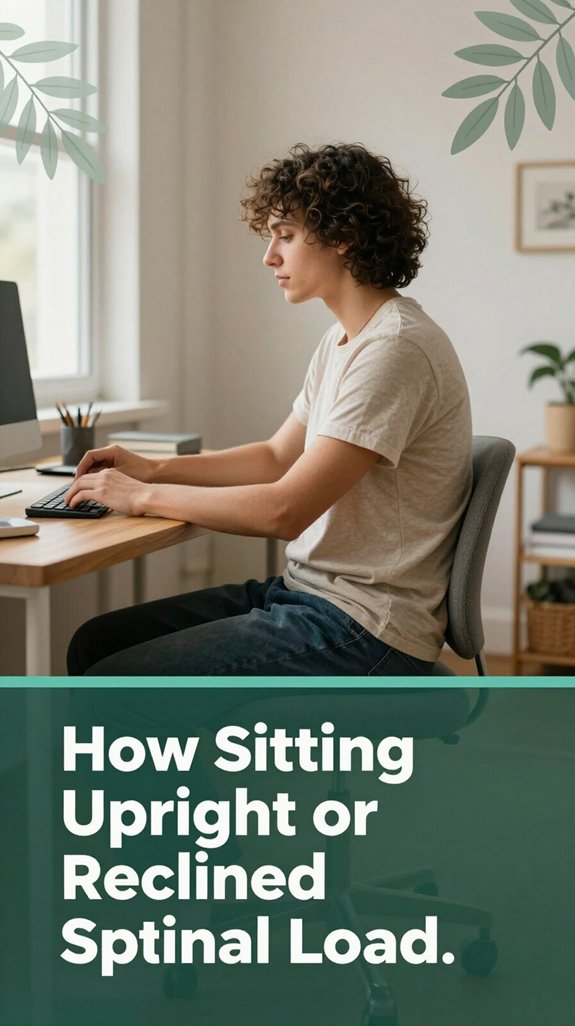
Now, here’s the thing: sitting upright and reclined place your spine under very different kinds of stress, almost like they’re competing for which one messes with your intervertebral discs more. You probably already noticed that during long hours at your desk, your lower back feels tight or tired. According to OSHA ergonomic guidelines, here’s what’s happening:
In short, adjusting your sitting position either sitting upright with lumbar support or reclined with a supportive chair can help reduce spinal load and prevent discomfort during long periods of sitting.
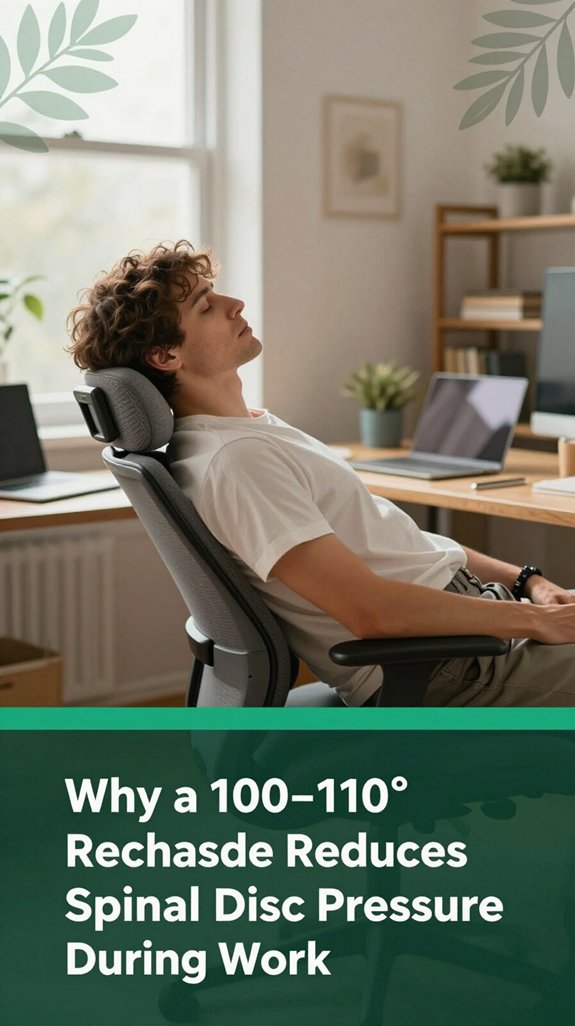
Think of your spine like a delicate spring, and the way you sit during your workday acts like someone stubbornly squeezing or relaxing that spring. When you recline between 100 and 110 degrees (which means leaning back slightly, not sitting bolt upright), you’re giving your lumbar discs a break, according to OSHA ergonomic guidelines.
Reclining 100–110° eases lumbar discs, reducing strain and promoting healthier spinal biomechanics during work.
Studies show that at this angle, pressure on your lumbar discs is only about 105 to 115 percent of the pressure experienced when standing much lower than when slouching at 90 degrees or bending at 80 degrees. This position helps preserve the natural curves of your lumbar, thoracic, and sacral regions, sharing load more evenly across the spinal column. Biomechanical research indicates that maintaining an optimal recline angle can significantly reduce the risk of disc degeneration. Proper spinal alignment is a cornerstone of effective office ergonomics, helping ensure both comfort and safety during long work hours.
A slight recline shifts weight onto your chair backrest, so your core and back muscles don’t have to bear as much of the load. By reducing muscle strain and spinal compression, you lower your risk of developing issues like sciatica or lumbar disc herniation.
This posture encourages better spinal biomechanics, which research on spinal biomechanics suggests can prevent long-term lower back problems.

The pros and cons of deep recline, like sitting at a 120–135° angle, come down to your body’s natural response to how you’re supported think of it as your spine’s little escape hatch.
Ultimately, it’s about finding that support-relief balance.
Maintain enough support to prevent muscle fatigue but avoid prolonged relaxation that might weaken your postural muscles or lead to ligament laxity.

When you move around and adjust your recline regularly, you’re doing your spine a solid favor without even realizing it. Think of it as giving your back a tiny break shifting position redistributes pressure from your lumbar discs to different parts of your spine.
According to OSHA ergonomic guidelines, this prevents any one spot from taking too much of the load. This is especially important since staying in the same posture makes pressure build up and can cause discomfort or even microdamage over time. A healthy spine benefits from this variability, as it helps maintain optimal function and reduces the risk of long-term issues. When you lean back or sit upright intermittently, you’re helping your discs receive the nutrients they need through pressure changes that promote fluid exchange.
It’s like giving your soft tissues a micro-reset, turning a boring sitting stretch into a mini spa day for your spine. Regular positional adjustments can reduce the risk of developing conditions like sciatica or thoracic kyphosis caused by prolonged poor posture. Incorporating movement and recline adjustments into your sitting routine can also stimulate circulation and promote overall spinal health, further supporting your comfort and well-being. Overall, incorporating movement and recline adjustments into your sitting routine supports spinal health and comfort.
If you’ve ever leaned forward at your desk, maybe to reach for your phone or grab that pen, you’ve probably felt your lower back tighten up pretty quickly. That’s because loads and bending are affecting your spine more than you realize, according to OSHA ergonomic guidelines. Here’s what’s really happening: When you flex your trunk, even slightly, the load shifts from your muscles to passive tissues like intervertebral discs and ligaments.
Think of it as your spine taking a shortcut around muscle support, which increases stress on these structures. Repeating or holding flexed postures ramps up this passive tissue load, causing the discs and ligaments to stretch and weaken over time. People who sit with prolonged forward flexion, such as at a computer, are at increased risk of developing disc degeneration and ligament strain.
Keeping a neutral spine minimizes stress on these passive structures. Adding external loads, like lifting or pulling objects, increases bending and shear forces on your lumbar and thoracic spine, pushing your intervertebral discs toward their limits. According to research on spinal biomechanics, these forces can contribute to conditions like disc herniation and sciatica.
Even in a reclined position, heavy or repeated bending can increase these forces, making your spine work harder than it appears. For example, leaning forward in a reclined chair at a 135-degree angle (which means leaning back slightly, not sitting bolt upright) can still generate significant passive tissue strain. Proper posture and controlled movements are key in reducing these risks.
All right, here’s the thing: personalizing your recline isn’t just about finding a number on the chair’s adjustment dial. You need to think about your body’s unique proportions and how you sit during different tasks.
Maybe you’ve noticed that sitting at 100–110° (which promotes a slight forward tilt of the pelvis to maintain a natural lumbar lordosis, according to OSHA ergonomic guidelines) feels good for work. This angle provides your pelvis enough tilt to keep your lumbar spine in a healthy “S” shape, reducing stress on your lower back muscles and discs. Adjusting the recline angle also affects spinal disc pressure, making it a key factor in achieving ergonomic comfort.
But if you’re doing something delicate, like a micro-task or a quick break, a slight shift to 120–135° (which allows your lumbar spine to decompress and take pressure off the intervertebral discs) can help reduce pressure on your discs and let your back rest. Research on spinal biomechanics suggests that a more reclined position decreases load on the lumbar and sacral regions, easing strain during short or sensitive tasks.
In addition, the angle at which you sit can influence your overall posture and comfort throughout the day. It’s all about listening to your body, tweaking the recline just enough to stay comfortable, and avoiding extremes that make your lumbar, thoracic, or cervical spine groan in protest.
People who sit more than 6 hours a day should prioritize personalized recline adjustments to help prevent discomfort and long-term musculoskeletal issues.
Personalization isn’t fancy; it’s smart. Finding a seat angle that supports your spinal curves and aligns with your activity can prevent discomfort and promote better posture.
Here’s the thing: it’s all too easy to fall into habits that seem harmless like sitting too upright with your legs fully extended or leaning way back in your recliner without giving your back the support it actually needs.
So, watch out for these common mistakes:
Additionally, paying attention to your seat adjustments can help maintain optimal spinal alignment and reduce strain during long sitting periods.
You want to avoid these mistakes because your spinal discs, similar to a good friend, prefer being supported and moved gently.
Being mindful of your seating habits can help prevent chronic back issues and discomfort.
Let’s face it, choosing the right recline angle feels a bit like Goldilocks too upright, and your lumbar discs are getting squished; too far back, and your cervical spine and core muscles start yelling for help.
You want that sweet spot around 105 degrees (which keeps your pelvis neutral and prevents the rigid upright posture from stressing your lumbar discs, according to Mayo Clinic recommendations). This optimal angle provides support for focused tasks and helps maintain proper spinal alignment.
But for relaxing or taking breaks, a deeper angle such as 115 to 135 degrees (which means leaning back slightly, not sitting bolt upright) maximizes spinal decompression. Research on spinal biomechanics suggests that such an angle allows your lumbar and thoracic discs to relax, reducing pressure and promoting recovery from sustained sitting.
It’s also beneficial to avoid remaining in one recline position all day. Alternating between a slight recline and a deeper lean helps distribute load evenly across the spinal structures, which can help prevent lower back pain and lumbar disc fatigue. Prolonged static posture increases the risk of musculoskeletal disorders (MSDs). Incorporating intentional posture variation throughout your sitting routine can further lessen the strain on your spine.
Additionally, micro-movements small shifts in your sitting posture can promote disc health over time by preventing static load build-up in the lumbar and sacral regions.
Seat design really shapes how your spine handles different recline angles. When your chair supports a slight recline, say 100–110°, and cushions your lumbar curve, it reduces disc pressure.
If the seat’s too flat or tilts backward excessively, you’ll lean forward or slide down, piling more load on those discs. The right cushion, adjustable tilt, and good support keep your spine happy no matter how far back you lean.
Absolutely, prolonged deep recline can cause neck issues. When you stay in that position, your neck bends forward, increasing strain on the discs and muscles.
The muscles stretch and fatigue, and the discs get compressed differently, which can lead to pain or even nerve irritation over time. Since your head’s full weight rests on your cervical spine without proper support, it’s like holding a heavy backpack for hours you feel it.
Yes, your posture variability definitely affects the best recline setting for your disc health.
I mean, about 50% of people have different lumbar shapes, so what’s comfy for one might strain another. Your unique spine curves, pelvic tilt, and movement habits influence how you should sit.
When you add external loads in a reclined seat, your disc pressure definitely bumps up, but not as much as in a slouched or forward-flexed posture.
All right, here’s the thing: leaning back slightly while supporting weight actually helps distribute forces better, keeping your discs closer to their normal, unloaded state.
But if you’re arm’s length away with heavy stuff, your spine’s doing all it can to stay balanced not super chill.
If your back’s telling you to sit up, that’s a clear sign reclining is hurting your spine. You might notice persistent soreness, stiffness, or even radiating pain in your legs or arms.
Your posture might slip into that “tech neck” slouch, or it’s harder to move normally afterward. Basically, if you’re feeling more pain, stiffness, or nerve symptoms, your recline position is probably doing more harm than good.
Alright, if you’re serious about saving your spine, don’t just settle for a recline that feels comfy for five minutes. Think of your back like a superhero’s cape flimsy and flimflam without the right support. Adjust often, move positions, and pick that sweet spot around 100–110°. Your discs will thank you, your neck won’t scream, and you’ll avoid living the “oh no, I just stood up and felt like I’d been hit by a truck” life. Trust me, it’s worth the effort.