Physical Address
304 North Cardinal St.
Dorchester Center, MA 02124
Physical Address
304 North Cardinal St.
Dorchester Center, MA 02124

Look, pedaling at your desk can actually be effective if you keep it low-resistance and don’t go full sprint. All right, it keeps your blood flowing, helps burn extra calories, and prevents that stiff feeling you get after sitting all day.
Sure, it might slow your reaction times a tiny bit, but that’s only if you’re cycling really fast. For the most part, pedal at a gentle pace, stay comfortable, and you’ll boost your energy without sacrificing focus plus, there’s plenty more to contemplate if you keep going.
Basically, a bike desk is a combination of a stationary bike and a regular office setup: imagine pedaling away at a gentle clip while working on your computer, like an office cyborg. It integrates a bike with a desk surface, allowing you to pedal while typing, reading, or even making phone calls no extra power needed.
A bike desk combines a stationary bike with a desk, letting you pedal and work simultaneously for health and productivity.
This setup can boost your productivity because you’re staying active without sacrificing work. The pedal resistance is low and adjustable, so you stay comfortable yet engaged.
Research on spinal biomechanics suggests that sitting for prolonged periods can contribute to issues like lumbar kyphosis and lower back pain; therefore, incorporating light activity into your work routine can help mitigate such problems.
Pedaling at a gentle pace also helps improve circulation and can reduce the fatigue associated with static sitting. Additionally, using a bike desk can help break up long periods of inactivity, which is recommended by health guidelines to support overall health sedentary behavior.
A bike desk makes working a little more dynamic, helping you maintain ergonomic health while staying productive.
Look, I understand sitting all day is about as enjoyable as watching paint dry, but the health benefits of a bike desk might actually help you forget you’re technically working. When you pedal at low resistance, such as 17 or 25 watts (which maintains comfortable work performance), your work quality remains consistent, but you burn about 10–20% more calories.
According to research on metabolic activity, this increased calorie expenditure occurs because pedaling elevates your energy use. Additionally, pedaling at low resistance gets your cardiovascular system going, raising energy expenditure and blood flow meaning you’re actively boosting your metabolism rather than remaining sedentary.
The continuous movement also promotes micromovements, which can help prevent stiffness and improve circulation. Per Mayo Clinic recommendations, it also helps maintain joint flexibility in the lumbar, thoracic, and cervical regions, and engages more postural muscles than standing alone.
Active workstations like bike desks, with their continuous movement, can further improve overall cardiovascular health by promoting better circulation throughout the day. Research on spinal biomechanics suggests that frequent movement while working can reduce stiffness and discomfort associated with prolonged sitting, especially for those with existing lower back issues.
Using a bike desk can make you feel more alert, reduce boredom, and enable you to stay physically active during extended work periods something that many ergonomists recommend for combating the health risks of sedentary jobs.
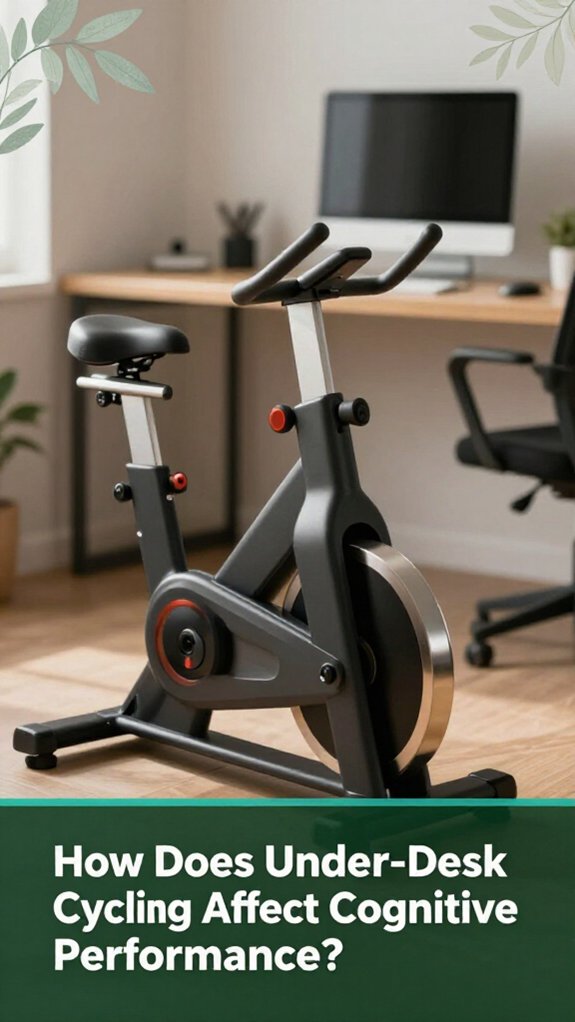
Ever wonder if pedaling away at your desk messes with your focus? I’ve definitely felt that slow, sluggish reaction time when cycling. Here’s what the research shows:
Look, I get it your body’s telling you to move, but you don’t want your brain to go into slow-mo.
The practical implication is to keep pedaling at low intensity, stay comfortable, and allow your brain time to adapt to the activity.
Have you ever noticed how easy it’s to drag through the afternoon and feel like your motivation has just disappeared? I get it by mid-afternoon, even finally getting the coffee to kick in feels pointless.
Research shows bike desks can actually boost your motivation and work engagement. When you pedal, you report feeling happier and more enthusiastic about your tasks, even if you’re walking at a low pace. Studies indicate that even light physical activity, like pedaling at a gentle pace, can increase alertness and reduce feelings of fatigue. According to OSHA ergonomic guidelines, slight physical exertion, such as pedaling at a gentle pace, can contribute to increased alertness. The slight physical effort adds a sense of accomplishment, which lifts your mood.
And oddly enough, motivation scores tend to jump markedly when you get used to pedaling, making you more willing to tackle challenging projects.
If you’re hunting for that extra push without sacrificing focus, your bike desk might just be your new best friend.
When you’re pedaling softly at your desk, it’s natural to wonder if it’s affecting your work performance. Honestly, research on spinal biomechanics suggests it probably isn’t. Here’s what you need to know:
All right, I get it pedaling might feel unusual at first. But as the research shows, it’s unlikely to impair your productivity.
Plus, it’s beneficial for your cardiovascular health and can help reduce issues like lower back pain and sciatica caused by prolonged sitting. Win-win.
All right, let’s talk about comfort because honestly, if your bike desk feels worse than your regular chair after a couple of hours, it’s hard to see the point. You might notice discomfort building in your knees, ankles, or hips pretty quickly.
That’s because, during cycling, extra muscle activity ramps up, and if you’re pedaling at higher resistance, it can push discomfort to clinically meaningful levels, according to OSHA ergonomic guidelines. Proper posture during cycling is crucial to avoid worsening musculoskeletal issues and to ensure you’re not straining your lower back or hips unnecessarily.
Some people find recumbent-style bikes better they cut down on glute and hip strain. To make it clearer, here’s a quick comparison:
| Comfort Level | Work Rate (W) |
|---|---|
| More comfortable | Around 17 W or less (low-intensity activity that mimics gentle walking) |
| Less comfortable | 25 W and above, plus sweat (moderate to vigorous effort that can increase fatigue) |
| Very uncomfortable | ≥40 W, ongoing pedal effort (high-intensity cycling that may cause muscle soreness or joint pain) |
If you are using a bike desk, keep in mind that sustaining higher resistance levels might lead to discomfort or fatigue, especially in the lower lumbar, sacral, and hip areas, which can impact long-term comfort and spinal health.
If you experience persistent pain or discomfort, it’s advisable to lower resistance, take regular breaks, and ensure your bike setup promotes proper ergonomic alignment such as adjusting seat height and handlebar position it’s essential for preventing musculoskeletal issues. Remember, your comfort and spinal health are worth prioritizing during your workday.
Setting up your bike desk correctly mightn’t seem like the most exciting part of working while pedaling, but trust me, it’s essential for your safety and comfort.
A little preparation can help you avoid discomfort or injury, especially during long periods of activity.
Here’s the essential checklist:
Take these steps seriously; optimizing your ergonomic setup promotes both safety and comfort.
When your posture is properly aligned, you’ll be able to pedal longer and with less risk of discomfort or injury.
Ever wonder if a bike desk is actually a good fit for your workspace and goals? Let’s be real it’s not a one-size-fits-all solution.
If you want better heart health and a little extra brain fuel, pedaling at 17 W (which provides light-intensity activity) might suit you. According to research on cardiovascular exercise, maintaining a low-resistance pace can help boost your overall heart health without excessive fatigue.
However, if knee and ankle discomfort after two hours sound like your typical afternoon, a bike desk may not be ideal. People with pre-existing joint issues or arthritis might experience increased pain during prolonged use, which could lead to discomfort or injury.
Here’s a quick look regarding factors to consider:
| Consideration | Yes | No | Like to Try |
|---|---|---|---|
| Health benefits | Raises heart rate, boosts energy (per Mayo Clinic recommendations) | Discomfort from joint strain | Prefer light activity during work |
| Productivity | Slightly slower typing, increased errors (research on spinal biomechanics suggests) | Need top speed, error-free work | Memory and focus improvements |
| Ergonomics | Good for postural support, especially when using adjustable seating and monitor height | Pain after long use, especially if ergonomics are neglected | Adjustable resistance helps to modify intensity |
All right match your goals and aches, then decide if a bike desk fits your vibe. Remember to consider your specific health conditions and ergonomic setup to ensure a safe, effective working experience.
To prevent joint discomfort, you should keep your resistance low and pedal with a smooth, controlled stroke.
Make sure your feet are centered on the pedals and your knees stay slightly bent no hyperextension!
All right, take micro-breaks to stretch your calves and hamstrings.
Listen to your body; if something hurts, dial down the resistance or take a quick pause.
Balance is key, so you’re not pushing your joints to the edge.
Honestly, you’ll probably find that sticking around 17 watts feels like easing into a comfy chair supportive without nagging.
It’s just enough to keep you moving without stirring up discomfort, especially in your knees and ankles, which can be real divas.
If you wanna push a little, up to 25 watts, but only if your body’s giving you the thumbs-up.
Trust your comfort sensors they’re smarter than you think!
Yes, you can integrate bike desks into team spaces effectively.
All right, it’s about fitting the bikes without transforming your office into a sweat shop. Keep pedaling at about 17 W no sweat, literally and you’ll stay comfortable, maintain your workflow, and even boost memory.
Just make sure everyone’s on the same pedal, and you’re good to go. You’ll find it’s a win for health and teamwork, trust me.
Imagine your body doing a tiny dance while you work that’s what bike desks are aiming for long-term. They promote movement, encouraging your trunk to stay engaged and your legs to activate, which is great for posture.
But, beware the discomfort in your knees and ankles can sneak in over time if you don’t find that sweet resistance spot.
Look, if you’re doing data entry or brainstorming, you’re pretty much a prime candidate for a bike desk.
You’re not worried about lightning-fast typing, but you want to stay energized and motivated. Those creative tasks and routine analysis? They actually benefit from a little movement, keeping boredom at bay and your mood up.
Honestly, you’ll find it easiest if your job isn’t all about crunching numbers or texting at light speed.
All right, think of a bike desk like trying to ride a bicycle through a crowded park you need to find your rhythm without bumping into things. If you take it seriously and tune into your body’s signals, it can really help you stay active and alert during those long work sessions. Just remember, it’s not perfect; sometimes your shoulders might argue, and your lower back might give a tiny protest. But hey, with a little patience, you might just turn your workday into a smoother, healthier ride.