Physical Address
304 North Cardinal St.
Dorchester Center, MA 02124
Physical Address
304 North Cardinal St.
Dorchester Center, MA 02124

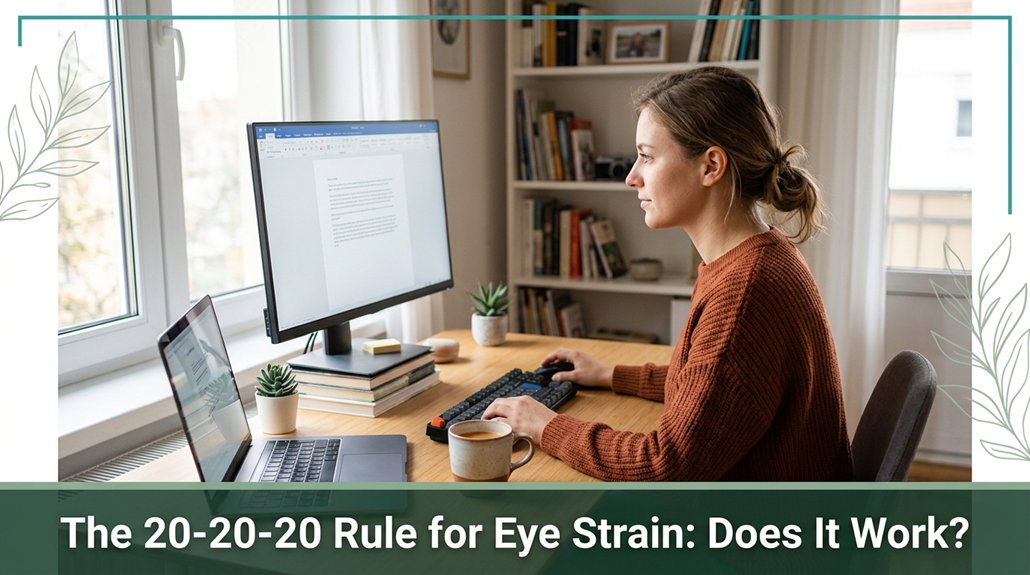
Your eyes start feeling dry, and your neck begins to ache after hours staring at your screen sound familiar? The 20-20-20 rule can offer some quick relief by giving your eyes a mini break, but it’s not a complete fix. While it helps ease eye strain and combat dryness if you stick with it, for long-term eye health, you’ll need to pair it with proper ergonomics and longer breaks. Want to learn more about keeping your eyes happy and healthy? Keep reading for tips that go beyond the simple rule.
This article contains affiliate links. If you purchase through them, I may earn a small commission at no extra cost to you. I only recommend products I genuinely believe in.
You probably know the feeling your eyes start to feel gritty, or maybe you get a headache after staring at your screen for what feels like forever. That’s where the 20-20-20 rule comes in. It’s a simple idea: every 20 minutes, look at something about 20 feet away for 20 seconds.
Why? Because your eyes aren’t meant to focus that long on close-up objects like your phone or a document. According to OSHA ergonomic guidelines, at about 20 feet, your eye muscles relax, giving your ciliary muscles a break from constant contraction.
This relaxation helps prevent eye fatigue, which can lead to discomfort and headaches. Studies show that up to 97% of digital device users experience some form of Digital Eye Strain, highlighting the importance of such practices.
This practice essentially gives your visual system a mini “time out,” helping you maintain visual comfort during prolonged screen use. The 20-20-20 rule is an easy, practical way to reduce eye strain and support your eye health during long periods of near work.
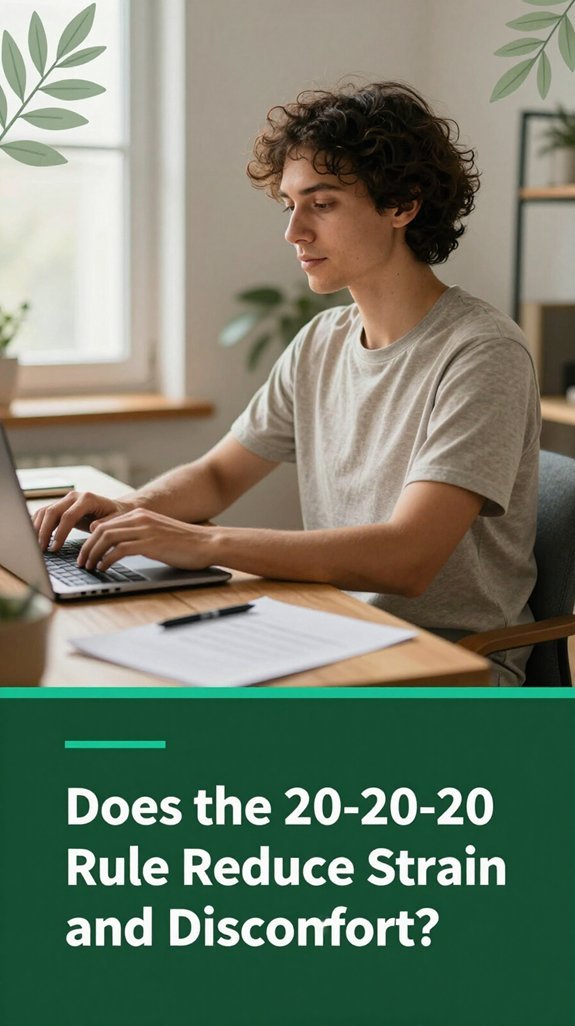
All right, let’s cut straight to the chase: the 20-20-20 rule does seem to help with reducing eye strain and discomfort at least in the short term. If you’re like me, you’ve felt that eye fatigue creep in after hours of staring at a screen, and suddenly, blinking feels like a chore.
Research from a 2023 study shows that taking regular breaks looking away every 20 minutes for 20 seconds can actually lower those self-reported symptoms like dryness, burning, and headache. According to research on digital eye strain, these brief breaks help relax the ciliary muscles and alleviate eye fatigue caused by sustained screen focus.
But here’s the thing: those benefits fade once you stop reminding yourself to take breaks. It’s kind of like a diet that works if you stick to it no magic, just good habits.
For now, incorporating the 20-20-20 rule is a practical way to temporarily ease digital eye strain.
Remember, maintaining proper ergonomic habits such as adjusting screen height to eye level and ensuring good lighting can also reduce eye discomfort.
The key takeaway is that consistent breaks combined with ergonomic adjustments can effectively mitigate digital eye strain, especially for people who sit more than 6 hours a day in front of screens.
Ever wonder if those tiny breaks you take with the 20-20-20 rule actually do anything for dry eyes and tear stability? Well, they do, at least subjectively.
Research on tear film dynamics suggests that after about two weeks of sticking to the rule, many people notice less dryness, burning, and that annoying foreign body sensation. The breaks give your tear film per Mayo Clinic recommendations, this thin layer of oils, water, and mucins holding everything in place a chance to redistribute and stabilize.
During those 20 seconds, your blink rate increases, helping spread oils and moisture across the ocular surface. This increased blinking activity is supported by findings showing that intentional blinking during these breaks helps maintain tear film quality. Sure, the hard numbers like tear break-up time might not shift much right away.
However, your perception of comfort definitely improves, which can reduce eye strain and fatigue. And, honestly, that’s a win your eyes feeling better is what really matters. Consistently applying the 20-20-20 rule can support tear film stability and enhance visual comfort during prolonged screen use.
So, how does that little 20-20-20 break you keep hearing about actually affect your binocular vision and focus? Well, research shows it can make your focusing muscles more flexible, at least temporarily. According to Mayo Clinic recommendations, this flexibility helps improve your ability to shift focus between objects at different distances. You know that feeling when you switch from your screen to your phone and find it a little easier? That’s because your accommodative facility the eye’s ability to change focus improves.
It’s like stretching your focusing system instead of just relying on it repeatedly. But here’s the thing: it doesn’t seem to change your eye alignment or vergence, which is what keeps your eyes working together smoothly according to OSHA ergonomic guidelines.
Vergence refers to the inward or outward movement of both eyes to maintain proper binocular vision. Additionally, regular practice of targeted eye exercises can further support the development of strong vergence control. Many ergonomists recommend combining the 20-20-20 rule with exercises that specifically enhance eye coordination and vergence control for sustained improvements.
Have you ever sat at your desk, thinking, “Maybe I should take a break,” then glanced at the clock and did a quick 20-second stretch before diving right back into work?
Well, here’s the thing research shows that this tiny break isn’t enough to stop your eyes from telling you, “Hey, we’re getting too close for comfort.”
Brief breaks won’t prevent your eyes from signaling near stress and potential myopia progression. Longer focus shifts are essential.
According to research on eye health, your eyes need more than 20 seconds; they actually require 90 seconds or more to relax fully. Short breaks don’t really interrupt the biochemical signals that cause your eyeballs to elongate the main reason for myopia.
People who sit for extended periods, especially those working on screens for more than 6 hours a day, should consider longer breaks. Incorporating proper ergonomic workstation setup can also help reduce eye strain and improve overall comfort during prolonged screen time.
Unless you’re aiming for that “sustained distance” break of 5 minutes or more every hour, your quick pause isn’t likely to prevent myopia from progressing. Taking regular, longer breaks that include focusing on distant objects can help reduce eye strain and the progression of myopia.
Research indicates that longer breaks of 5 minutes or more are necessary for meaningful impact on ocular growth from animal studies and clinical insights, making the common 20-second rule insufficient for eye health.
How can you actually stick to the 20-20-20 rule without it feeling like just another thing to check off your list? Honestly, it’s about making it part of your routine, not adding a burden. Use reminders your phone alarm, a smartwatch notification, or an app that ping every 20 minutes. According to ergonomic guidelines, setting alarms helps create consistent intervals, reducing eye strain and promoting proper posture.
Research indicates that consistent breaks can also help prevent long-term issues like myopia, especially in children who are more vulnerable to excessive screen exposure. It’s like setting an avocado to ripen: you know it’s coming, so you’re ready. Align your breaks with natural task shifts such as closing a document or switching tabs and use those moments for your eyes and posture.
For example, when finishing a report or moving to a new task, take a moment to look away from the screen and adjust your sitting position. Placing a distant object in your workspace such as your window or a clock encourages you to glance at objects roughly 20 feet (6 meters) away, which research on ocular muscle relaxation suggests helps reduce eye fatigue.
Proper monitor distance also plays a role in minimizing eye strain and maintaining good neck posture, so ensuring your screen is at an optimal viewing distance can make a significant difference. Additionally, put sticky notes on your screen as friendly reminders to take quick eye breaks, making the habit easier to remember. Easy does it. Incorporating these cues into your daily routine ensures that the 20-20-20 rule becomes a natural part of your workday, helping prevent digital eye strain and maintain comfortable eye and neck health.
Getting the hang of the 20-20-20 rule sounds simple enough look away every 20 minutes, focus on something 20 feet away, and you’re good to go. But here’s the thing: the research backing it up is pretty limited and mixed. It’s not like a magic fix, especially for things like myopia prevention. In fact, some studies say that 20 seconds isn’t enough to make a real difference.
All right, pay attention to these limits. The evidence comes mainly from clinical opinion, not solid trials, according to research on visual ergonomics. The rule’s duration might be too short to impact myopia or serious eye health issues.
Relief from eye strain varies wildly; some people hardly feel a thing. The effectiveness of this short break duration is still debated among eye care professionals. Furthermore, the potential benefits of frequent breaks are often grounded in limited scientific evidence, emphasizing the need for more comprehensive research.
Additionally, the data supporting the 20-20-20 rule is limited in scope and robustness. Many ergonomists recommend longer or more frequent eye breaks, especially for individuals with existing eye conditions or those who spend more than six hours a day working at a computer.
For example, prolonged near work can contribute to accommodative stress and digital eye strain, but the 20-second interval may not be sufficient to mitigate these issues effectively.
You’ve probably noticed that when you’re glued to your screen all day, your eyes start feeling dry, tired, or just plain uncomfortable like they’ve been running a marathon without any medals. All right, beyond the trusty 20-20-20 rule, here’s what really helps: blinking more and keeping your eyes moist.
Your blink rate drops during screen time, making your eyes dry and cranky, according to OSHA ergonomic guidelines. Prolonged screen use reduces blinking frequency, leading to dryness and discomfort. Try conscious “blink breaks,” and consider artificial tears or lubricating drops they’re surprisingly lifesavers.
Additionally, wearing glasses over contacts can help reduce eye dryness, and adjusting your screen’s position to be at about arm’s length (roughly 20 inches or 50 centimeters) and slightly below eye level (about 10 to 15 degrees) can greatly minimize strain. Optimizing ambient lighting to reduce glare and contrast issues is also beneficial; use blinds or dim room lights to create a comfortable viewing environment.
Furthermore, establishing an ergonomic setup can ease muscle strain related to your neck, shoulders, and eye muscles support your posture by using an adjustable chair, monitor stand, or ergonomic peripherals. Knowing the optimal monitor height for neck pain relief helps you set up your workstation to prevent strain and discomfort. Incorporating these strategies into your daily routine can significantly diminish digital eye strain and improve overall visual comfort.
Here’s a quick cheat sheet:
| Strategy | How It Helps | What To Do |
|---|---|---|
| Blink more | Prevents dryness | Remind yourself often to blink intentionally |
| Adjust ambient light | Cuts glare and contrast issues | Use blinds, dim lights, or add task lighting |
| Use ergonomic setup | Eases neck, shoulder, and eye muscle strain | Support your posture with ergonomic furniture and monitor placement |
Implementing these practical strategies will help keep your eyes comfortable during long screen sessions and reduce the risk of developing related issues such as dry eye syndrome or computer vision syndrome.
No, the 20-20-20 rule can’t replace ergonomic adjustments, and you probably already know that.
While it might give some relief from eye fatigue, it doesn’t fix poor screen height, bad lighting, or your slouching posture.
All right, your eyes are just one part of the puzzle.
For real comfort and eye health, you need to tweak your workstation raise that monitor, improve lighting, and mind your posture.
You should follow the 20-20-20 rule for at least two weeks to see real benefits.
Even then, keep in mind the relief might fade if you stop like how your back feels great after stretching, then tightens again if you sit too long.
To potentially keep the gains, try extending those breaks or adding eye exercises.
Consistency is key, so stick with it, and don’t expect miracles overnight.
Yes, age can impact how effective the 20-20-20 rule is.
All right, you might notice that younger folks, especially kids and teens, are usually told to just break every now and then, but their eyes are still changing think myopia progression.
For middle-aged or older people, issues like presbyopia or dry eyes mightn’t improve just by looking away every 20 minutes, because their problems stem from different parts of their eye or body.
Risks with frequent breaks? Honestly, they’re pretty minimal, but you should watch out.
If you take breaks without changing your posture, you might end up with sore neck or back lingering after your eyes feel better.
Also, breaking the flow for no reason can make you more stressed or distracted, especially if you build your work around continuous focus.
You can totally benefit from the 20-20-20 rule just like adults.
Kids often hold devices closer meaning they strain their eyes more and blink less, which is the same reason adults get dry and tired eyes. While specific pediatric studies are missing, the mechanisms are similar, so taking regular breaks works for everyone.
Plus, it’s probably less about perfect timing and more about giving your eyes a breather before they give up on you.
Alright, after diving into all this research, I’m pretty convinced the 20-20-20 rule isn’t a magic fix, but it’s a solid starting point like carrying around a vintage leather map when everyone else just uses GPS. If you stay mindful and take those short breaks, your eyes, neck, and even your brain will thank you. So, give it a shot. It’s not flashy, but hey, it beats being the kid who looked at a CRT all day without blinking!