Physical Address
304 North Cardinal St.
Dorchester Center, MA 02124
Physical Address
304 North Cardinal St.
Dorchester Center, MA 02124

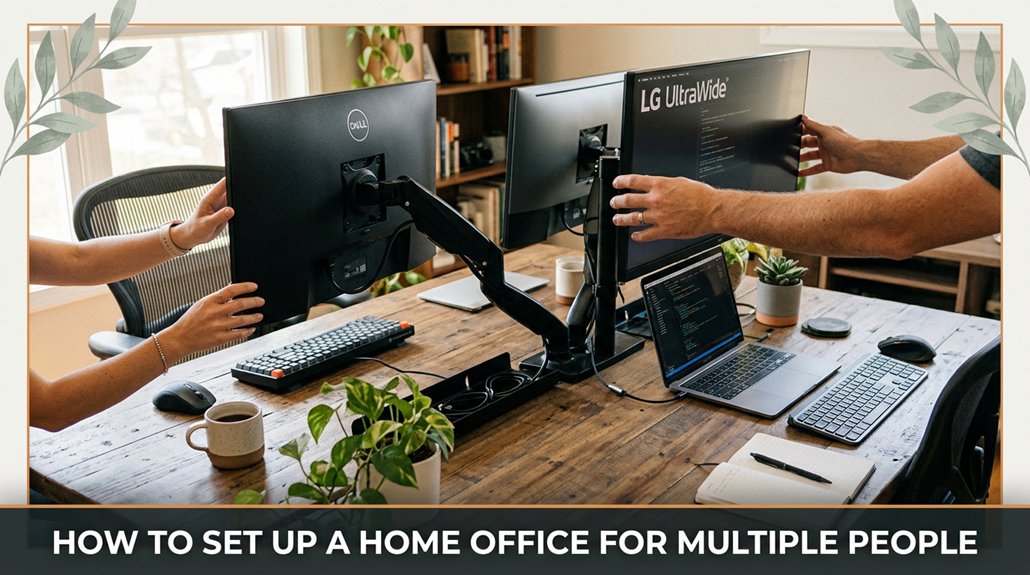
Alright, setting up a home office for multiple people can feel overwhelming and if your space is tight, it can turn into a real challenge. But don’t worry, you’re not alone in figuring out how to make it work smoothly. The key is to measure your space carefully don’t just rely on the desk dimensions, because they might surprise you and ensure there’s at least 36 inches of room for comfortable walking. Arrange desks so they face away from traffic paths and avoid glare from natural light. Use shared tech like wireless keyboards and networked printers to keep clutter down. Keep boundaries clear with dividers, and organize everything with labels and shelves. Mastering these tips now will save you headaches down the line and make your shared workspace functional and comfortable for everyone.
Alright, before you start shopping for desks or fancy office chairs, take a good look at the space you have. If you’re setting up a home office for two people, measure the room because knowing the room dimensions is essential for effective planning.
Use a tape measure to determine the length and width of the space, and record these measurements. Think about how much space you need for each desk to ensure comfortable working areas.
Allow for adequate walking room: a minimum of 36 inches between desks and walls is recommended because it prevents clutter and ensures ease of movement.
Identify where natural light hits the space because maximizing daylight reduces the need for artificial lighting during the day and minimizes glare on screens, which can cause eye strain.
Maximize natural light to reduce artificial lighting needs and prevent screen glare for a comfortable workspace.
Avoid placing screens opposite direct sunlight to prevent glare, and position your desks where natural light shines but doesn’t create reflections.
Remember, the goal is a functional workspace, not Instagram-perfect, so be honest about what fits and how you work best.
Keep in mind your specific needs, such as storage or electrical outlets, to create a comfortable, efficient setup.
Planning for proper workspace ergonomics can greatly improve your comfort and productivity, ensuring your setup is both practical and sustainable.
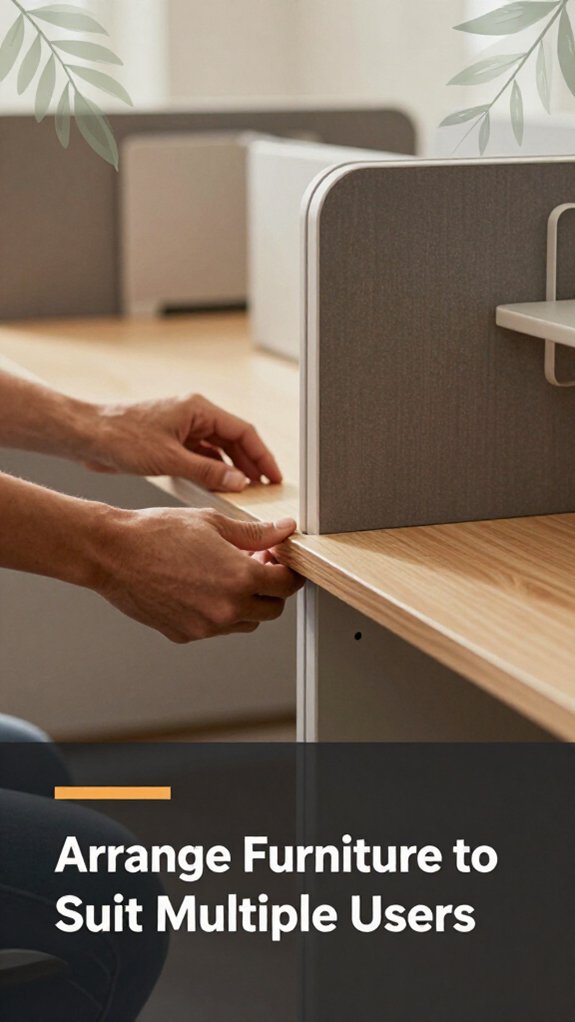
When you’re arranging furniture for multiple users, the first thing you’ll want to do is reflect on how everyone will actually work in the space because this ensures the setup accommodates each individual’s needs.
Because, let’s face it, if you slap desks next to each other without thought, chaos ensues. You’ve got to take into account:
Important measurement fact: Power outlets and network connections should be placed within 20 to 30 inches from each user’s workspace, to allow convenient access without stretching or crawling under desks. Ensuring proper ergonomic workstation setup is vital for comfort and safety.
All right, prioritize comfort and flow. Overlook one of these factors, and you’ll be troubleshooting desks and chairs for days.
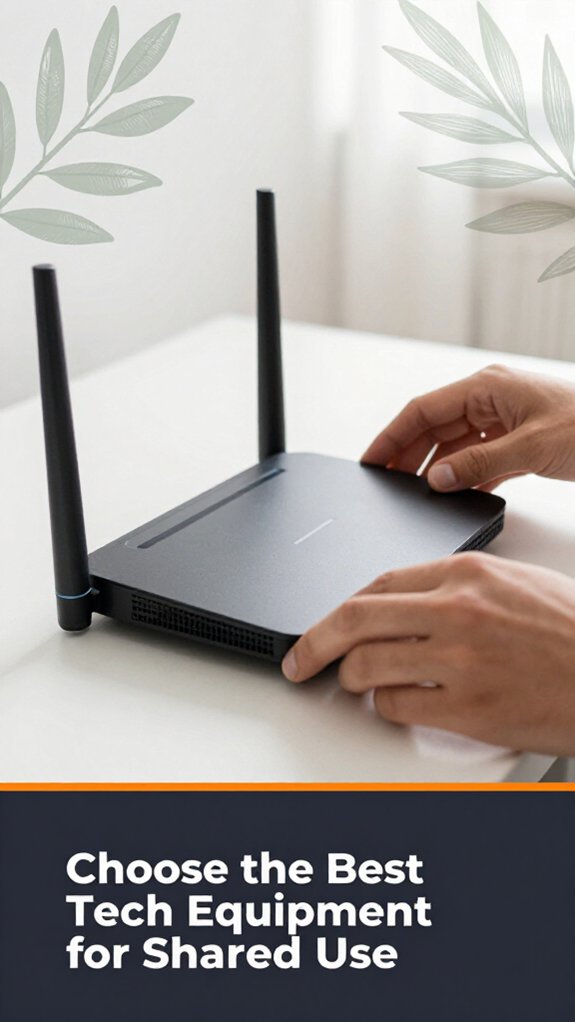
The first thing you want to do is pick tech equipment that can handle shared use without turning into a game of electronic musical chairs.
Start with monitors opt for models like Dell UltraSharp U2723QE or ASUS ProArt Display PA278CV, with adjustable stands or VESA mounts, so multiple people can tweak them without fuss.
Raise the monitor until the top of the screen is at or just below your eye level, because this reduces neck strain during prolonged use.
Next, get a quality wireless keyboard and mouse, such as Logitech MX Keys and MX Master 3, because sharing wired gear means unplugging and hunting down mismatched cables.
Ensure the keyboard and mouse are compatible with all users’ devices and can connect via Bluetooth or a universal receiver.
Separate steps:
Now, for printers or scanners? Choose networked, plug-and-play devices like the HP LaserJet Pro M404dn or Brother MFC-L3770CDW, because no one wants to spend 15 minutes troubleshooting connections.
Highlight:
Fact: Position printers and scanners at least 3 feet away from workspaces to reduce noise and streamline workflow.
Look for shared audio equipment, such as the Jabra Speak 750 or Logitech Zone Wireless headset, because everyone can hop on calls without fighting over devices or adjusting volume.
For volume control, set each device to a default level to prevent sudden loud sounds and ensure consistent audio levels across shared devices.
Additionally, opting for ergonomic home office furniture can greatly improve comfort during long Teams meetings.
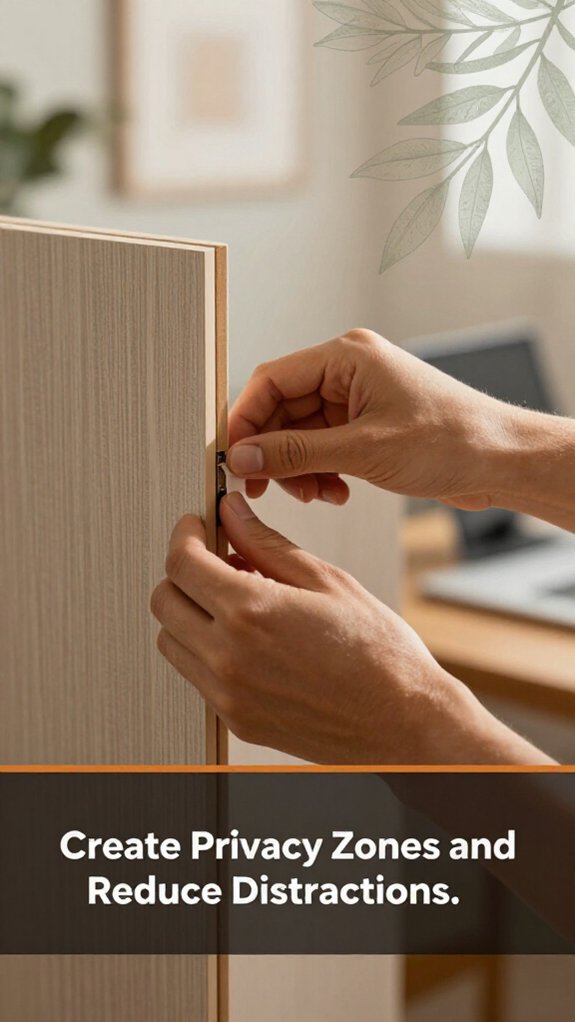
Creating privacy zones and reducing distractions isn’t as simple as hanging a few curtains or stacking a pile of books.
You’ve likely experienced being 45 minutes into assembling a piece of furniture when you realize step 4 assumes knowledge that step 2 never mentioned.
Here’s what’s worked for me:
Setting clear boundaries and expectations in a shared space might just be the most important step you overlook, because failing to do so leads to interruptions and conflicts. Until you’re halfway through a customer call and your kid’s virtual dance party blares in the background.
First, establish designated “work hours” because defining specific times helps set clear expectations. For example, communicate that from 9:00 AM to 5:00 PM, the space is for work-related activities only.
Next, tell everyone in the house what times you’re off-limits, because this reduces interruptions and respects your work commitments.
Then, agree on physical boundaries such as separate desks or areas so everyone knows where work starts and stops. For instance, designate one corner of the room as your workspace and ensure it’s separated from common areas.
Remember to communicate openly and honestly. If your roommate keeps borrowing your headphones or your partner keeps dumping laundry behind your monitor, address it clearly and calmly. This prevents resentment and misunderstandings.
Measurement fact: Position your monitor 20 to 30 inches from your face, with the top of the screen at or just below eye level, to reduce eye strain and maintain proper neck alignment. Additionally, recognizing signs your home office setup is hurting you can help you make necessary adjustments before discomfort turns into injury.
Everyone’s different, but setting these ground rules saves a lot of frustration and helps avoid turning your home into a chaos zone.
When you’re trying to prevent your home office from turning into a sock drawer of clutter, it helps to get serious about organizing your storage because effective organization makes finding what you need faster and reduces stress.
Get rid of items you don’t use regularly because eliminating unnecessary clutter creates more space for essential tools.
Use clear bins, like Sterilite or IRIS storage containers, so you can see everything at a glance.
Dedicate specific drawers for supplies such as pens in one drawer and chargers in another because organized drawers save time and improve productivity.
Install shelves for vertical storage your printer, books, or decorative items because vertical solutions use space efficiently and keep surfaces clear.
Use wall-mounted hooks or pegboards, like the Wall Control Galvanized Steel Pegboard, for quick-access tools such as scissors, tape, and cables because wall storage keeps frequently used items within reach.
Label everything clearly using adhesive labels or a label maker, because labels help you quickly locate files, chargers, or office supplies without wasting time searching.
Keep only essentials at hand like your laptop, notepad, and a few pens because having too many items on your desk can easily lead to clutter.
Stash the rest of your supplies in storage containers, drawers, or shelves because extra items outside immediate reach prevent surface clutter from accumulating.
Remember, bigger isn’t always better compact storage solutions like stackable bins or desktop drawers fit better in tight spaces because they maximize limited room without overcrowding.
Fact: To keep your workspace ergonomic, position your monitor so the top of the screen is at or just below eye level, approximately 20 to 30 inches from your face.
My advice? Keep only the essential tools within arm’s reach such as your keyboard, mouse, and most-used documents and store less frequently used items elsewhere. Proper workspace setup is key to maintaining comfort and preventing injury. Because if you don’t, your beautiful setup will quickly turn into a cluttered mess faster than you can say “Where’s my stapler?”
This article contains affiliate links. If you purchase through them, I may earn a small commission at no extra cost to you. I only recommend products I genuinely believe in.
All right, so you’ve got your workspace all sorted no clutter, everything within reach, and that nice neat desk. Now, you need to set some ground rules and schedules because clear guidelines help ensure smooth collaboration. You’d think everyone would just know when to work or take breaks, but nope.
Sit down with your team and be clear define working hours, quick check-in times, and break periods. Because clearly communicated schedules prevent surprise interruptions and last-minute confusion. For example, establish that all team members work from 9:00 AM to 5:00 PM local time, with a 15-minute morning check-in at 9:15 AM, and lunch from 12:30 PM to 1:15 PM.
You might wonder how to enforce these schedules. Here’s the key: consistency is essential. If someone’s blasting YouTube at 2 PM while others are on calls, chaos follows.
Use shared calendars, like Google Calendar or Microsoft Outlook, to keep everyone aligned. Set boundaries by marking ‘Do Not Disturb’ hours, and respect each other’s designated work times to maintain a productive environment.
Highlighted Fact: Position your monitor so that the top of the screen is at or just below your eye level, approximately 20 to 30 inches from your face, because this minimizes neck strain and promotes proper posture during long working hours.
Enforce these ground rules because maintaining a predictable schedule reduces stress and keeps workflow smooth. Trust me, consistent boundaries and clearly defined times keep everyone sane and the team functioning efficiently.
Let’s face it: if your home office is uncomfortable, you’re not going to last long, no matter how much you love your new setup. You want ergonomic chairs, proper lighting, and a clutter-free space.
Extracted facts and formulas:
You can usually squeeze two to three people comfortably in a shared home office, but it depends.
All right, if you like everyone to have space to breathe a desk each, some privacy stick with two.
Throw in a third, and things get crowded fast unless you’ve got a sizeable room.
You definitely need to contemplate electrical safety overloading circuits is a recipe for trouble. Make sure outlets can handle multiple devices and use surge protectors.
Keep walkways clear to prevent tripping hazards, and install smoke detectors if you’re running multiple workstations.
Also, know your local fire codes and get any required permits.
Trust me, a little upfront planning saves headaches and a potential evacuation.
You manage different work styles by carving out zones for focus and collaboration.
All right, start with adjustable desks so everyone can tweak their space. Then, offer noise-canceling headphones or shared quiet corners for introverts.
Look, you’ll want flexible storage so personal stuff stays personal.
The key? Communicate openly ask what they need and adjust. It’s messy, yeah, but if you listen, your shared space can actually work for everyone.
You handle theft or damage by logging everything, obviously. Give each person designated equipment keys no, sharing isn’t clever and keep a list of serial numbers.
All right, install hidden security cameras if you’re feeling paranoid. Label gear with your initials or a “not for stealing” message.
And most importantly, set clear rules with consequences because you’ll be the only one laughing if your expensive monitor mysteriously becomes an art project.
You want room for growth, so plan for flexible layouts.
Get modular furniture easy to add or move around.
Think about dedicated storage for future gear, even if you don’t buy it yet.
Use clear labeling and a shared system to track what’s coming or going.
All right, don’t go overboard measure twice, buy once.
Expect adjustments; your setup will evolve quicker than you think.
Alright, setting up a home office for multiple people is kind of like assembling IKEA furniture more patience than you’d think, and definitely some extra tools like a glass of wine. Expect missteps, stubborn screws, and a few “where the heck does this go” moments. But once you nail the layout and tech, you’ll have a space that actually works. Trust me, it’s worth it. Now, grab a drink you’ve earned it.