Physical Address
304 North Cardinal St.
Dorchester Center, MA 02124
Physical Address
304 North Cardinal St.
Dorchester Center, MA 02124

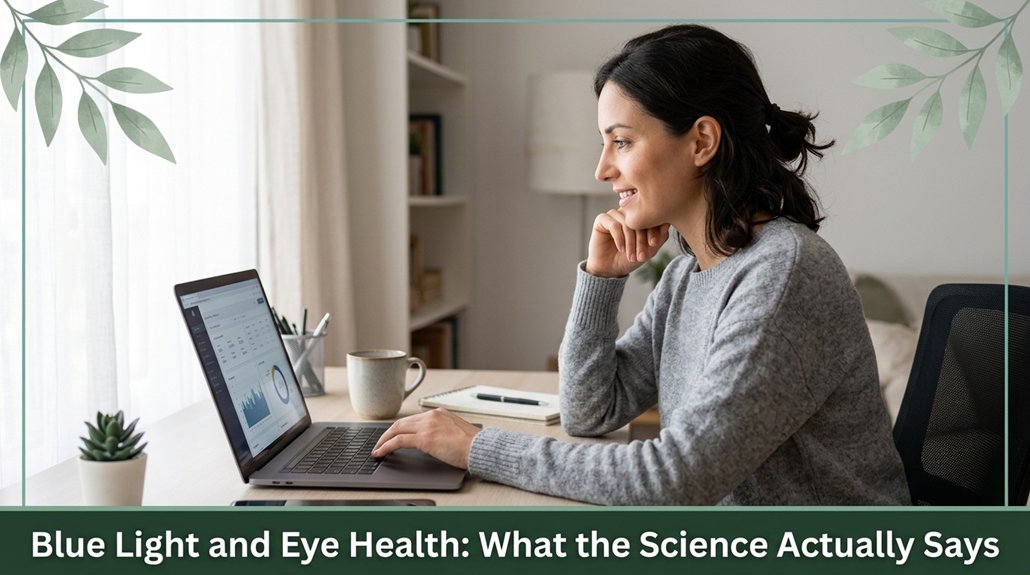
Struggling to get a good night’s sleep after a long day of screen time? You’ve probably heard that blue light from your devices might harm your eyes, but the science isn’t quite so cut and dry. While blue light can cause eye strain and mess with your melatonin when you scroll late at night, it’s unlikely to cause permanent damage or worsen your eyesight. Most experts agree that taking proper breaks and practicing good ergonomics make a bigger difference. Keep reading to find out what’s really effective in protecting your eyes from blue light.
This article contains affiliate links. If you purchase through them, I may earn a small commission at no extra cost to you. I only recommend products I genuinely believe in.
Imagine the world as a giant, glowing ball of light so much of what we see every day is influenced by different kinds of light, and blue light is one of the most familiar yet misunderstood parts of that mixture. You’ve probably heard about blue light because it’s in your phone, your laptop, even those bright LED lights in your kitchen.
But where does it really come from? Blue light is part of the visible spectrum, sitting at the shorter-wavelength end around 400 to 490 nanometers meaning it packs more energy than other colors. Research indicates that exposure to blue light can impact various biological processes, including our sleep-wake cycles.
Sunlight is the biggest natural source of blue light, scattering it across the sky through a process called Rayleigh scattering. Artificial sources, such as screens and LED lighting, emit significant amounts of blue light, which contributes to our daily exposure.
Researchers on ocular health have raised concerns because prolonged exposure to high levels of blue light might affect the retina over time, potentially leading to eye strain or discomfort.
Since many people spend several hours each day using digital devices, understanding where blue light comes from helps in managing eye health. Blue light exposure can cause visual fatigue, dryness, and discomfort in the eyes, especially if screens are used extensively without breaks.
According to Mayo Clinic recommendations, taking regular breaks from screens and adjusting device brightness can help mitigate these effects.
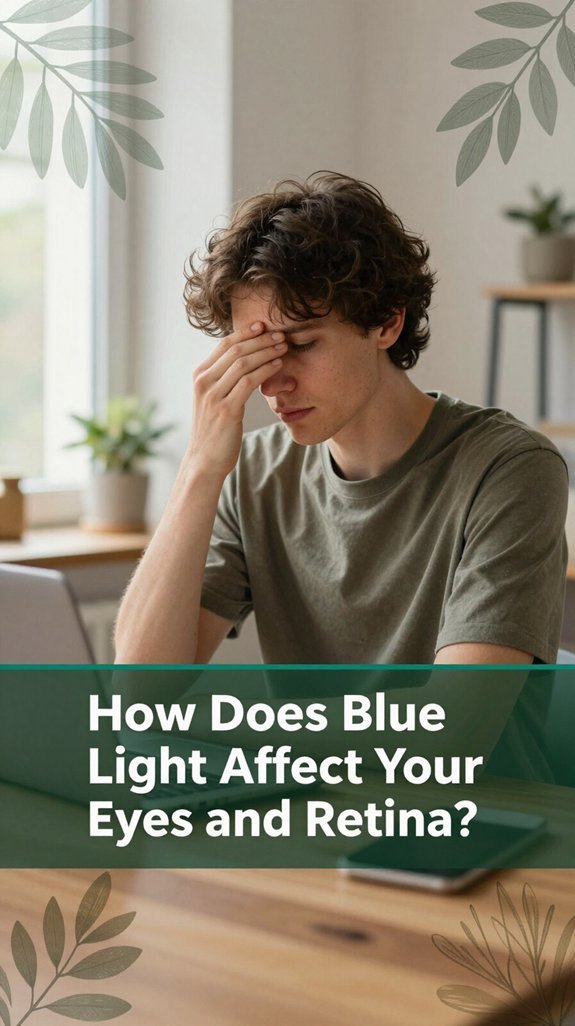
You’ve probably experienced that blurry, tired feeling in your eyes after working on your screen for a few hours it’s like your vision needs a break, even if your hands and brain are still going strong.
That worn-out, blurry eye feeling after hours at the screen signals your eyes need a break.
According to research on screen time and eye strain, blue light, especially in the 400–460 nm range, easily passes through your cornea and lens, reaching the retina with little resistance. That blue-violet hue is linked to more photochemical injury to your retinal pigment epithelium (RPE) and photoreceptors because of its high energy.
Blue light can increase reactive oxygen species, which causes oxidative stress in your retina cells. This damage over time can lead to degenerative retinal conditions. Essentially, blue light triggers cellular stress and inflammation, especially when your eyes are exposed for hours, leading to fatigue and flickering vision that you recognize all too well. Exposure to blue light is also linked to disruptions in sleep patterns, which can indirectly affect eye health.
Practical implications include taking regular breaks from screens, adjusting display brightness, or using blue light filters to protect your retinal health.
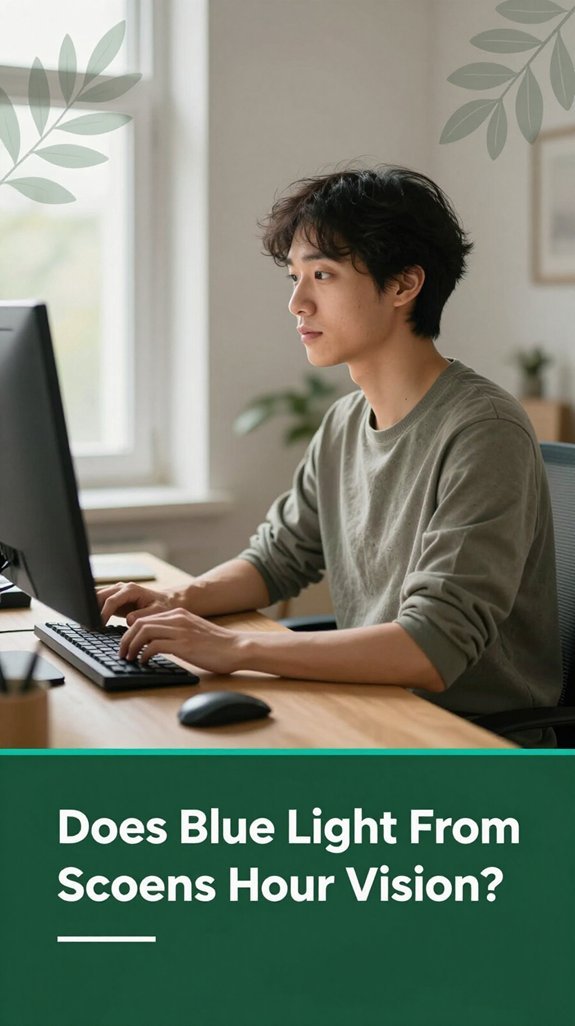
All right, here’s the truth: the blue light shining from your screens isn’t likely to cause sudden, catastrophic eye disease overnight. According to research on digital eye strain, blue light from devices falls far below harmful levels; it’s not sufficient to cause retinal burns or damage in the same way that staring at the sun or welding would.
Major eye health organizations, such as the American Academy of Ophthalmology, agree that there’s no solid evidence that blue light alone causes permanent vision problems.
You might notice some eye strain after hours of focused work, especially if you experience dryness or poor ergonomics, or if you haven’t taken breaks these factors are common contributors. Blue light scatters easily within the eye’s transparent media, including the cornea, aqueous humor, lens, and vitreous body, which causes an increased workload for your visual system to focus sharply on screens.
However, this scattering isn’t damaging to the retina or the macula, and it doesn’t cause long-term vision impairment. The natural protective mechanisms of the eye help mitigate potential damage from blue light, further reducing the risk.
Additionally, understanding the difference between *perceived* and actual harm can help reduce unnecessary worry, since scientific evidence shows minimal risk. By taking regular breaks, maintaining proper screen distance (about 20-30 inches, or roughly arm’s length), and ensuring good lighting, you can reduce eye strain.
The key takeaway is that blue light from screens isn’t inherently harmful to your eyesight; focusing on ergonomic habits and regular eye care is the best approach.
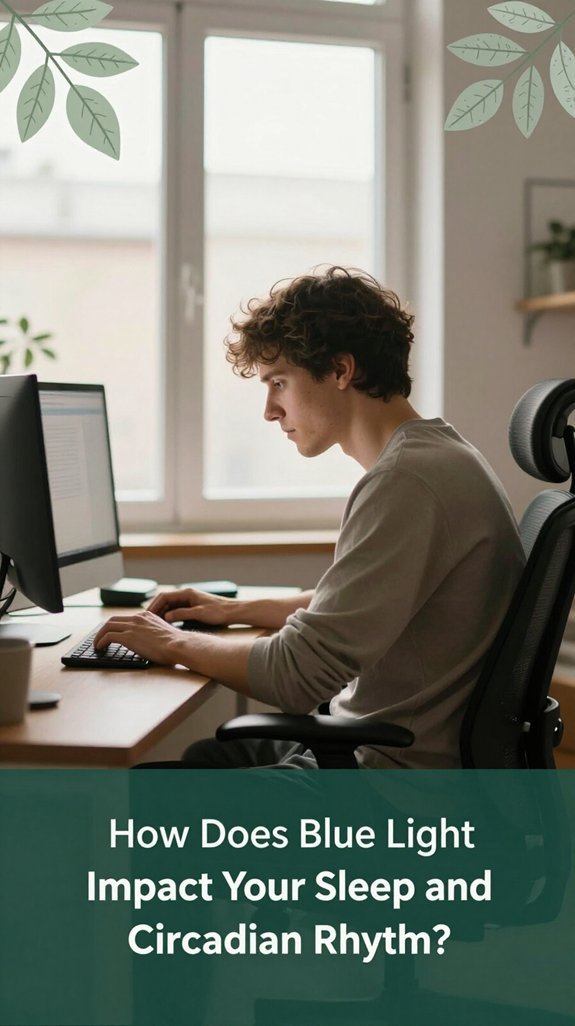
Ever wonder why staying up late scrolling through your phone makes you feel like you’re wired, even though you’re tired? It’s because blue light hits your eyes and tricks your internal clock. Short-wavelength blue light, around 480 nm, activates special cells in your retina that tell your brain, “Hey, it’s daytime,” according to research on retinal photoreceptors. These signals suppress melatonin the hormone that makes you sleepy and shift your circadian rhythm later.
Basically, blue light delays your body’s “nighttime” signals, making you feel alert longer. That’s why a quick scroll or binge-watching episode can push your bedtime hours later, leaving you tossing and turning. All right, before you blame your lack of sleep on “bad luck,” know that your screen habits are disturbing your sleep schedule without you even realizing it.
If you’re looking to protect your sleep, consider reducing blue light exposure in the evening or using screen filters. Blue light exposure has been shown to be more effective at suppressing melatonin than other types of light, which contributes to this delay.
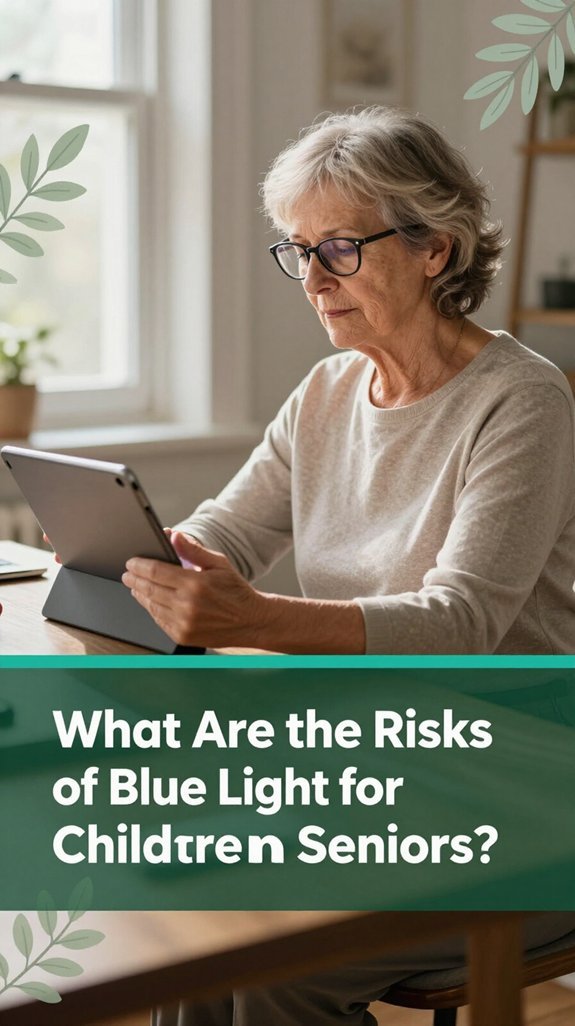
When it comes to children, blue light can feel like that overly bright, flickering streetlamp turned up to eleven, except it’s coming from their tablets, smartphones, and classroom screens. Kids’ eyes transmit more blue light because their lenses are clearer, and their pupils are bigger, meaning more blue light reaches the retina. According to Mayo Clinic recommendations, their still-developing protective filters aren’t quite capable of filtering out enough blue light, so they’re a bit more vulnerable.
Because of this, prolonged exposure to blue light can impact their developing retinal cells, which could contribute to future visual issues. Now, combine that with hours of screen time homework, games, TikTok and you’re looking at potential cumulative damage over their lifespan. Extended exposure to blue light may impact their developing retinal cells, which could contribute to future visual issues.
Seniors, on the other hand, face a different problem. Aging lenses tend to yellow and block blue light, which alters the light reaching the retina. After cataract surgery, more blue light can pass through the implanted lens, increasing stress on the retina.
According to research on retinal health, this increased blue light exposure can exacerbate existing age-related macular degeneration or other retinal conditions. Furthermore, if seniors are dealing with other eye issues such as diabetic retinopathy or glaucoma, the additional blue light stress may accelerate retinal deterioration.
Have you ever noticed how your eyes feel heavier after a long day staring at screens? It’s like your eyes are saying, “Really?” and you’ve gotta give them a break. According to Mayo Clinic recommendations, you can take specific steps to protect your eyes from blue light exposure.
First, follow the 20-20-20 rule: every 20 minutes, look at something 20 feet away for 20 seconds. This gives your eye muscles, particularly the ciliary muscles controlling accommodation, a chance to relax. Blue light can contribute to digital eyestrain, which makes focusing more difficult.
Second, tweak your device settings turn on night mode, lower brightness, or increase text size. Even using a simple blue-light filter can significantly reduce blue light exposure.
Next, check your workspace ergonomics: keep your screen at arm’s length (about 20 to 28 inches) and slightly below eye level (about 15 to 20 degrees). Ensure the room isn’t glaring or overly dark, as poor lighting increases eye strain. According to OSHA ergonomic guidelines, proper positioning can help prevent vision-related fatigue and discomfort.
Finally, blink more often to maintain adequate tear film and moisture, which can decrease dryness and irritation. Additionally, take breaks outside in natural light when possible, as exposure to natural environments supports overall eye health and reduces strain. Remember, children’s eyes are more susceptible to blue light damage from digital devices, so limiting screen time is especially important for them.
Implementing these strategies can help protect your eyes from blue light and reduce discomfort, promoting long-term eye health and comfort.
All right, let’s cut through the hype on blue-light glasses and screen filters. You’ve probably heard they’ll save your eyes or help you sleep better, but the science doesn’t quite back that up. A 2023 review looked at numerous studies and found little or no real effect on eye fatigue, vision clarity, or sleep quality despite what ads might claim. According to research on circadian rhythms, blue light can influence sleep cycles, but the extent of this effect from typical screen use appears minimal.
Sure, some people report feeling more comfortable or glare-free when wearing blue-light glasses. However, this is likely due to general optical benefits, not blue light blocking itself. Most blue-light lenses only block a small percentage of short-wavelength light, which may not significantly impact eye health.
If you’re experiencing eye strain from prolonged screen time, focusing on blinking more (per Mayo Clinic recommendations), adjusting your workspace, and taking regular breaks will provide more noticeable relief.
Research on spinal biomechanics suggests that ergonomic strategies like maintaining proper screen distance (~20 inches from your eyes) and a 135-degree (which means leaning back slightly, not sitting bolt upright) viewing angle can help reduce eye and neck strain.
Ever wonder what eye experts really think about blue light and your eye health? Well, after diving into all the research and expert opinions, here’s what I found no need to panic.
The American Academy of Ophthalmology states that blue light from your screens doesn’t cause permanent retinal damage at typical exposure levels. According to their guidelines, UV radiation remains the primary concern for eye harm, as it can lead to conditions like cataracts and age-related macular degeneration.
Natural exposure from the sun is far greater than from screens. Those glasses claiming to block blue light are mostly marketing hype. Research suggests that the concern about blue light causing conditions such as cataracts or macular degeneration isn’t backed by solid scientific evidence, especially for regular screen use. Your eyes are more vulnerable to brightness, glare, and dryness than blue wavelengths.
Blue light from screens doesn’t cause permanent eye damage; UV radiation is the main risk factor.
To protect your eye health, it’s best to take regular breaks from screens following the 20-20-20 rule, which recommends looking at something 20 feet away for 20 seconds every 20 minutes.
Moreover, ensuring proper ambient lighting and maintaining an appropriate distance from screens (about arm’s length, or 20-26 inches) can reduce discomfort.
Relax, take breaks, and unless blue light is disrupting your sleep, skipping blue-light-shielding glasses is a reasonable choice. Your eye health benefits more from managing brightness and dryness than from blocking blue light.
Yes, blue light can cause immediate or short-term eye damage if you’re exposed to intense sources like welding or sunlight reflections think of looking directly at a laser beam.
But for everyday screen use, it’s unlikely. What you’ll probably notice are symptoms like eyestrain, dryness, or blurred vision, which are temporary and usually pass after a break.
Blue light’s long-term health effects are kind of like that nagging gym soreness you mightn’t see immediate damage, but repeated exposure could, over time, contribute to issues like age-related macular degeneration.
Studies in animals and cells show it speeds up retinal aging, increases oxidative stress, and damages eye cells. While human proof isn’t ironclad yet, it’s wise to think of blue light as a slowly accumulating stressor something to keep in check, just in case.
You, me, everyone’s eyes handle blue light differently when it comes to age.
Children’s lenses are clearer and let more of those blue rays hit the retina, kinda like turning a spotlight directly on it. That means kids absorb about 40-45% more blue light than adults, whose lenses yellow with age, acting like natural filters.
Plus, kids tend to hold screens closer and stay up later hello, circadian chaos!
You might worry that blue light filters could bump up your visual performance, but here’s the thing they mostly don’t.
They won’t make your visuals sharper or help with eye discomfort in everyday use.
Sure, some studies show you might read a bit faster or do quick tasks better, but overall, the science says these filters aren’t game-changers for your visual clarity or endurance.
It’s like adding spice nice, but not essential.
You can rest easy knowing that, for daily activities, there’s a safe level of blue light exposure.
Your devices emit far less blue light than safety limits think of it as a tiny splash in a bucket rather than a flood. Sure, it might bother your eyes or mess with your sleep, but damage? That’s not really happening at normal screen time.
All right, think of blue light like that hyperactive neighbor’s floodlight bright, lots of energy, but maybe more than your eyes need late at night. You don’t have to hide behind blackout curtains or wear space helmets. Just set boundaries, take breaks, and maybe swap those glasses if they make you feel like a sci-fi star. Your eyes and sleep will thank you no alien invasions necessary.