Physical Address
304 North Cardinal St.
Dorchester Center, MA 02124
Physical Address
304 North Cardinal St.
Dorchester Center, MA 02124

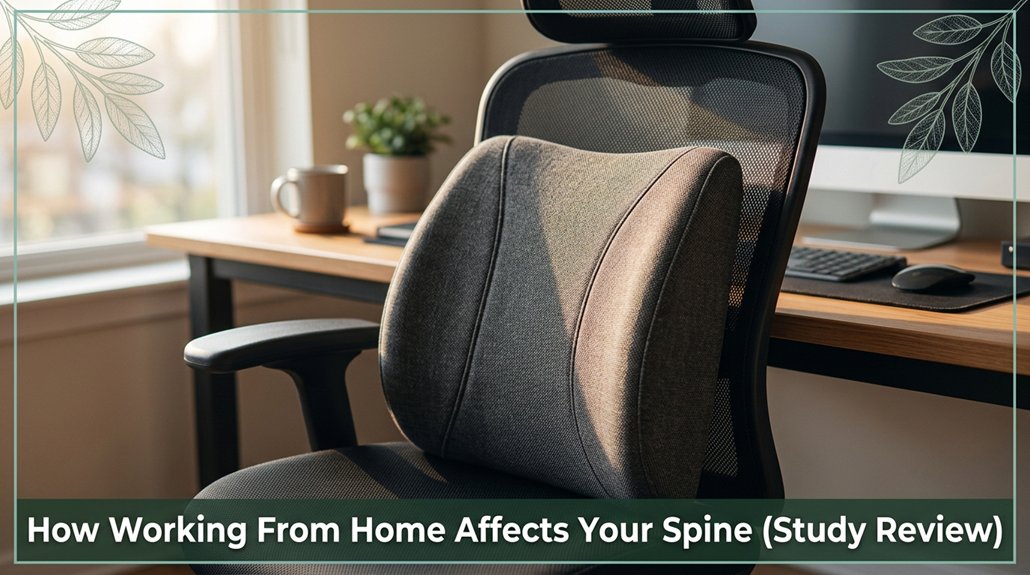
You’ve probably noticed your back or neck start to protest after a few hours working from home. That’s no accident poor ergonomic setups, staying in the same position too long, and skipping breaks put serious stress on your spine.
Without even realizing it, you could be squishing your lumbar discs or straining your neck muscles. Keep reading for simple adjustments you can make to help keep your spine comfortable and healthy.
This article contains affiliate links. If you purchase through them, I may earn a small commission at no extra cost to you. I only recommend products I genuinely believe in.
All right, let’s talk about how working from home can turn your spine into a bit of a drama queen. You might’ve noticed higher reports of lower back pain around 34 to 38 percent of teleworkers say they experience it. Neck pain isn’t far behind, affecting about 22 to 27 percent of remote workers.
Imagine sitting on your dining room chair with your trunk slightly bent forward your lumbar spine (lower back) is basically hanging out for dear life. The longer you stay static without proper support, the more your lumbar and thoracic (mid-back) regions protest. Poor ergonomic setup further exacerbates this, leading to increased strain and discomfort.
Slouching on your chair strains your lower and mid-back, making long-term discomfort and pain more likely.
Research on spinal biomechanics suggests that sustained poor posture can lead to muscle strain and even herniated discs over time. Inadequate ergonomic setups increase the risk of neck pain per Mayo Clinic recommendations, this risk is almost three times higher if support is lacking. Proper ergonomic design can significantly reduce these risks. Your back can definitely cry out for better support, regular movement breaks, and some stretching sessions. For example, adjusting your chair to support the natural curve of your lumbar spine or taking short walks can make a significant difference.
Trust me, your spine will thank you. Prioritizing ergonomic awareness can help prevent chronic pain and maintain healthy spinal alignment during remote work.
All right, let’s talk about the setup of your home office because if your chair, monitor, and desk aren’t positioned correctly, your back and neck are doing a lot of unnecessary work.
According to OSHA ergonomic guidelines, standard support like adjustable lumbar support helps keep your lower back healthy and reduces strain on the lumbar discs. Without such support, your spine may be subjected to increased stress, potentially leading to discomfort or injury.
The chair might be too high or low compared to your desk, causing your hips to flex beyond 90°, which research on spinal biomechanics suggests can load the lumbar discs excessively. When your hips are improperly aligned, it can contribute to lumbar strain, sciatica, or other lower back issues.
Ensure your adjustable chair allows your hips to be level or slightly higher than your knees for optimal support.
Don’t forget about your monitor: if it’s below eye level, your neck remains in forward-flexion, which can cause neck fatigue and tension headaches.
Many ergonomists recommend that the top of your monitor be at or just below eye level to keep your head in a neutral position. Keeping your monitor at the proper height can help prevent thoracic kyphosis from developing over time.
All of these factors add up, and your body’s signals like soreness or stiffness are often your first indicators of poor ergonomics. Proper chair adjustments can make a significant difference in preventing discomfort and promoting good posture during long hours of work.
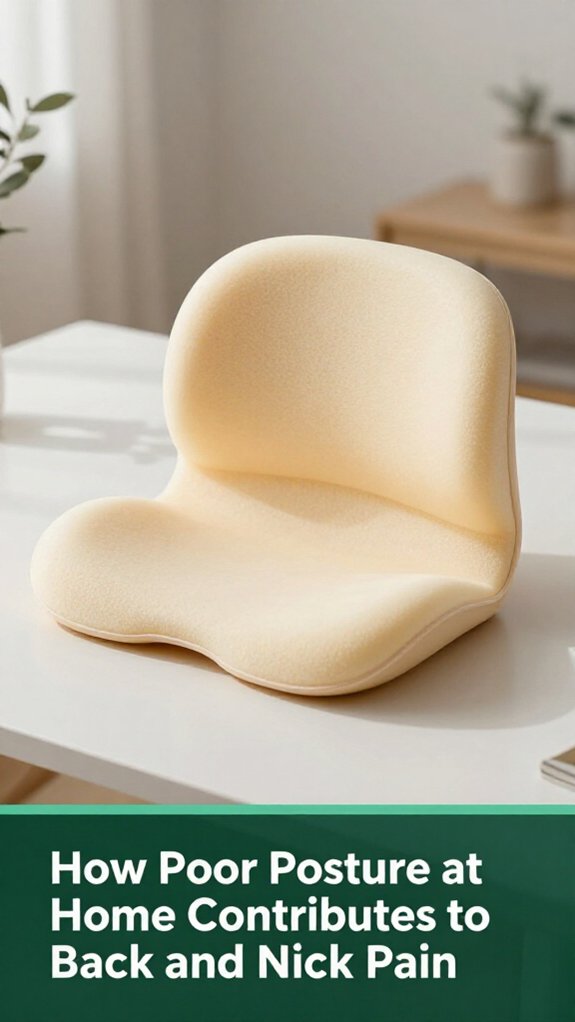
Look, I’m sure you’ve felt it hours into a work session on your laptop, and suddenly your neck feels tight or your lower back starts to nag. That’s poor posture doing its thing. Here’s what’s happening:
Now that you know poor posture can set the stage for back and neck pain at home, it’s time to talk about what’s often sneaking in behind the scenes psychosocial stressors. According to OSHA ergonomic guidelines, elevated stress levels can significantly impact musculoskeletal health.
You’ve probably noticed that when stress levels increase, your pain tends to worsen sometimes quite noticeably. Elevated stress causes your muscles, especially around the cervical, thoracic, and lumbar regions, to tense up without your awareness. This muscle tension can transform mild discomfort into a persistent, intense ache.
For instance, chronic muscle tightening in the lumbar region can contribute to conditions like sciatica or lumbar strain.
Depressive feelings and ongoing emotional distress can also amplify your risk of developing chronic lower back pain. Research on spinal biomechanics suggests that emotional stress can alter muscle activation patterns, increasing strain on the lumbar and sacral muscles. This increased muscle activation can lead to longer recovery times and worsened pain.
Furthermore, work-family conflict and feelings of being lacking privacy create ongoing psychological stress. These psychosocial stressors may interfere with your sleep quality and recovery processes, thus prolonging musculoskeletal discomfort. Additionally, muscle tension caused by stress has been linked to increased pressure on lumbar discs, worsening back pain symptoms.
According to Mayo Clinic recommendations, preventing chronic pain involves managing stress effectively to reduce muscle tension.
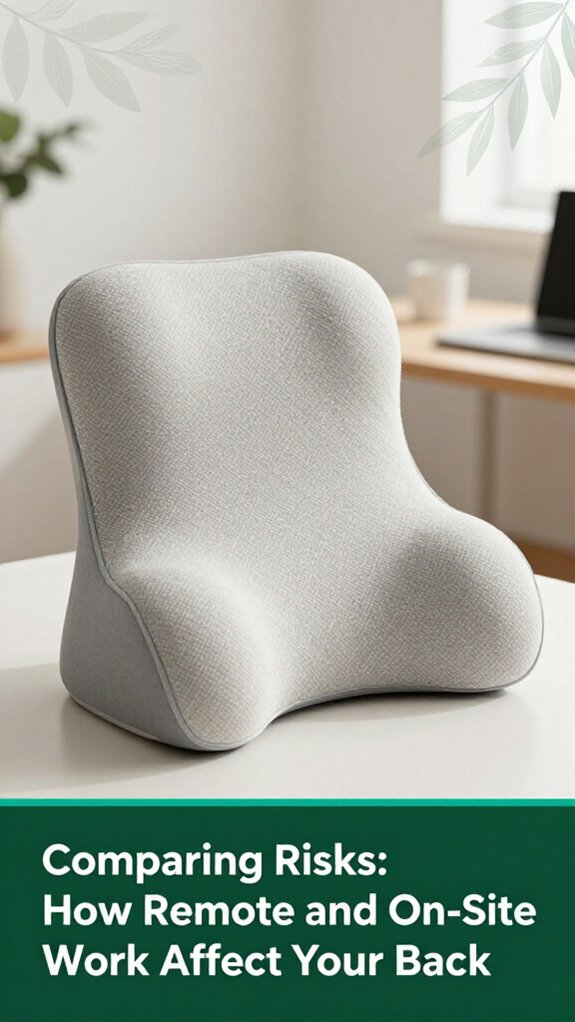
If you’ve ever spent hours at home, only to find your back aching by day’s end, you’re not alone. Here’s the thing: remote work often means worse ergonomics and longer screen time, which can increase the risk of musculoskeletal discomfort.
Home setups usually lack adjustable chairs and proper desk space, making you slouch or strain your lumbar and thoracic spine. Without proper support, maintaining good posture becomes difficult, leading to increased lumbar flexion and thoracic kyphosis. Many ergonomists recommend adjustable furniture to reduce these risks.
You tend to sit longer without breaks imagine that, six hours straight boosting neck, shoulder, and back pain, including conditions like sciatica and muscle fatigue. Prolonged static sitting can increase pressure on the lumbar discs, raising the risk of disc herniation.
Regular breaks and movement are crucial for spinal health.
Lack of employer support leaves you to fix these issues yourself, which can be a real pain. Many people compensate by improvising with makeshift solutions that may not promote proper alignment, leading to poor ergonomics.
Plus, handling interruptions and environmental distractions at home keeps your posture constantly shifting, adding to spinal fatigue and thoracic strain. These shifts can cause muscular imbalance and exacerbate existing spinal conditions.
Additionally, prolonged sitting leads to fluid loss in discs, causing stiffness, potential degenerative changes, and accelerated wear of vertebral discs, which can worsen back problems intervertebral disc health.
All these factors suggest that remote work increases risks for back pain and musculoskeletal disorders. Your body notices every minute of it, so it’s important to prioritize ergonomic adjustments and regular movement to protect your spine.
All right, so here’s the thing: the long-term effects of working from home on your spine aren’t just minor inconveniences they can actually persist for years if you ignore them. You might notice your lumbar or thoracic back becoming sore, or your neck feeling tight, but what’s really happening is your workstation often lacking ergonomic adjustments causing persistent strain.
According to OSHA ergonomic guidelines, poor workstation setup, such as insufficient lumbar support or incorrect monitor height, can contribute to ongoing musculoskeletal issues. Over time, this creates pain patterns that stick around, similar to that one song you can’t get out of your head. Research indicates that improper ergonomics directly contribute to chronic spinal problems.
The more you stay in poorly designed setups or push through fatigue, the more your pain trajectories latch onto you. People who sit more than 6 hours a day are especially at risk of developing chronic conditions like lower back pain, disc degeneration, or cervical strain.
If these issues are left unaddressed, they can develop into high-stable pain cycles or sudden flare-ups, impacting your daily activities and overall spinal health. Your long-term spine health depends on paying attention now and making ergonomic adjustments, such as using adjustable chairs with proper lumbar and thoracic support, positioning your monitor at eye level, and taking regular breaks.
Research on spinal biomechanics suggests that early intervention with ergonomic improvements can significantly reduce the risk of persistent pain. Ultimately, prioritizing proper workstation setup is key to preventing long-lasting spinal issues so act now rather than later.
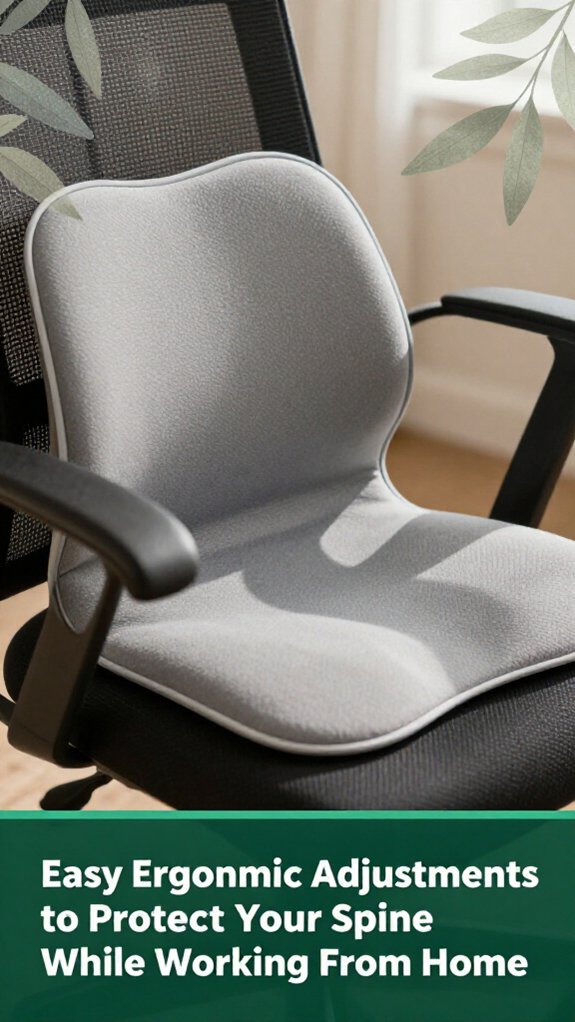
You don’t need a fancy setup to protect your spine just a few simple tweaks can make all the difference. Honestly, I’ve been there: sitting in that awkward chair, craning my neck to see the screen, feeling that familiar ache creeping in. Here’s what helped me:
Simple, right? But effective.
Number one: you’ve got to set yourself up right. Use an ergonomic chair with lumbar support trust me, your lumbar spine and lower back will thank you. Keep your monitor at eye level; if it’s below or above, your cervical and upper thoracic regions will complain. According to OSHA ergonomic guidelines, keeping the monitor at eye level helps maintain proper neck alignment, reducing strain.
Keep your keyboard and mouse at elbow height so your shoulders don’t tense up or develop undue strain. Research on spinal biomechanics suggests that maintaining a neutral arm position decreases risk of shoulder and upper back discomfort. Now, here’s the thing: micro-breaks every 30–60 minutes, which means taking about five minutes to stretch or walk around, really matter. Your lumbar, thoracic, and cervical regions need these resets to prevent muscle fatigue and joint stiffness. Incorporating proper lighting levels can also significantly improve visual comfort and reduce eye strain during extended work sessions reduces eye strain.
| Strategy | Why it helps | Tips |
|---|---|---|
| Use ergonomic gear | Keeps joints and spinal segments aligned, reducing discomfort (per Mayo Clinic recommendations). | Use an ergonomic chair with lumbar and thoracic support, and an adjustable monitor arm. |
| Change posture regularly | Avoids developing poor static postures that can lead to chronic pain. | Switch between sitting and standing every 30–60 minutes. |
| Take regular breaks | Prevents muscle fatigue and repetitive strain injuries. | Include stretching of major back, neck, and shoulder muscles; walk briefly around the workspace. |
| Keep feet flat | Promotes a neutral pelvis and lumbar lordosis (curvature). | Use a footrest or keep feet flat on the floor, especially if your chair height elevates your hips above your knees. |
| Practice pelvic tilts | Maintains the natural curvature of the lumbar spine, preventing hyperlordosis or flattening. | Perform gentle rocking motions while seated to engage core muscles and support lumbar health. |
Follow these strategies consistently, and your back may just give you a high five.
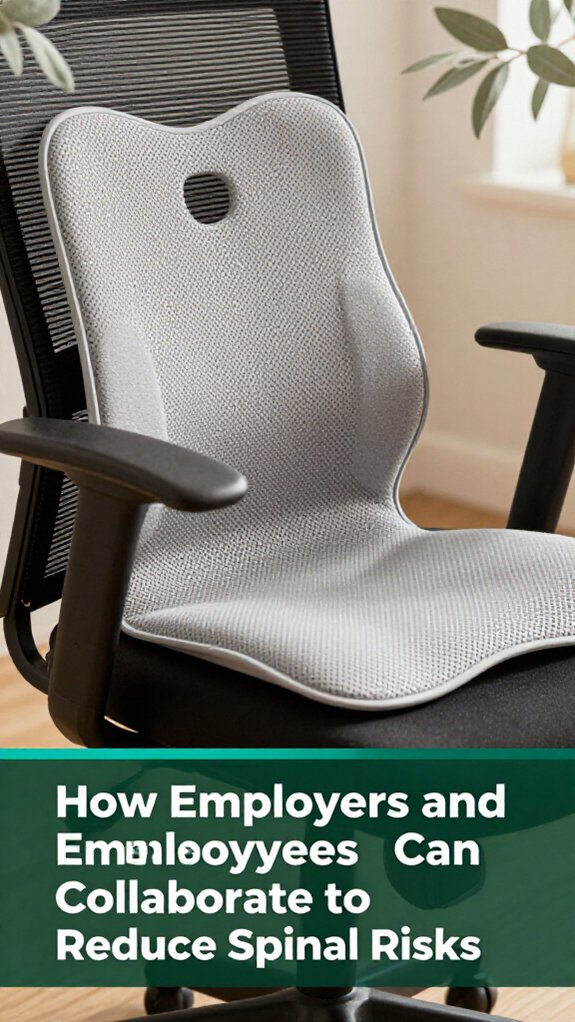
When it comes to reducing spinal risks from remote work, collaboration between employers and employees isn’t just a nice-to-have it’s essential. You need good equipment, and your boss needs to listen. Here’s how you can team up:
Together, you and your employer can make remote work safer and healthier by implementing ergonomic best practices and fostering open communication.
Ergonomic tweaks keep your spine happier long-term.
All right, when you adjust your chair for lumbar support and keep your monitor at eye level, you’re reducing strain on your neck and lower back.
Now, add frequent breaks and micro-movements your spine gets a chance to relax.
Basically, investing in these small changes lowers the risks of chronic pain later on, making sure that after hours, you’re still feeling good, not wrecked.
Breaks bolster your back’s balance by breaking up long periods of sitting, which keeps your muscles from tightening and your joints from stiffening.
When you take regular rests, you give your spine a breather, preventing those sneaky aches.
Think of it like scheduling mini-muscle massages you’re actively easing tension, reducing fatigue, and fighting off the dreaded backbends of discomfort that come from ignoring those little pauses.
You’re right full-time home workers face higher risks of lower back and neck pain compared to hybrid folks.
That’s mainly because away from the office, your setup might lack the supportive chairs and correct monitor height, leading to worse posture.
Hybrid workers, with some days in the office, can benefit from better ergonomics sometimes.
You’ll notice subtle signs like a stiff neck after long screens, or a dull ache in your lower back that lingers.
All right, if you catch yourself leaning forward or rounding your shoulders, that’s a warning. Pay attention to persistent muscle tightness or discomfort after sitting too long.
Basically, if you start feeling more discomfort than usual or your posture feels off, it’s time to check in these early signs won’t hide forever, so address them before they worsen.
You’ll find that psychological factors, especially stress and depression, really hype up your back pain.
When you’re stressed, your muscles tense up think of it like your body’s way of preparing for a fight, even if there’s no fight. Anxiety and burnout make you feel like your pain’s worse because your mind amplifies the discomfort.
Low mood messes with your coping skills, so it’s no surprise your back pays the price in worsening pain.
All right, here’s the deal: if you sit all day at home without paying attention to your spine, it’ll protest. That little nagging neck ache or sudden lower back stiffness? Yep, your body’s way of saying, “Hey, I need better support and movement.” So, take those ergonomic tips seriously you’re not just saving your back now, but in the long run. Trust me, your future self will thank you at your next barbecue, when you’re not the one limping to the snack table.