Physical Address
304 North Cardinal St.
Dorchester Center, MA 02124
Physical Address
304 North Cardinal St.
Dorchester Center, MA 02124

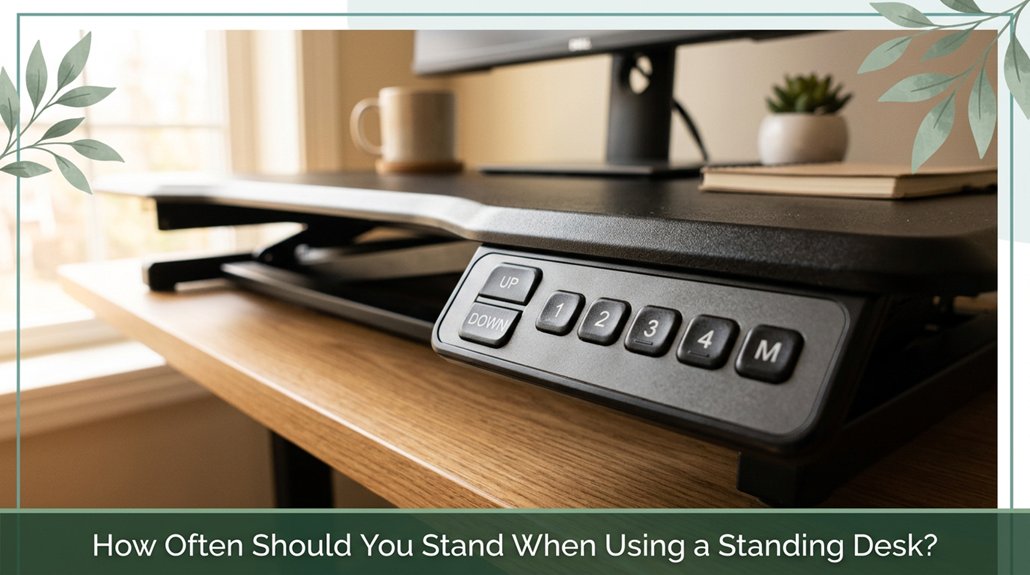
If you’ve been relying on a standing desk but find yourself stiff or uncomfortable after a short while, you’re not alone. The truth is, standing all day isn’t the answer either you need a balance. Research suggests you should switch between sitting and standing every 30 to 60 minutes, with standing bouts lasting around 15 to 30 minutes.
It may sound like a lot of toggling, but it’s really about preventing discomfort and keeping your back happy. Keep moving, listen to your body, and stay tuned there’s more helpful tips coming your way!
All right, let’s get real you’ve probably experienced that slump when you’ve been sitting at your desk for too long, causing your lumbar and thoracic regions to feel stiff and compressed, and your energy levels to decline.
Research on spinal biomechanics suggests that prolonged sitting can contribute to poor posture and musculoskeletal discomfort. If you don’t incorporate movement, these issues may lead to chronic back pain or conditions like thoracic kyphosis. Standing periodically helps counteract the negative effects of extended sitting on spinal health. That’s why figuring out how often to stand at a standing desk matters. The research indicates that standing more than 2–3 hours a day, broken into smaller intervals, can boost your mood, energize your focus, and even support better spinal alignment.
According to OSHA ergonomic guidelines, alternating between sitting and standing helps reduce pressure on the lumbar discs and relaxes the seated muscles. Incorporating ergonomic setup adjustments can also significantly decrease strain and discomfort during standing periods.
Shifting your routine standing, sitting, then standing again supports your body and keeps that mental fog at bay. It’s about finding that sweet spot to prevent discomfort and maintain productivity.
Incorporating ergonomic solutions like adjustable desks and anti-fatigue mats can further promote spinal health and encourage regular movement.
Ever find yourself sinking into your chair, thinking, “Okay, I’ve been sitting for a while, time to stand,” only to realize it’s been an hour and you’re still glued there? That’s totally normal. The key isn’t just beating that urge to sit but knowing when to switch positions.
Experts suggest changing your posture every 30 to 60 minutes so you don’t stay in one position too long. Think of it like a dance: sit for about 30 to 60 minutes, then switch to standing or move around for 5 minutes. This helps prevent discomfort and musculoskeletal issues. According to OSHA ergonomic guidelines, alternating positions reduces strain on the lumbar, thoracic, and cervical spine. Incorporating movement and ergonomic practices can further enhance back health and reduce discomfort throughout the day.
Switch positions every 30 to 60 minutes to prevent discomfort and reduce strain on your spine.
Research on spinal biomechanics suggests aiming for 2.5 to 3.5 hours of standing in an 8-hour workday. The goal is to keep your muscles engaged and your metabolism active without turning your workspace into a gym, which is unrealistic.
Remember, frequent movement fosters better circulation and reduces the risk of issues like sciatica and lower back pain.
You’ve probably noticed that your back starts to complain after about 30 minutes of standing your lower lumbar and sacral regions feel tense, and your legs may feel like they’re about to give out. According to OSHA ergonomic guidelines, the ideal standing duration involves alternating between standing and sitting, with breaks to move or stretch.
The recommended standing bouts are generally in the range of 20 to 30 minutes, paired with brief periods of sitting or light activity. Here’s a quick breakdown:
| Duration | Benefit | Tip |
|---|---|---|
| 15 min | Prevent calf strain | Good for beginners or as an initial interval |
| 20 min | Reduce lower-back fatigue | Ideal for a quick, restorative break |
| 30 min | Maximize comfort and productivity | Follow with light movement or stretching |
| 45 min | For those experienced with ergonomic standing | Use anti-fatigue mats (which decrease spinal compression and leg discomfort) |
Additionally, many ergonomists recommend using anti-fatigue mats for longer standing periods, especially when standing exceeds 30 minutes, to help combat muscle fatigue and maintain spinal health. It is also important to pay attention to body signals muscles and joints will signal when they need a break or adjustment.
Incorporating ergonomic accessories like monitor arms and footrests can further improve comfort during standing sessions. Remember to listen to your body: muscles and joints will signal when they need a break or adjustment. Incorporate movement and stretching to prevent muscle stiffness and support spinal alignment. Ultimately, the optimal standing duration varies based on individual comfort and physical condition, but maintaining regular breaks and light activity can help prevent discomfort and musculoskeletal disorders.
When you’re setting up your desk for comfortable standing, the goal is simple: make sure everything you need is within easy reach so you don’t spend your time stretching or twisting awkwardly.
Start with the desk height set it at your standing elbow level, so your forearms are parallel to the floor, which helps maintain proper shoulder and wrist alignment (according to OSHA ergonomic guidelines). Place the keyboard and mouse directly in front of your elbows, keeping that 90-degree bend to reduce strain on your wrists and forearms.
Now, for eye level your monitor’s top should be at or just below eye height, possibly using a riser or adjustable arm. This positioning helps prevent neck strain and thoracic kyphosis, which can occur from looking upward or downward excessively (research on spinal biomechanics suggests). Proper monitor positioning can also reduce overall fatigue, making it easier to maintain good posture throughout your workday.
Support your feet properly by wearing supportive shoes and standing on an anti-fatigue mat these measures reduce lower back and leg fatigue. Incorporating ergonomic workspace setup further enhances comfort and sustains good posture during extended periods of standing. Shift your weight between your legs every few minutes to promote circulation and prevent stiffness.
Ensure that all objects you need are accessible so you avoid reaching or twisting, which could lead to discomfort or musculoskeletal issues.
When your standing desk setup is correct, standing feels natural, not like a workout. Proper ergonomics help maintain spinal neutrality and reduce the risk of discomfort or injury over long periods.
All right, getting your standing time from a few minutes here and there to longer stretches can feel a bit like tightening a loose screw, and you don’t want to crank it too hard and risk stripping the threads. Here’s the thing: start small. During your first week, aim for 15–30 minutes of standing per hour. Use a timer or desk reminder to help you stay on track, and don’t go beyond 30 minutes before switching back to sitting. Alternating between sitting and standing helps prevent musculoskeletal issues and promotes better comfort throughout the day. After a couple of weeks, you can extend your standing blocks to 20 or even 30 minutes. Always listen to your body to avoid fatigue or discomfort. Research on spinal biomechanics suggests that micro-movements like calf raises or brief walks can help prevent stiffness and reduce the risk of musculoskeletal strain. Incorporating movement breaks into your routine can enhance circulation and support spinal health. Be patient; your body needs time to adapt. Rushing the process might lead to discomfort or injury before you hit your optimal standing routine.
Standing comfortably isn’t just about standing still; it’s about giving your muscles and joints a little extra love. You’ve probably felt that after an hour, your foot feels like a tiny volcanic eruption, or your lower back whispers, “Hey, I’m still here,” indicating muscular fatigue or strain.
According to OSHA ergonomic guidelines, anti-fatigue mats are a game-changer they reduce foot pressure by up to 30% and lower perceived leg fatigue by 20-40% after just a couple of hours, helping to mitigate discomfort in the plantar fascia, metatarsals, and calf muscles.
Pairing anti-fatigue mats with shoes that have proper arch support and a heel height under 2 centimeters (which reduces strain on the lumbar and sacral spine) can significantly improve comfort during prolonged standing. Research on spinal biomechanics suggests that small micro-movements, such as shifting your weight or performing calf raises periodically, help prevent static muscle loading in the lower back, calves, and thighs.
Additionally, maintaining proper hydration and taking short breaks to stretch and walk promote circulation and reduce muscular stiffness.
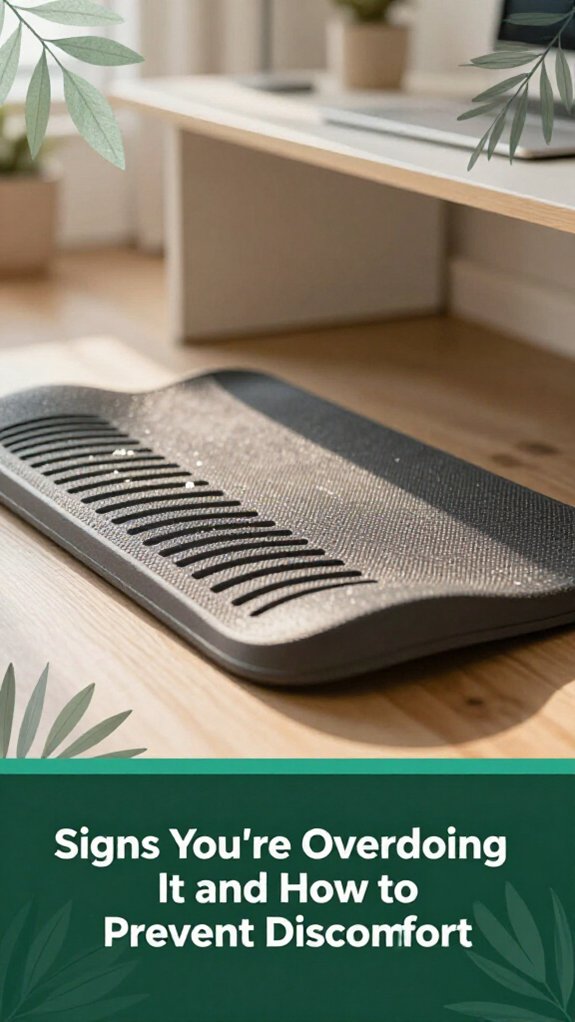
It’s easy to push through the discomfort initially, thinking that a little soreness or tiredness just comes with standing you’re upright, after all. However, if you ignore warning signs, it can lead to more serious issues.
Pushing through initial discomfort while standing may seem fine, but ignoring warning signs can cause serious health issues.
For example, aching feet or arch pain may occur after just 30–60 minutes, or calf soreness may develop after an hour, especially if you’re not shifting your weight regularly. Feet swelling or varicose veins can become more visible after several hours, and your lower back might start to ache after an hour on a hard surface, according to OSHA ergonomic guidelines.
Here’s how to identify when you’re overdoing it:
To prevent discomfort, take regular breaks, move around frequently, and listen to your body’s signals. Ignoring these signs can lead to conditions like plantar fasciitis, sciatica, or lower back strain, so proactive measures are essential.
Look, I’ve been there sitting or standing for hours, feeling that weird ache creep into your back or calves, and thinking, “Well, I’ll tough it out.”
But here’s the truth: small movement breaks can make a huge difference without taking up half your workday. According to OSHA ergonomic guidelines, you should aim for a quick walk or stretch every 90 minutes just 20 to 60 seconds so your muscles don’t get angry.
After each hour of sitting, stand or walk for 1 to 2 minutes, and do some gentle stretches to keep your lumbar and thoracic spine healthy.
Doing light activity, like calf raises or marching in place, for just a few minutes every hour can boost circulation and support lower-back health, especially when sitting for extended periods.
Research on spinal biomechanics suggests that periodic movement helps prevent stiffness and lower back pain.
Ultimately, regularly moving your body from a seated or standing position keeps your muscles and joints from turning into a stiff, protesting statue.
You’re probably standing too long if you start noticing aching feet, sore calves, or dull lower-back fatigue.
All right, your body’s warning signs are pretty clear they suggest you’ve gone past the 40-minute mark of static standing.
If your legs or back are signaling discomfort, it’s time to shift, sit down, or walk around a bit.
Trust me, ignoring these cues can turn into something more annoying than a stubborn pop-up ad.
Standing continuously is like trying to hold a plank on one arm it might seem doable at first but quickly becomes exhausting. You’re better off taking frequent breaks, around every 30-45 minutes, to shift things around and avoid muscle fatigue.
Think of it like changing gears in a car you keep going smoothly without overstraining. Short breaks, micro-movements, and alternating sitting and standing keep your body happy and pain-free long-term.
You can easily incorporate movement into standing by switching your stance every 10-15 minutes shift your weight, change foot positions, or gently stand on one foot.
Take short breaks to stretch your neck, shoulders, or hips, or walk a few steps during water breaks or calls.
It’s like giving your muscles a little dance party they’ll thank you with less fatigue and fewer aches.
You’ll know your desk’s ergonomic enough when your elbows are at 90 degrees, wrists stay straight, and your monitor hits eye level without tilting your head.
It’s about feeling relaxed in your shoulders and back no tension or constantly adjusting. Honestly, if you finish a workday feeling good and not like you’ve run a marathon in place, you’re probably good.
Trust me, it’s a balance; tweak until it just feels right.
You’re probably surprised to learn that standing too long can be harmful that after about 2 hours, your circulatory risk increases by 11%.
All right, imagine your blood pooling in your legs, and your lower back starts protesting. The key is moderation. You want to stand sure but also sit, walk, or shift around every 20-30 minutes.
It’s all about giving your body a break before discomfort turns into real health issues.
All right, you’ve got the basics down stand, sit, switch, and stretch. Remember, your body’s a balancing act, not a workout routine. It’s about building a sustainable rhythm that keeps your muscles motivated and your mind sharp. So, don’t push to the point of pain listen to your body, and give it a break before it starts throwing silent protests. Trust me, your back and brain will thank you at the barbecue.