Physical Address
304 North Cardinal St.
Dorchester Center, MA 02124
Physical Address
304 North Cardinal St.
Dorchester Center, MA 02124


Standing desks won’t magically fix everything, but they can make a real difference if you spend hours sitting. If your lower back is talking to you by 3 pm, or you’re feeling sluggish after long stretches at your desk, switching between sitting and standing might help. It’s not just about standing it’s about breaking up those lengthy sitting sessions that can harm your blood sugar, heart, and overall comfort.
By alternating positions, you can improve your posture, reduce back pain, and burn a few extra calories and that’s enough to notice. Just make sure to use it wisely to avoid hurting yourself. Stick around, and I’ll share some tips to help you get the most out of your standing desk.
This article contains affiliate links. If you purchase through them, I may earn a small commission at no extra cost to you. I only recommend products I genuinely believe in.
So, do standing desks actually improve your overall health? The short answer is, it’s complicated. Is a standing desk good for you? Turns out, yes but with some caveats.
Research shows that breaking up sitting time with standing can lower your blood sugar after meals and improve blood flow, which might lower your risk for diabetes and cardiovascular issues over time, according to Mayo Clinic recommendations.
But here’s the thing: just standing all day isn’t a silver bullet. Prolonged static standing can lead to leg edema and joint discomfort, particularly in the knees and lower back. According to OSHA ergonomic guidelines, too much static standing can also contribute to fatigue and musculoskeletal strain, especially if your standing surface isn’t ergonomically optimized.
The key is balancing sitting and standing, ideally with short bouts of standing about 15 to 30 minutes at a time so that your muscles, including those supporting your lumbar and thoracic spine, and your circulation stay healthy.
Using an adjustable sit-stand desk can help you find this optimal rhythm, reducing the risk of developing issues like thoracic kyphosis or sciatica caused by poor posture.
Additionally, incorporating movement and adjusting the desk height regularly support better ergonomic alignment and overall well-being.
In summary, if you use a sit-stand desk wisely, it *can* be beneficial for your health, but it’s important to avoid prolonged static standing and incorporate movement.

All right, if you’ve ever spent hours hunched over your keyboard and then suddenly felt like your neck and shoulders had turned into a kind of stiff sculpture, you’re not alone.
What you mightn’t realize is that using a standing desk can actually help with this. It encourages better posture by supporting your neutral spine and reducing slouching, which flats your natural lumbar lordosis, according to OSHA ergonomic guidelines.
When you stand, you’re less likely to promote that forward head posture that makes your neck ache later.
Research on spinal biomechanics suggests that standing more often can reduce strain on your cervical and thoracic vertebrae by maintaining proper alignment. Plus, standing increases awareness of how you sit and stretch your muscles reducing overall postural strain and helping prevent conditions like thoracic kyphosis or lower back pain.
Many ergonomists recommend alternating between sitting and standing to give your lumbar, cervical, and sacral regions a break during long work hours, especially when used in conjunction with proper desk height setup.
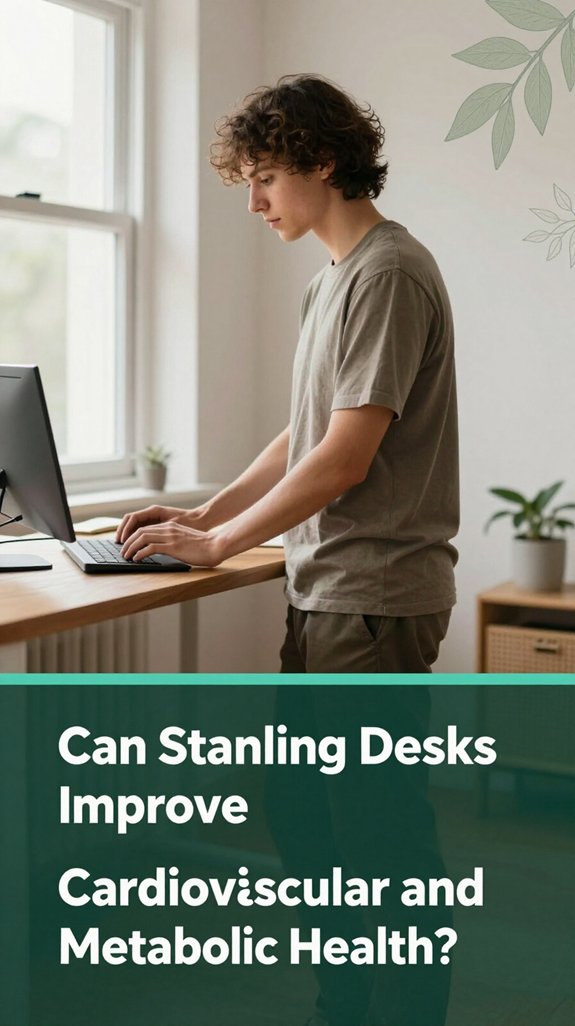
Ever wonder if standing more during your workday could actually benefit your heart and metabolism? Research indicates that switching from sitting to standing reduces sedentary time by about 70–88 minutes daily and shifts your behavior from “prolonged sitting” to “light activity,” according to OSHA ergonomic guidelines.
It’s not about sweating or running marathons; it’s about small, consistent changes. Standing boosts blood flow in your legs, which helps keep your arteries more flexible and healthier important factors in maintaining cardiovascular health. Additionally, some studies suggest that standing desks can improve arterial compliance, which is a key marker of long-term heart health, per Mayo Clinic recommendations. Improved arterial flexibility can contribute to better cardiovascular outcomes over time.
Increasing daily movement can also help reduce the risk of developing metabolic conditions like type 2 diabetes. If you sit for more than 6 hours a day, incorporating more standing into your routine can add up to meaningful cardiovascular benefits. It’s not a magic fix, but standing more can help your circulatory system work more efficiently even if you don’t lose weight.
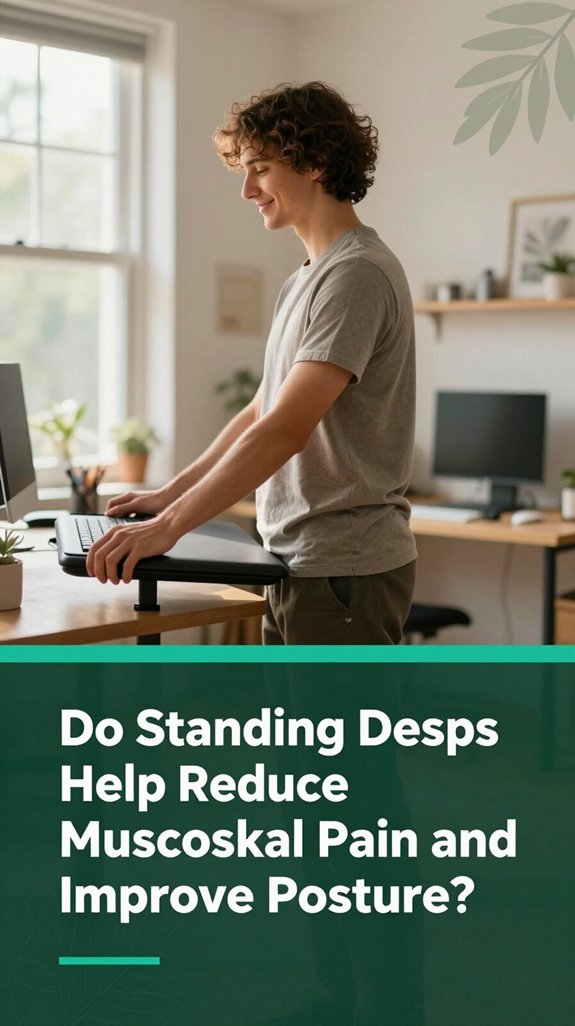
When you switch from sitting to standing at your desk, you might notice your neck and back feel a little different sometimes better, sometimes a bit strange until your body adjusts. It’s normal because your muscles and joints need a moment to adapt.
Research on spinal biomechanics suggests that sit-stand workstations can help reduce discomfort in the neck, shoulder, and lower back areas, especially when you decrease sitting time by a couple of hours a day.
According to Mayo Clinic recommendations, reducing prolonged sitting can diminish muscular strain and improve overall posture. Long-term evidence indicates that these benefits may be sustained over extended periods if sit-stand desks are used regularly. Regular adjustments to your desk setup are essential to maintain comfort and prevent strain. Here’s a quick overview of the benefits:
| Standing Desk Benefits | Feeling Better? |
|---|---|
| Less muscle overload in the lumbar and cervical regions | Yes, more upright posture |
| Reduced fatigue, particularly in the shoulder and neck muscles | Definitely, less tired |
| Improved spinal alignment, including thoracic kyphosis correction | Feels good when aligned properly |
Moving more frequently and alternating between sitting and standing helps improve posture and eases muscular strain your body finally gets a chance to recover from sustained static loads.

Imagine this: you’ve been sitting at your desk for a few hours, and honestly, your lumbar, thoracic, or sacral regions might be telling you to stop. You might wonder if standing actually helps burn more calories or just makes you feel like you’re doing something. Here’s the deal:
All right, so standing alone isn’t a weight-loss miracle. It provides a tiny caloric boost, but many ergonomists recommend combining standing with movement and postural adjustments for better health outcomes.
Every little bit helps, so aim to incorporate movement into your routine whenever possible.
You probably notice it, especially on those days when your mood feels stuck in neutral or your energy seems to be running on fumes. I’ve been there feeling sluggish, stressed, and just unmotivated.
Here’s the thing: research on ergonomic interventions shows that standing desks can actually boost your mood and energy levels. When you switch between sitting and standing, you tend to feel less tense and more upbeat. Additionally, studies show participants using standing desks report less stress and fatigue, with 87% experiencing increased vigor. This evidence supports the idea that incorporating standing into your work routine can help break cycles of low energy and low productivity.
Per Mayo Clinic recommendations, standing reduces stress hormones like cortisol, so you’re less likely to feel overwhelmed. It’s not just a placebo people report feeling more vigorous and less fatigued after using a sit-stand desk. This suggests that integrating standing into your work routine can help break cycles of low energy and low productivity.
If your energy dips and you hit productivity walls, a standing desk might be an effective way to keep you feeling more alert. Incorporating adjustable height settings allows for a personalized experience, making it easier to transition smoothly and remain comfortable throughout your workday.
Changing your posture from sitting to standing periodically can lead to improvements in overall mood, reduced feelings of stress, and increased productivity during your workday.
All right, let’s get real standing at your desk all day sounds like a miracle cure, but it’s not quite that simple. You might think that standing straight like a soldier is good, but here’s the thing:
Your back, knees, and ankles can start sending distress signals think swelling, pain, and discomfort especially if you jump in without a slow build-up. According to OSHA ergonomic guidelines, gradually increasing standing time can help prevent strain and injury.
Standing incorrectly can give your neck, shoulders, or upper back that “ugh” feeling, thanks to slouching or craning forward to see your monitor. Poor neck and upper thoracic posture can lead to thoracic kyphosis and discomfort; maintaining proper monitor height and posture is critical to avoid these issues.
And don’t forget your wrists and elbows poor positioning here can lead to repetitive strain injuries such as carpal tunnel syndrome or cubital tunnel syndrome. Ensuring your wrists are in a neutral position and your elbows are close to your sides can help prevent these conditions. Additionally, paying attention to standing ergonomics can greatly reduce risk of strain.
Ever wonder if you’re using your standing desk the right way, or if you’re just standing there waiting for your legs to turn into jello? Here’s the scoop: keep your desk at elbow height, so your arms are at a comfortable 90° (which helps prevent shoulder strain).
Position the monitor at eye level no craning or downward gazing according to OSHA ergonomic guidelines, to reduce neck and cervical strain. Think of your back like a lazy cat upright but relaxed, with a slight natural curve in the lumbar region. This alignment supports the thoracic and lumbar spinal curves, reducing the risk of developing thoracic kyphosis or low back pain.
Place your keyboard close to your body so your wrists stay straight, not bent, which can help prevent wrist strain and conditions like carpal tunnel syndrome. When standing, your feet should be shoulder-width apart, with your weight evenly split between both feet.
According to research on spinal biomechanics, micro-movements such as shifts in weight or calf raises help pump blood through your lower limbs and reduce fatigue. Additionally, using an anti-fatigue mat can significantly lessen discomfort and improve circulation during extended periods of standing.
Make sure to regularly change your position and incorporate brief breaks every 20–30 minutes to prevent static muscle loading and improve circulation. Don’t forget moving frequently, resetting your posture, and avoiding prolonged static standing are key to maximizing the benefits of a standing desk.
Long-term studies on standing desks give us a pretty clear picture, though it’s not exactly a blockbuster revelation; it’s still worth knowing. Here’s what the research says:
Have you ever noticed how your back starts to protest after sitting in the same position for hours? If you’re an office worker sitting six to eight hours daily, a sit-stand desk might help improve your comfort and posture. People with musculoskeletal complaints such as lumbar, thoracic, or cervical strain often find relief when alternating between sitting and standing standing activates core muscles and reduces static spinal load, according to OSHA ergonomic guidelines.
Those with a family history of cardiovascular issues or weight concerns may also benefit, as standing slightly increases energy expenditure. Research on spinal biomechanics suggests that standing encourages better spinal alignment and reduces the risk of conditions like thoracic kyphosis or sciatica stemming from prolonged static postures.
However, if you have certain back or joint problems, standing all day might exacerbate discomfort or lead to fatigue. For example, individuals with sacral or knee joint issues may experience increased strain when standing for extended periods. Improper setup, such as insufficient desk height or poor footwear, can also cause musculoskeletal strain and discomfort. Additionally, the science of fit plays a vital role in ensuring that standing desks benefit users without introducing new risks.
Here’s a quick overview:
| Who Should Consider | When It Might Not Be Right |
|---|---|
| Those with musculoskeletal discomfort, including lumbar, cervical, or sacral issues | Risk of joint fatigue and discomfort if standing too long without breaks |
| Sedentary office workers engaging in prolonged sitting | Existing joint or back conditions that worsen with standing |
| Overweight individuals aiming to increase activity levels | Improper ergonomic setup causing strain on lumbar or lower extremity joints |
| People with cardiometabolic risks seeking to reduce sedentary behavior | Without proper ergonomic support to maintain neutral spinal alignment |
Use these guidelines as a starting point, but always listen to your body. Consulting with a healthcare professional or ergonomic specialist can help tailor solutions specific to your needs.
Here’s the thing: if you’re trying to make your workday less of a marathon of sitting or standing, structuring a sit-stand schedule is your best friend. You want to alternate every 30 to 60 minutes, not do a marathon stand or sit, or your body will remind you why that’s a bad idea.
Balance, my friend, is the secret, not just standing or sitting endlessly. Maintaining proper ergonomic practices reduces the risk of conditions such as thoracic kyphosis, sciatica, and carpal tunnel syndrome, which are common among extended sedentary workers.
Yes, standing desks can cause more leg and foot discomfort over time, especially if you stand for hours without breaks.
You might notice heaviness, aching, or swelling because your blood pools in your legs or your joints get compressed. It’s like asking your legs to become statues they weren’t meant to hold that static, upright pose all day.
Take breaks, vary your posture, and use cushioned mats to help your legs survive the standing marathon.
You should switch between sitting and standing every 30 minutes, like clockwork. Think of it as mixing up your playlist too much of one thing gets stale.
For example, stand for about 8 minutes, then sit for 20, and move around a bit. It’s all about avoiding stiffness, overuse, and keeping your energy up. Gradually increase standing time so your legs don’t scream at you, and throw in light movement to stay comfy.
Yes, standing desks can be effective without extra movement, but don’t expect massive changes just standing still.
All right, you’re probably thinking, “Cool, I can stand all day now, right?” Not quite.
Standing improves blood flow and insulin sensitivity on its own, but it’s not a miracle weight-loss trick.
Think of it more as a way to break up long sitting stretches and keep your body from “going dead” at your desk.
You’re not gonna find a magic wand, but standing desks can help prevent long-term conditions like diabetes.
I know what it’s like to sit too long and feel sluggish, but when you replace some sitting with standing, you decrease blood sugar spikes and improve insulin sensitivity.
Think of it as giving your body a little nudge in the right direction breaking up prolonged sitting helps keep your metabolism happy and healthier in the long run.
You should aim to set your standing desk just below elbow height with relaxed shoulders, keeping your monitor at eye level.
Switch between sitting and standing every 20–30 minutes, and move around during breaks think weight shifts or gentle stretches.
Support your forearms, avoid locking your knees, and keep your screen centered.
This setup helps prevent strain, reduces fatigue, and keeps you comfortable throughout the day.
Alright, so here’s the thing: standing desks aren’t magic, but they’re definitely a tool in your health toolbox. Think of them like that fancy olive oil you don’t need a ton, but a little can make things better. Maybe you’ll notice your back feels less protest-y, or your energy stays more even. Just don’t forget to shift around, sit when you need to, and keep listening to what your body says it’s the best health insider you’ve got.