Physical Address
304 North Cardinal St.
Dorchester Center, MA 02124
Physical Address
304 North Cardinal St.
Dorchester Center, MA 02124

Sitting all day at your desk can leave your neck, shoulders, and back feeling stiff and sore. But the good news is, a quick daily routine of simple desk yoga moves can make a real difference. Think gentle stretches like interlacing your palms overhead, soft neck tilts, seated twists, hip flexor lunges, and quick wrist and shoulder rolls.
These poses help relieve tension, boost circulation, and remind your muscles they’re still part of the team. Stick around for more moves that keep you feeling good trust me, it’s worth it.
This article contains affiliate links. If you purchase through them, I may earn a small commission at no extra cost to you. I only recommend products I genuinely believe in.
Sometimes it feels like your body has a built-in alarm system, alerting you that sitting for hours isn’t exactly doing you any favors. That’s where yoga for desk workers comes in. By taking just a few minutes to stretch and move, you can reduce neck, shoulder, and lower-back pain by up to 72%, according to research on spinal biomechanics.
It also improves your joint flexibility, boosts circulation, and helps manage weight even if you’re glued to your chair. Having limited movement throughout the day can lead to reduced thoracic spine mobility and increased risk of conditions like thoracic kyphosis or sciatica. Regular movement is essential for maintaining joint health.
Regular desk yoga promotes better spinal alignment and muscular balance, counteracting these issues. All right, maybe you already know you feel sluggish after a long day, but yoga can lift your mood, sharpen concentration, and even improve your posture by strengthening key muscles.
Properly executed stretches can target the cervical, thoracic, lumbar, and sacral regions, helping alleviate musculoskeletal discomfort. Basically, it’s like giving yourself a mini health upgrade whenever you hit pause without leaving your desk. Incorporating brief yoga or stretching sessions into your workday can significantly enhance your overall comfort, muscular endurance, and mental focus, making it easier to stay productive and pain-free.
If you’re serious about making desk yoga work, the first step is setting up your workspace so it won’t sabotage your good intentions. According to OSHA ergonomic guidelines, you’ve probably experienced that moment where your neck feels fine, then suddenly, mid-sentence, it’s screaming.
Adjust your chair so your thighs are parallel to the floor, and your knees are at a comfy 90-100° (which helps promote proper circulation and reduce strain). Make sure your lumbar support hits the natural curve of your lower back that little pressure can reduce disc stress by up to 30%. Your monitor should be at eye level and positioned 20-30 inches away, so you’re not craning or flexing your neck research on spinal biomechanics suggests that proper monitor placement reduces cervical strain and prevents forward head posture.
Keep cables tidy to prevent tripping hazards and eye strain, and use props like a block or an adjustable footrest to stay comfortable during longer stretches. Proper desk height is essential for supporting your active desk routine and preventing musculoskeletal discomfort. Good posture promotes spinal health, which is crucial for maintaining flexibility and preventing discomfort during your desk yoga routines.
These ergonomic adjustments help align your entire body, making quick, effective yoga movements safer and more beneficial. A well-structured workspace is essential for supporting your active desk routine and preventing musculoskeletal discomfort.
All right, if you’ve ever finished a long stretch at your desk, you’ve probably felt that tight grip creeping into your neck and shoulders, like they’re trying to cling on for dear life. I get it after hours hunched over, your pectoral muscles and anterior deltoids tend to tighten up, pulling your shoulders forward and contributing to a rounded thoracic spine, a condition known as thoracic kyphosis, according to research on spinal biomechanics. This tightness can lead to discomfort and poor posture.
Chronic tension in these muscles can also negatively impact breathing efficiency, making it even more important to incorporate movement and stretches throughout your workday. That’s where simple moves come in. For instance, interlace your palms overhead to stretch your pectorals and open up your thoracic spine, which can help reduce kyphotic curvature caused by prolonged slouching.
Raising your arms in this way can also alleviate tension in your shoulder girdle and improve chest mobility. Incorporating posture-enhancing exercises into your routine can further support the correction of misalignment and tension.
Next, try a seated twist to relieve tension in your upper back muscles, including the trapezius and levator scapulae, and enhance core stability. To perform this move, sit upright in your chair and gently twist your torso to one side, holding for a few breaths (about 3-5 seconds). Repeat on the other side.
Taking several deep breaths during each twist can help loosen tight muscles and release built-up tension your shoulders will thank you. Incorporating these poses into your daily routine can help reduce neck and shoulder discomfort caused by long periods of sitting, promoting better posture and overall musculoskeletal health.
You know that stubborn tightness in your hips that just won’t quit after a few hours at your desk? It’s like your hip flexors are doing their best to remind you they’re still there shortened, tight, and cranky. They’re supposed to lift your legs and stabilize your pelvis and lumbar spine, but prolonged sitting keeps them in a shortened position.
According to research on spinal biomechanics, this can reduce flexibility by up to 30% over time. No wonder your pelvis tilts forward, increasing lower-back strain and potentially contributing to conditions such as lumbar lordosis or sacroiliac joint discomfort. Prolonged sitting can lead to muscular imbalances, which further exacerbates back pain and discomfort.
All right, here’s the deal: stretching these muscles with gentle moves like kneeling hip flexor stretches or lunges can help lengthen them again. These stretches target the iliopsoas, rectus femoris, and tensor fasciae latae muscles, which are key hip flexors that often become tight from prolonged sitting.
Regularly doing these stretches will improve hip extension, lessen lumbar stress, and even boost gait efficiency. According to Mayo Clinic recommendations, consistent flexibility exercises can help prevent chronic lower back pain related to muscle imbalances.
Trust me, your back will thank you.
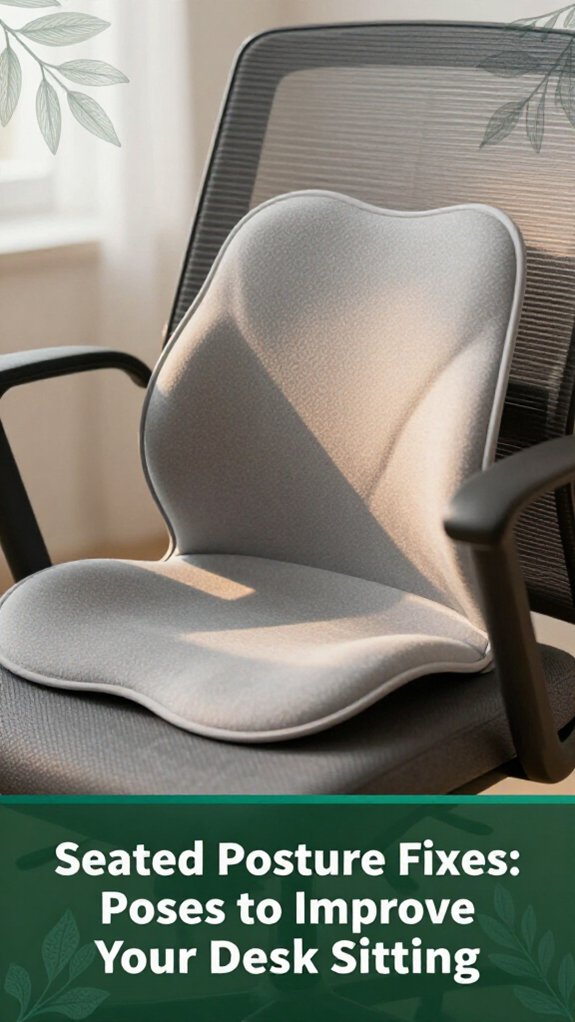
All right, let’s talk about fixing that slouchy, rounded-shoulder posture most of us develop after sitting at a desk for too long. You probably notice your shoulders creeping forward and your neck straining trust me, I’ve been there.
Here’s the thing: activating your core, especially the transverse abdominis, helps stabilize your lumbar and thoracic spine and reduces unnecessary lumbar lordosis, according to OSHA ergonomic guidelines. Engaging these deep abdominal muscles creates a more supportive core, which enhances overall posture and reduces strain during extended sitting periods.
Simple seated moves like “Dead Bugs” improve intra-abdominal pressure and support your lower back. These exercises help maintain lumbar stability, which is essential for good posture. Improving muscle imbalances through targeted exercises can significantly reduce shoulder tension caused by repetitive poor postures.
Then, incorporate shoulder-blade mobilization with retraction exercises to open up your pectoral muscles and ease upper-back tension. It’s like giving your shoulders a little reset, combating the common thoracic kyphosis caused by prolonged slouching.
Add in hip-flexor stretches and seated spinal twists, which promote pelvic stability and spinal alignment, without needing a fancy chair upgrade. Maintaining flexibility and mobility in these areas directly impacts your posture and can help prevent or alleviate lower back pain.
Your posture will thank you addressing these areas can prevent the development of chronic musculoskeletal issues related to prolonged sitting.
Ever feel like your brain hits a wall, and your shoulders are basically glued to your ears? I get it. You’re typing away, and suddenly, your stress rides a tidal wave up your neck. Here’s the thing: breathing techniques can be your secret weapon.
Try pairing a quick seated spinal twist with a 4-6 breath count this deepens your thoracic and lumbar spinal stretch and boosts oxygen flow to your brain and muscles. According to research on spinal biomechanics, twisting helps release tension in the thoracic region, fostering better posture and reducing discomfort.
Box breathing (inhale 4, hold 4, exhale 4, hold 4) helps steady your heart rate and regain focus, especially before a big meeting. This controlled breathing technique can help regulate autonomic nervous system responses, according to Mayo Clinic recommendations.
Alternate nostril breathing balances your brain’s hemispheres, making multitasking less of a headache by promoting hemispheric synchronization, as some evidence suggests. Pursed-lip exhales slow down stress spikes by activating parasympathetic response mechanisms.
Diaphragmatic breathing lowers blood pressure by engaging the diaphragm muscle, which improves oxygen exchange.
Moreover, integrating ergonomic practices into your routine can help prevent the buildup of tension caused by sustained static positions and repetitive motions, as highlighted in workplace injury prevention strategies.
Keep it simple: do these techniques regularly, and your body, including your cervical, thoracic, lumbar, and sacral regions, will thank you for the relief and improved posture.
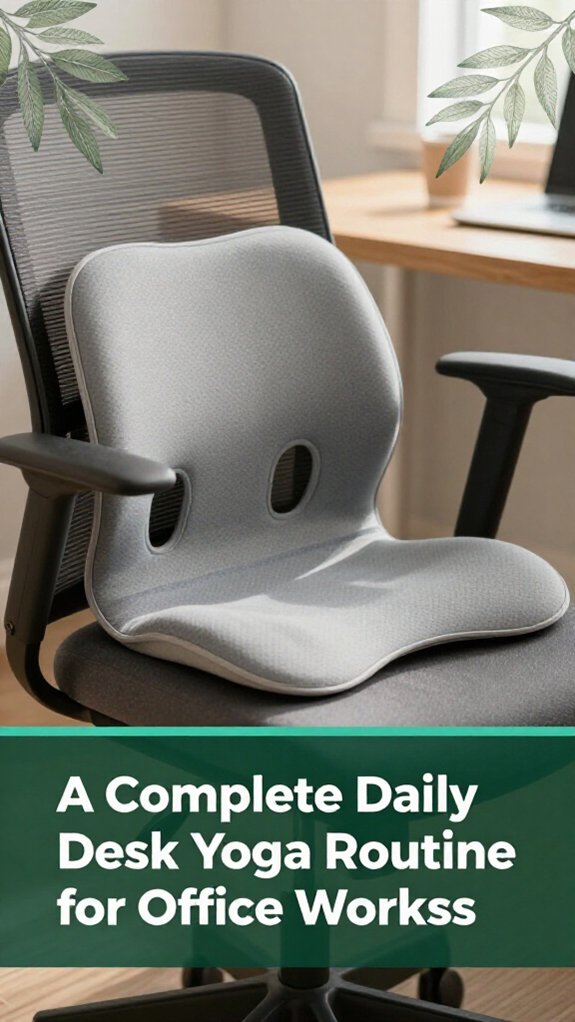
If you’re like me, you’ve probably noticed that by mid-morning, your body is just begging for a reset and that sitting all day isn’t exactly doing you any favors. According to OSHA ergonomic guidelines, prolonged sitting can contribute to issues like low back pain, neck strain, and thoracic kyphosis. Here’s a routine you can do right at your desk, no fancy yoga mat required.
Start with core activation and posture reset: interlace your palms overhead, twist to stretch your thoracic and lumbar regions, then lean side to side to loosen up those tense intercostal muscles and oblique muscles. These movements help improve spinal mobility and reduce stiffness.
Drop into a seated forward fold to release your lumbar and sacral lower back muscles, which often become tight from prolonged sitting.
Next, focus on neck and shoulder relief with gentle tilts and doorway stretches. These stretches release built-up tension from hours of screen time, which can contribute to cervical and upper thoracic discomfort. Many ergonomists recommend targeting these areas to prevent the development of thoracic kyphosis and cervical strain.
Finish with a mini full-body flow think chair squats, seated leg raises, and a desk plank designed to energize your muscles and boost circulation. Engaging multiple muscle groups like the quadriceps, hip flexors, core, and shoulder girdle helps counteract the effects of sustained static postures. Incorporating movement and neutral posture awareness during these exercises can optimize their benefits for long-term musculoskeletal health.
You probably already know that by the time you’re hitting the hour mark at your desk, your shoulders are creeping toward your ears, or your eyes are begging for a break from the screen.
According to OSHA ergonomic guidelines, micro-breaks standing for about 2 minutes or performing gentle stretches can significantly reduce musculoskeletal discomfort associated with prolonged sitting. Doing so can cut discomfort by approximately 30% after a long workday. These brief pauses also boost productivity, acting as a tiny boost of stamina for your brain and body.
Additionally, eye strain decreases by about 20%, and your stress levels tend to relax slightly. To help alleviate tension, incorporate quick neck tilts to gently stretch the cervical spine and release stiffness.
Wrist and hand stretches can prevent repetitive strain injuries like carpal tunnel syndrome. Shoulder rolls help loosen the thoracic region and reduce upper back stiffness. Forward bends can relieve pressure on the lumbar and sacral regions, particularly for those with tight lower back muscles.
Eye exercises, such as the 20-20-20 rule (looking 20 feet away for 20 seconds every 20 minutes), decrease visual strain on the cervical and ocular structures. Many ergonomists recommend these small pauses because they effectively reboot your energy and reduce physical discomfort no fancy equipment needed.
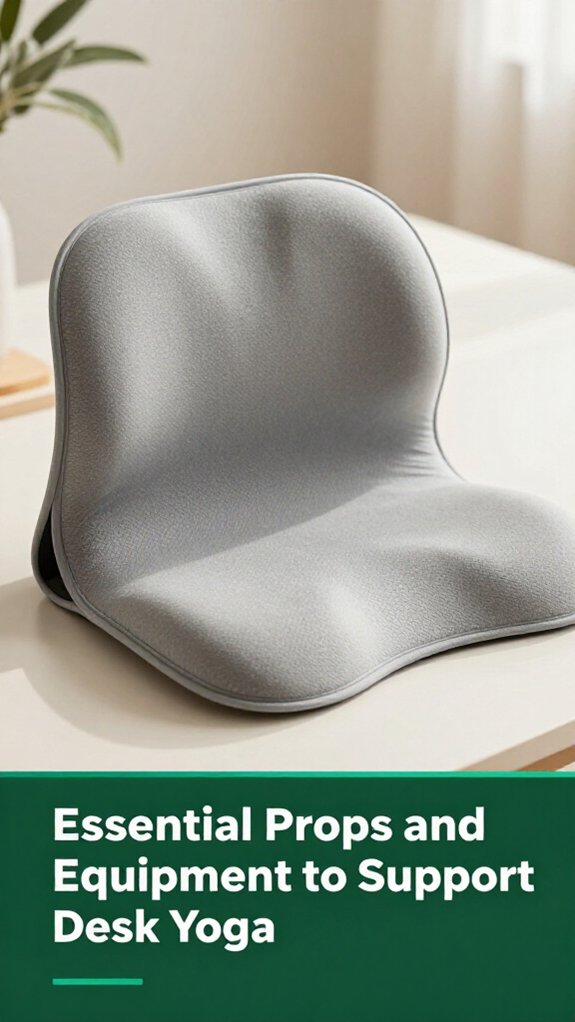
All right, so you’ve probably realized that a little added support can make a big difference when you’re squeezing in those yoga poses between meetings or during lunch. You need props that help with stability and proper spinal alignment think foam blocks, straps, or bolsters. According to research on spinal biomechanics, these tools can provide the extra height or reach you need without turning your stretch into a contortion act.
Adding simple props like blocks or bolsters can enhance stability and keep your spine properly aligned during office yoga.
For comfort, an adjustable chair or footrest can keep your hips, pelvis, and lumbar spine in the optimal position, preventing unnecessary strain or injury. An adjustable chair supports the natural lumbar curve, which is especially important for people with conditions like lumbar lordosis or sacral misalignment.
Don’t forget everyday office items such as a rolled towel or a bunch of books that can stand in for specialized gear without breaking the bank. These items can be used to support the thoracic or lumbar regions during seated stretches, providing additional stability.
Basically, with the right tools, your body gets the support it needs to feel better, faster. Proper ergonomic support during desk yoga helps maintain spinal health, reduce muscular tension, and prevent conditions such as lower back pain or thoracic kyphosis.
Getting into a routine with your desk yoga might sound tricky at first, but the key is making it fit seamlessly into your day no fancy setup needed. You can set reminders every 60–90 minutes, or link breaks to natural pauses like finishing a task or before a meeting. Using simple cues, such as a sticky note on your monitor or a soft sound, can effectively trigger your practice.
Keep your practice consistent by pairing yoga poses with habits you already do, such as drinking coffee or taking lunch breaks. This association makes it easier to remember to do your stretches regularly. Additionally, tracking your sessions can help you visualize your progress, which in turn keeps you motivated.
Schedule quick alerts so yoga becomes just another part of your work routine. Place visual cues on your desk, like sticky notes or small signs, to remind you of upcoming stretches. Pair specific stretches with your existing daily routines, such as stretching before or after coffee.
Sharing your progress with coworkers can also foster accountability and encourage you to stay consistent. Gradually increasing your goals or the duration of your stretches ensures you stay challenged without feeling overwhelmed.
You’ve probably noticed that sitting at a desk for hours on end can turn your body into a collection of aches, pains, and stiffness, and honestly, it’s no joke. Research shows that desk yoga actually reduces musculoskeletal discomfort, with effect sizes comparable to walking, which even beats yoga in easing pain intensity.
According to research on spinal biomechanics, a single yoga session can also improve vascular health by increasing artery diameter and blood flow, thereby reducing the vascular squeeze caused by prolonged sitting.
Mood-wise, just ten minutes daily of yoga lowers irritability and tension. This is because yoga activates the parasympathetic nervous system, making you feel calmer and more alert. For people who sit more than 6 hours a day, integrating short yoga sessions into your routine can significantly improve both physical comfort and mental well-being.
When it comes to desk yoga, one of the most common mistakes is neglecting proper alignment, which can quickly negate the benefits of your stretches. For example, even if you’re mindful to stretch your hamstrings, having rounded shoulders or a slouched back can cause you to pull on incorrect muscle groups, reducing the effectiveness of your practice. According to OSHA ergonomic guidelines, maintaining correct posture is essential to prevent musculoskeletal strain.
Here’s the thing:
Prioritize proper alignment to prevent strain and maximize your desk yoga benefits.
To avoid these issues, stay mindful of your alignment: support your spine with ergonomic chairs or lumbar cushions, and keep your shoulders relaxed and back directly over your hips.
You’re probably already aware that sitting at a desk all day can turn your body into a collection of stiff, protesting muscles. According to OSHA ergonomic guidelines, prolonged sitting can lead to musculoskeletal discomfort, especially in the lumbar, cervical, and thoracic regions.
It’s like your chair gradually becomes the villain in your personal stretching story.
Now, if you want your coworkers to join your yoga breaks, here’s the thing: make it easy and social. Create a recurring “Desk Yoga Break” event so it becomes part of the schedule. Share quick videos or infographics research on spinal biomechanics suggests that stretches targeting the neck, shoulders, and lower back can reduce discomfort, with some exercises cutting neck pain by up to 30%.
Offer small rewards or friendly competitions, like tracking participation points. Leading by example is crucial encourage managers to join in. When people see leadership participating, they’re more likely to follow suit.
Keep it simple and fun; soon enough, your office might just become the most collaborative and flexible workplace around.
Making desk yoga part of your workplace wellness plan isn’t just about adding another activity to the schedule; it’s about creating a smarter, more supportive environment for everyone. You can do this by aligning yoga with existing health initiatives, making it a part of scheduled wellness hours, and using survey data to tailor sessions. Combine yoga with mental health resources for a more holistic approach, and track participation to see what’s really working.
All right, here’s the thing: when you make yoga a policy like setting specific times it’s easier to get everyone on board. Using visual cues like posters can remind staff of effective poses and proper posture habits, which are essential for reducing musculoskeletal strain.
Include ergonomic training to support seamless adoption of healthier work habits, according to OSHA ergonomic guidelines. Track health improvements over time to measure the impact, and get certified facilitators for trusted guidance. Respect personal comfort and flexibility to ensure participation remains accessible and stress-free.
You’ll get way more out of your desk yoga sessions if you stick to a consistent schedule; trust me, it’s the secret sauce. Set a timer or reminders every 60 to 90 minutes to step away, even if just for a couple of minutes. Our bodies thrive on routine, so the more you do it at the same time each day, the faster it becomes a habit.
While you’re at it, pair each pose with slow, deep breaths inhale to lengthen and exhale to release tension.
Keep your workspace ergonomic according to OSHA ergonomic guidelines ensure your feet are flat on the floor, your monitor is at eye level (about 20 inches from your eyes), and your keyboard and mouse are positioned to keep your wrists in a neutral position. Proper ergonomic setup supports good posture and reduces strain on your cervical, thoracic, lumbar, and sacral regions.
Tracking your progress can help you see how small tweaks lead to significant comfort gains over time.
Yes, desk yoga can definitely help prevent long-term musculoskeletal issues.
You’ve probably felt that stiff neck or tight hips after hours at your desk those poses target exactly that.
By regularly stretching and moving, you reduce muscle tension, improve circulation, and help your body stay aligned.
All right, it’s like giving your muscles a little “break” so they don’t turn into lifelong villains.
Trust me, your future self will thank you.
Yes, there are risks. You might overextend your neck or twist too much without proper support, risking strains or nerve issues.
If you perform poses on an uneven surface or without warming up, you could sprain an ankle or strain your back.
And ignoring breath or posture can make things worse or cause dizziness.
All right, just stay mindful, listen to your body, and don’t go overboard your muscles will thank you.
You can start noticing changes in your posture within about 4 to 6 weeks, like shoulders subtly rolling back and your head sitting more naturally over your spine.
All right, your muscles and joints need time to relearn their good alignment think of it like re-tuning an old radio.
Consistency is key; practice daily, and your body will slowly but surely thank you, handing you that newfound, upright confidence.
Yes, desk yoga is suitable for all ages and fitness levels. I know, that sounds too good to be true, right?
But the truth is, these poses are gentle and adaptable. Whether you’re a kid, a retiree, or somewhere in between, you can modify movements to match your strength and flexibility.
All you need is a chair, a few minutes, and the willingness to take care of your body trust me, your posture will thank you.
Yes, you should probably chat with a healthcare pro before diving into desk yoga. I learned this the hard way after a minor back tweak I wish I’d checked first.
Sometimes, what seems harmless could hide something more serious or worsen if you do the wrong pose. Think of it like adding spice you want the recipe right before seasoning a delicate dish.
A quick consult keeps you safe and helps you get the most out of your practice.
All right, think of your desk as your tiny theater stage you’re the star, and these yoga moves are your backup dancers. When you give them a shot, your neck, shoulders, and hips get a quick curtain call of relief, preventing the drama of stiffness from stealing the show. So, next time you’re stuck in your chair, remember: a few simple poses can turn your workday from a solo act of discomfort into a well-rehearsed performance of wellbeing.