Physical Address
304 North Cardinal St.
Dorchester Center, MA 02124
Physical Address
304 North Cardinal St.
Dorchester Center, MA 02124

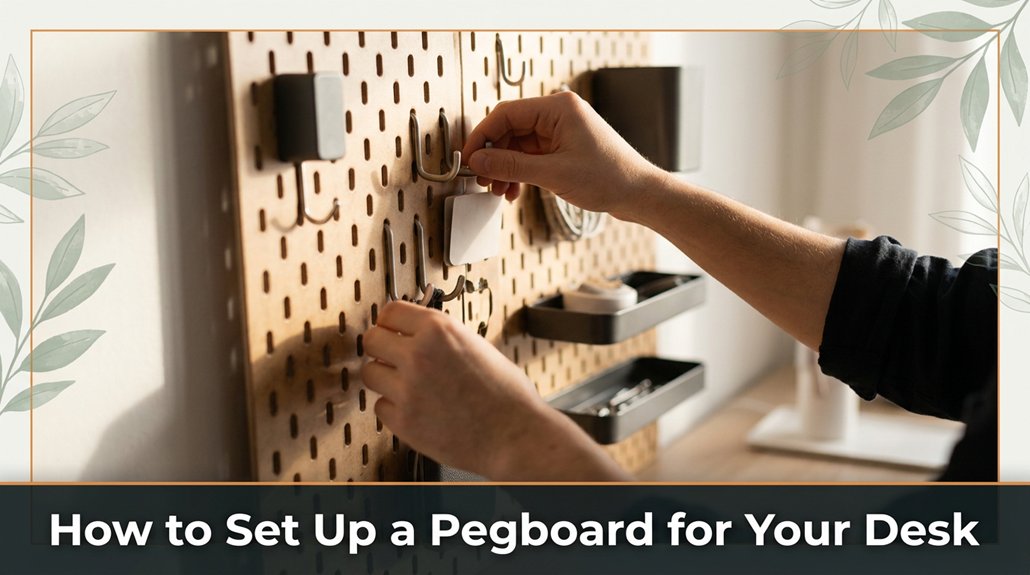
If your workspace feels cluttered or you’re tired of rummaging through drawers for what you need, setting up a pegboard can transform your desk organization. First, measure your wall space carefully it’s easy to choose a pegboard that’s either too large or awkwardly placed behind your monitor.
Use a tape measure and double-check dimensions, especially around outlets and cables these are common stumbling points. Next, pick a material that matches your style and supports the weight of your tools and supplies. When mounting, locate studs with a stud finder, mark level lines, drill pilot holes into the supports, and screw in carefully over-tightening can cause damage.
To keep your tools accessible and your workspace tidy, organize and personalize your pegboard as you set it up; trust me, it makes a huge difference. Stick with me, and I’ll share some secret tips to keep everything feeling neat and efficient.
This article contains affiliate links. If you purchase through them, I may earn a small commission at no extra cost to you. I only recommend products I genuinely believe in.
Alright, let me ask you this: have you ever spent ages digging through a drawer just to find that one tiny screwdriver or pair of scissors?
That’s where a desk pegboard setup shines. You hang your tools, cables, and supplies right at eye level, because this keeps everything visible and accessible.
You toss a screwdriver in, and boom then you know exactly where it’s next time. No more cluttered drawer chaos or wasting minutes searching.
Transforming your workspace with a pegboard is about efficiency and avoiding that sinking feeling when you realize you’ve looked everywhere but the only thing missing is your sanity.
Proper placement of your pegboard is key to maximizing accessibility and maintaining a clutter-free environment.
Now, you’ve got everything visible, within arm’s reach, and your workspace stays neat.
It’s a game changer trust me, I’ve been there.
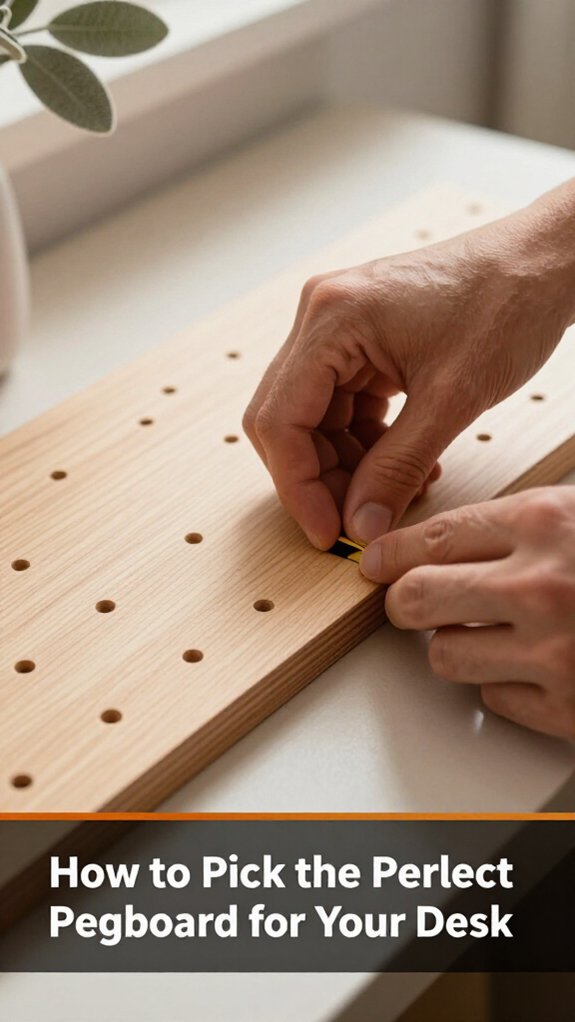
Choosing the right pegboard for your desk sounds simple, until you realize there are more options than you expected. Here’s what to focus on:
1. Material: Metal, plastic, or wood? Think about weight and durability because a more durable material can withstand regular use without breaking or bending. Metal is sturdy but noisy, which might be distracting, especially in quiet environments.
Plastic is lightweight, making it easy to move, but it’s less strong and may warp or crack over time. Wooden pegboards tend to be durable and aesthetically pleasing but can be heavier and more expensive.
2. Size: Measure your desk space and choose accordingly. Larger boards can hold more accessories, but they take up more space and can clutter your desk if too big.
Smaller boards are easier to hide out of sight but mightn’t provide enough storage for all your needs.
3. Hole Pattern: Classic grid pattern, slotted, or other designs? Different patterns mean different hooks and accessories are compatible.
For example, a standard grid pattern (such as 1/4-inch holes on 1-inch centers) is widely compatible with many brands like SimpleHouseware or Wall Control. Ensure the pattern matches the hooks and accessories you plan to use because incompatible hooks won’t fit securely and will hinder organization.
Measurement Fact: Pegboards with 1/4-inch holes on 1-inch centers are standard and most accessories are compatible with this pattern.
All right, pick what suits your style and space because a pegboard that’s too small doesn’t provide enough storage, and one that’s too big becomes an eyesore.
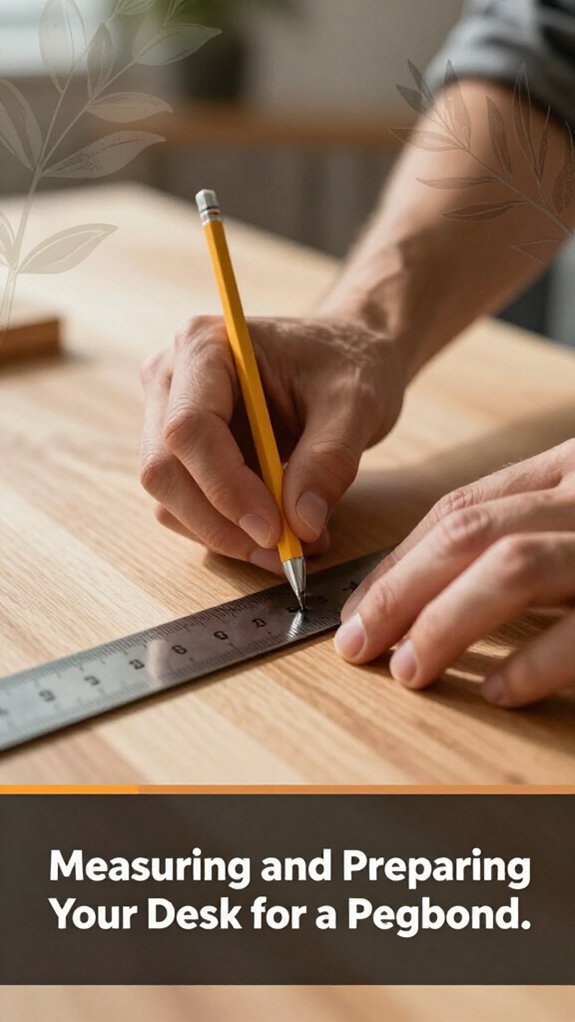
Before you start hanging your new pegboard, grab your measuring tape and a pen. You need to measure the width and height of your desk’s available wall space because precise measurements prevent ending up with a pegboard that’s either too large or too small.
Measure from the edge of your desk to where you’d like the pegboard to hang, and double-check those numbers to ensure accuracy.
Fact: For optimal accessibility, measure the vertical height from the desk surface to the intended hanging point.
It’s tempting to eyeball the measurements, but don’t do it. Precision saves you headaches later and helps your setup look tidy.
Keep in mind, the most common mistake is mounting the pegboard too high or low.
Instead, consider your arm movement and reach range, ensuring the pegboard is within comfortable reach without excessive stretching or lifting.
Also, factor in the location of power outlets and monitors.
– Ensure that the pegboard’s placement doesn’t block essential outlets or screen visibility, preserving both functionality and safety.
Additionally, understanding the ergonomic principles can help you position the pegboard in a way that minimizes strain and optimizes comfort during use.
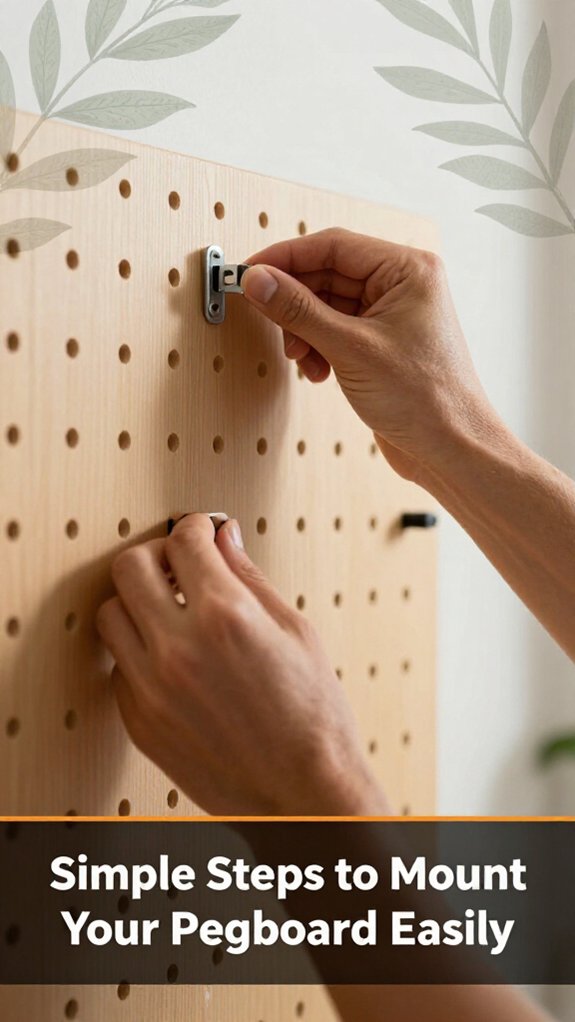
You’ll want to grab your stud finder, a level, and a drill because mounting your pegboard isn’t exactly a one-and-done task.
First, locate your studs don’t just assume the wall is solid everywhere. Mark the spots where you detect studs, because anchoring into studs provides the necessary support for heavy tools and ensures stability.
Next, hold the pegboard where you want it, and use the level because nobody wants crooked hooks. Ensure the top edge of the pegboard is level within 1/8 inch (3 mm) to achieve a straight appearance.
Now, drill pilot holes into the studs at your marked spots. This step is critical because pilot holes prevent the wood from splitting and make screwing easier.
Highlight:
Measure the distance between your pilot holes; use this measurement to evenly space remaining holes for optimal support.
Proceed to tighten the screws firm but don’t crush the board because overtightening can crack or warp the pegboard.
Tip: Use sturdy screws, such as 1-inch (2.5 cm) galvanized wood screws, and ensure they penetrate at least 1 inch (2.5 cm) into the studs for secure mounting.
Remember, your setup will vary depending on your wall type and how heavy your tools are.
Common mistake:
Basically, measure twice, drill once, and remind yourself that no pegboard ever hangs perfectly straight on the first try it’s a process of fine-tuning for the best results.
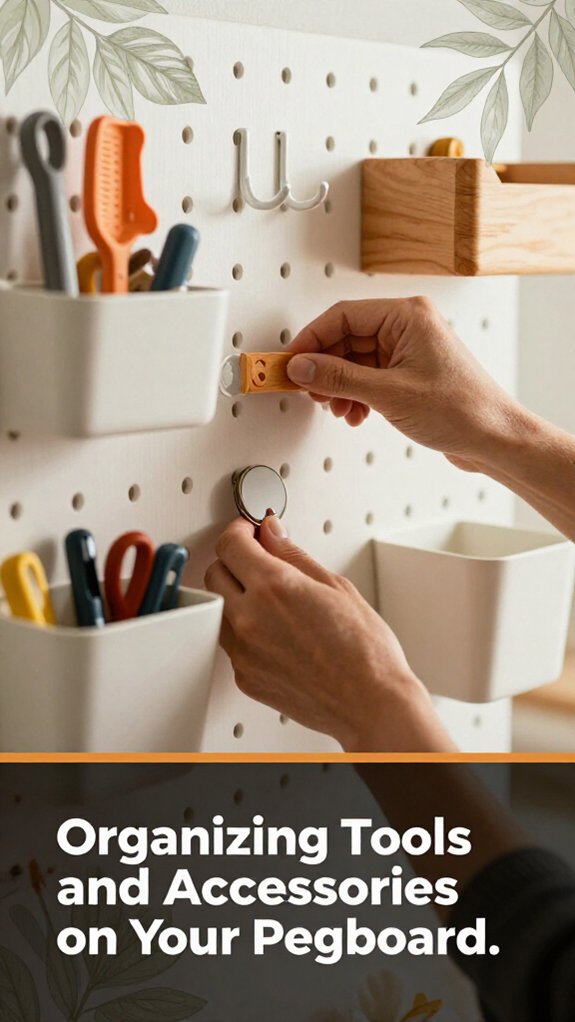
There’s no point in mounting a pegboard if it’s just going to look like a confused abstract art piece on your wall. So, you want your tools and accessories to actually make your desk smarter, not messier. Start by grouping similar items pens with pens, chargers with chargers because organizing related items together helps you find them quickly and keeps your workspace tidy.
Use hooks and baskets for bigger items think scissors, tape, or a tiny plant if you’re feeling fancy. Because larger items need more accessible storage, hooks and baskets prevent clutter and make retrieval easier.
Don’t overcrowd the pegboard; leave some space to breathe because overcrowded setups can make finding tools frustrating and slow down your workflow.
Keep frequently used items front and center no digging through a jungle of accessories because this saves time and reduces frustration during busy work sessions. For those odd-sized tools, go for custom hooks or clips that fit their dimensions because standard hooks mightn’t accommodate unusual shapes or sizes effectively.
Moreover, proper placement of the pegboard at or just below eye level around 58 to 65 inches from the floor for most adults helps minimize strain and makes reaching for tools more natural.
A cluttered pegboard just invites chaos, so keeping it tidy and personalized is your secret weapon. You don’t want to spend five minutes hunting for that one screwdriver, right? Here are three tips:
All right, setting up your pegboard is fun, but maintaining it requires consistent effort. Do a quick tidy-up weekly because it helps you stay organized without breaking a sweat.
Specific measurements and standards:
Common mistakes and how to avoid them:
You should aim for a pegboard weight capacity of around 50 pounds, tops.
Why? Because anything more needs serious mounting think heavy-duty anchors or wall studs not just drywall screws. Honestly, this limit prevents your setup from collapsing mid-work frenzy.
All right, I’ve seen folks overload them, then wonder why everything’s crashing down don’t be that person.
Stick to the guidelines, and you’ll avoid those “why did that fall?” moments.
Absolutely, you can customize your pegboard with DIY mods it’s like jazz improvisation for your workspace. You can paint it, add hooks, or even cut it to fit in tricky spots.
Just remember, drilling holes is the easy part; choosing the right hooks and accessories makes all the difference. I’ve seen folks go all out only to realize their modifications made the board less sturdy.
Trust your needs, customize smartly, and have fun!
You should always wear safety goggles; falling debris is a real thing.
Make sure to find a stud or wall anchor that can handle the weight, because hanging a bunch of supplies is heavy work. Use a level to avoid lopsided hooks that’s just asking for chaos.
And, honestly, double-check that screws are tight before loading it up. Trust me, a quick safety check saves a big headache later.
You should reorganize your pegboard whenever it starts feeling cluttered or inefficient roughly every 4 to 6 months.
Ever notice how your setup slowly drifts? That’s natural. Your needs change, tools shift.
All right, don’t wait until you’re digging through a mess. Instead, give it a quick re-evaluate, clean it up, and swap out what no longer works.
Trust me, your workspace and sanity will thank you.
All right, if you’re setting up for humid environments, you want rust-resistant materials. Go for stainless steel or coated metal hooks trust me, plain steel will rust faster than you can say “why did I bother.”
Plastic hooks work too, as long as they’re sturdy and won’t warp or crack.
And, obviously, avoid untreated wood or cheap metal; they’ll turn into a gooey mess sooner rather than later.
All right, so you’ve got your pegboard up, tools organized, and workspace transformed. It’s a lot like assembling furniture way easier when you skip the parts where you get distracted or realize the measuring tape was buried under a pile. Just remember, your perfect setup isn’t about perfection; it’s about making your space work *for* you. Now go enjoy that tidy, functional desk and don’t forget to actually use it.